








Longevity outcomes hinge on a range of factors, with genetics taking precedence in most cases. They also depend on movement and diet; however, putting our fate back in our own hands.
The secret to extending healthy years lies not in a single workout regimen but in a carefully balanced combination of training methods, according to a leading medical expert.
Board-certified internist Doctor Farhan Abdullah told GB News: “To find out how much longer you will live, the best results come when you combine progressive resistance training and steady-state aerobic training.”
Resistance training serves, first and foremost, as a potent tool for maintaining blood sugar regulation, warding off frailty, and fostering metabolic well-being.

Strength training is a potent tool for maintaining blood sugar regulation
|GETTY
“It can also cause your muscles to function like endocrine organs by controlling glucose, inflammation and hormone production,” Dr Abdullah explained.
“Zone 2 cardio can increase the amount of mitochondria in your heart cells and improve your body’s ability to utilise oxygen. When progressive resistance training and zone 2 cardio are done regularly together, you build a foundation for healthy ageing.”
Despite the popularity of high-intensity interval training (HIIT), it shouldn't be viewed as a complete solution for those seeking to add years to their lives.
Dr Abdullah argues that it offers genuine advantages, such as enhanced VO2 Max and improved insulin sensitivity, but argues there are significant drawbacks to relying on it alone.
LATEST DEVELOPMENTS:
“There may be nothing worse for someone trying to extend their lifespan than believing that high-intensity interval training alone is enough,” he warned.
“HIIT does have many beneficial effects, such as improving your VO2 Max and insulin sensitivity.
“However, it can become overly used and applied incorrectly, especially in those who are experiencing stress.”
For those seeking a more sustainable approach, the physician outlined a structured weekly programme.
“I suggest creating a solid foundation through structured workouts.
“I generally recommend two to four days of resistance training focused on compound exercise, two to three days of zone 2 cardio and at least some form of daily low-intensity activity.
“I typically tell my patients to train the major muscle groups two to four times per week using progressive overload, gradually increasing weight, repetitions, or intensity.
“One of the biggest mistakes people make is to view strength training as either optional or only aesthetically pleasing and therefore do it sporadically or without progression.”
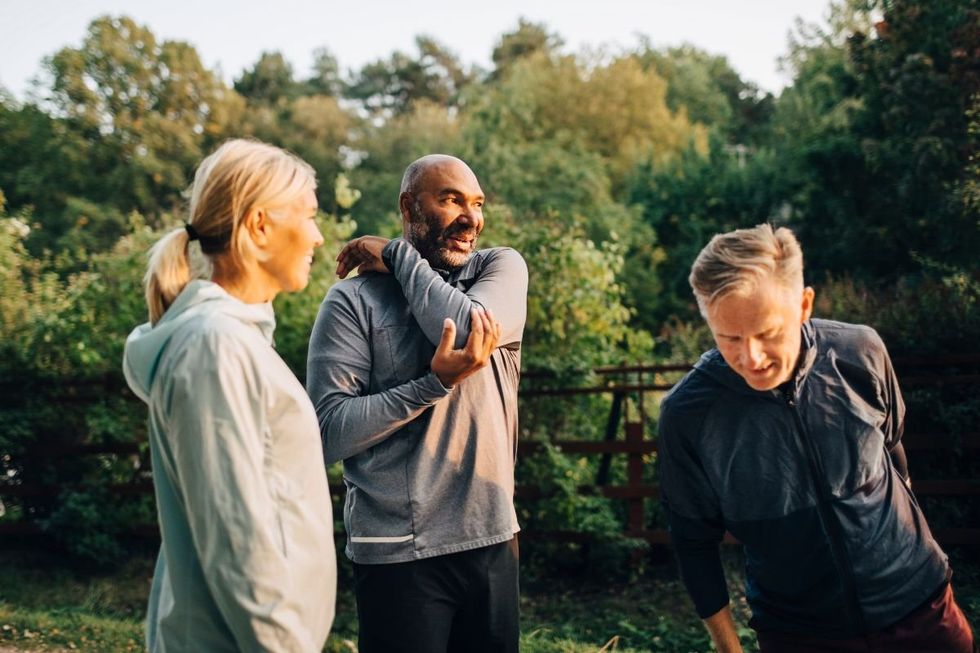
Walking each day briskly delivers substantial health benefits
|GETTY
Beyond structured gym sessions, the simple act of walking each day briskly delivers substantial health benefits that many overlook.
It can also aid in recovery between more intense workouts. Dr Abdullah noted: “Daily brisk walks can improve cardiovascular health by lowering blood pressure and reducing triglycerides.
“[They] can also reduce visceral fat by allowing calories consumed after meals to be burned off.
“Many people complicate their workout routines and overlook how much of a benefit a lot of impact walking each day could provide towards extending one’s life span.”
Our Standards: The GB News Editorial Charter