







Popular pink noise sleep aids might actually be doing more harm than good, scientists have warned.
New research from the University of Pennsylvania Perelman School of Medicine has found that pink noise – the soothing static-like sound millions use to drift off – could be cutting into vital REM sleep by nearly 19 minutes each night.
The findings, published in the journal Sleep, cast doubt on the booming market of ambient sound machines and apps that promise better rest.
"REM sleep is important for memory consolidation, emotional regulation and brain development, so our findings suggest that playing pink noise and other types of broadband noise during sleep could be harmful," said lead author and professor of Sleep and Chronobiology in Psychiatry, Mathias Basner.
TRENDING
Stories
Videos
Your Say

The static-like sound helps millions to drift off
|GETTY
Pink noise is a type of broadband sound – think of it as white noise's cousin – that spreads across a wide range of frequencies and creates that uniform, static-like hum.
You'll recognise similar sounds from ocean waves, rainfall, air conditioning units and household fans.
To test its effects, researchers brought 25 healthy adults aged 21 to 41 into a sleep laboratory for seven consecutive nights.
None of them had previously used noise to help them sleep or suffered from sleep disorders.
The participants experienced different conditions, including aircraft noise, pink noise, combinations of both, and nights using earplugs.
Each morning, participants completed tests and surveys measuring their sleep quality and alertness.
LATEST DEVELOPMENTS
Pink noise at 50 decibels – roughly the volume of moderate rainfall – was linked to nearly 19 fewer minutes of REM sleep.
Aircraft noise alone meant about 23 minutes less time in the deepest sleep stage, known as N3.
When pink noise and aircraft noise were combined, both deep sleep and REM sleep dropped, and people spent an extra 15 minutes awake.
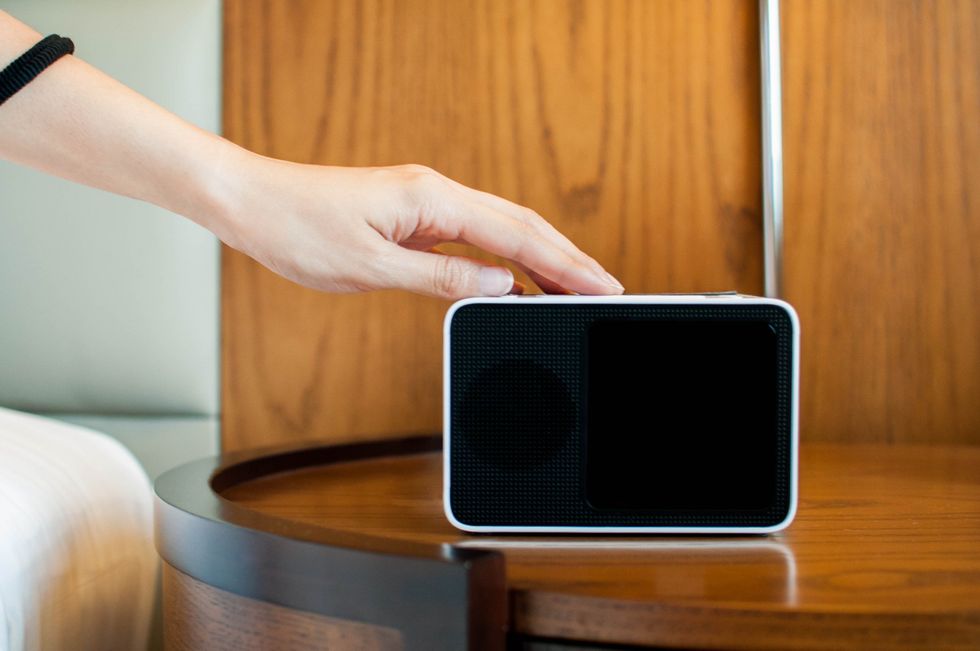
Pink noise spreads across a wide range of frequencies
|GETTY
Participants said their sleep felt lighter and they woke more often – unless they wore earplugs, which proved far more effective at protecting sleep quality.
Professor Basner raised particular concerns about young children, who spend far more time in REM sleep than adults, making them especially vulnerable to these effects.
"Overall, our results caution against the use of broadband noise, especially for newborns and toddlers," he said.
The warning may surprise parents, who often place sound machines right next to their baby's bed with the best intentions of helping them sleep through the night.
The researchers are calling for more studies on vulnerable groups, long-term use, and what volume levels might be safe – if any exist at all.
Our Standards: The GB News Editorial Charter