







A major new analysis has determined that so-called "breakthrough" Alzheimer's medications are unlikely to provide meaningful benefits to patients.
The independent review, from the Cochrane Collaboration, examined drugs including donanemab and lecanemab, which have been heralded as significant advances in dementia treatment.
But although these medications have demonstrated an ability to slow cognitive deterioration, researchers concluded the effect falls considerably short of what would genuinely improve patients' daily lives, igniting a fierce dispute within the scientific community.
Equally distinguished experts have launched a robust challenge to the report, describing its methodology as fundamentally flawed.
TRENDING
Stories
Videos
Your Say

The drugs' effects fall considerably short of what would genuinely improve patients' daily lives
|GETTY
The controversy arrives at a particularly sensitive moment, with these treatments costing approximately £90,000 for an 18-month course privately and remaining unavailable through the NHS.
These medications function by targeting beta amyloid, a sticky substance that accumulates between brain cells in those suffering from Alzheimer's disease.
The treatments employ specially engineered antibodies, similar to those the body naturally produces to combat infections, designed to identify and remove this harmful buildup.
The Cochrane review examined 17 separate studies encompassing more than 20,000 participants who received amyloid-clearing treatments.
Prof Edo Richard, a neurologist at Radboud University Medical Centre in the Netherlands and one of the report's authors, was direct about what he tells his own patients.
"I would tell them, I think you will probably not benefit from these drugs, and they're burdensome for you and your family," he said.
"I think it's extremely important that we're honest to our patients about what they can expect. I'm always wary to avoid giving people false hope."
The report's conclusions have not gone unchallenged, however, with prominent researchers mounting a vigorous defence of the medications.
LATEST DEVELOPMENTS
Prof Bart De Strooper, from the UK Dementia Research Institute at UCL, argued that the review "does not clarify the evidence, it blurs it" and stated that "the flaw in this review is fundamental".
He maintained that while earlier experimental programmes had indeed failed, more recent antibody treatments have produced genuine, if modest, clinical improvements.
Dr Richard Oakley from the Alzheimer's Society urged caution in how the findings are interpreted.
"It's essential that we interpret this review with nuance and avoid taking a sledgehammer to decades of pioneering scientific study," he said.
Prof Robert Howard at UCL, meanwhile, backed the report, calling it "unfortunate and unfair" that these drugs have been promoted in ways that may have raised false hopes among affected families.
For British patients, the practical reality is stark. These treatments are currently accessible only through private payment, with the £90,000 price tag placing them beyond the reach of most families.
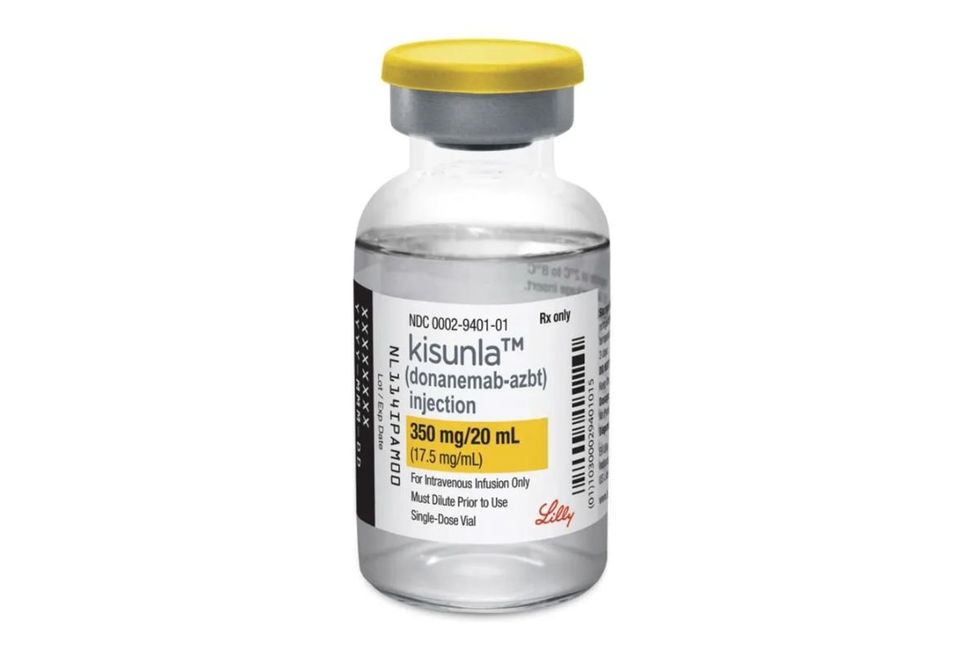
Drugs like donanemab have been heralded as game-changers in dementia treatment
|ELI LILLY
The NHS does not fund these medications, though the National Institute for Health and Care Excellence is conducting a fresh review of the evidence.
NICE previously rejected the drugs but is now reassessing their value, taking into account the considerable burden placed upon unpaid carers.
The treatments also carry risks of brain swelling and bleeding, and require administration every two to four weeks.
The question dividing the scientific establishment remains whether newer antibodies genuinely deliver modest but real clinical benefit, or whether the entire amyloid-targeting approach requires fundamental reconsideration.
Our Standards: The GB News Editorial Charter