










A private GP has sounded the alarm over a sharp increase in cancer referrals among patients under the age of 50, warning that what was once uncommon has become a weekly occurrence in her practice.
Dr Asiya Maula, who works at The Health Suite, said the shift represents a dramatic change from her experience a decade or two ago.
She said: "I'm referring under-50s for cancer investigations far more regularly than I ever used to.
"Ten or 20 years ago this was uncommon. Now, it's something I'm seeing week in, week out."
Medical professionals are increasingly encountering individuals in their 30s and 40s presenting with symptoms requiring urgent investigation.
TRENDING
Stories
Videos
Your Say

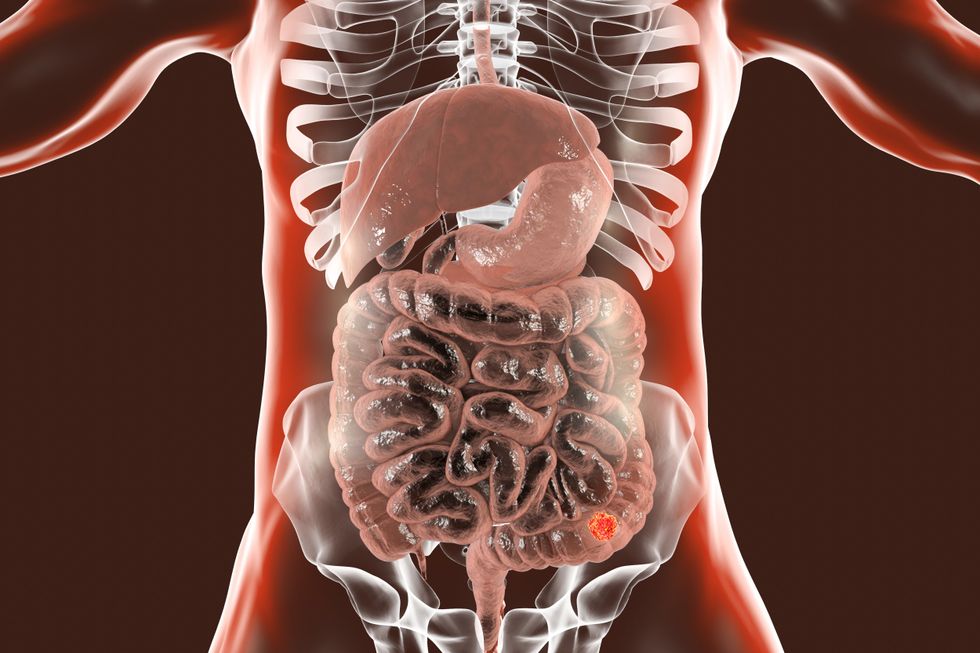
Bowel cancer has seen a surge in younger adults
|GETTY
Health experts caution that improved diagnostic methods alone cannot account for this troubling trend, with the types of malignancies appearing in younger adults following a distinct pattern, according to Dr Maula.
"The biggest increases we're seeing in younger patients are bowel cancer, breast cancer, thyroid cancer and certain blood cancers. These are conditions we historically associated with older age groups," she said.
Cancers that were previously considered rare among those below middle age are now being detected with increasing regularity.
Physicians report that people in their 30s and 40s are presenting with concerning symptoms at rates not seen in previous generations.
Dr Maula indicated that multiple overlapping factors are believed to be responsible for this worrying development.
Modern lifestyles, for instance, may be creating a hazardous combination of toxic exposures that accumulate over decades.
Contemporary life exposes individuals to thousands of synthetic substances daily, ranging from vehicle emissions and air pollution to cosmetics, cleaning agents and household materials.
LATEST DEVELOPMENTS
Dr Maula explained: "Our environments are far more chemically loaded than those of previous generations.
"Many of these substances were never tested for lifelong, low-dose exposure, yet people are exposed to them daily for decades."
Plastics have also seemingly become inescapable, with microplastics now detected in human blood, lung tissue and reproductive organs.
Coupled with chemicals found in food packaging and plastic bottles, these factors create the perfect storm for hormonal disruption.
"Hormones help control how cells grow and divide. Disrupting that signalling over long periods may create conditions that allow abnormal cells to survive and multiply," she said.
Then we've got agricultural pesticides, designed to eliminate insects and weeds, that leave residues on produce, with exposure frequently beginning in childhood.
"These chemicals are literally designed to destroy living cells," Dr Maula said. "The concern is what repeated low-level exposure might be doing to human cells over time."
'Our environments are far more chemically loaded than those of previous generations'
|GETTY
Ultra-processed foods now constitute a substantial portion of many Britons' diets and are associated with obesity, insulin resistance and chronic inflammation, all recognised risk factors for cancer.
Perhaps most concerning is how early such exposures start, with children encountering environmental chemicals, plastics and poor nutrition from before birth.
Scientists fear that for some youngsters, this could result in shorter lifespans than their parents.
Most importantly, Dr Maula warned that cancer seldom results from a single cause.
She said: "It's the cumulative effect of environment, diet and lifestyle over decades. Cancer doesn't check your age - and persistent symptoms should always be taken seriously."
Our Standards: The GB News Editorial Charter