










A virus that most people catch as children could be behind bladder cancer developing later in life, new research has revealed.
New scientific findings from the University of York have revealed that the BK virus – an infection that typically stays dormant in our kidneys – can spark the kind of DNA damage that leads to cancer.
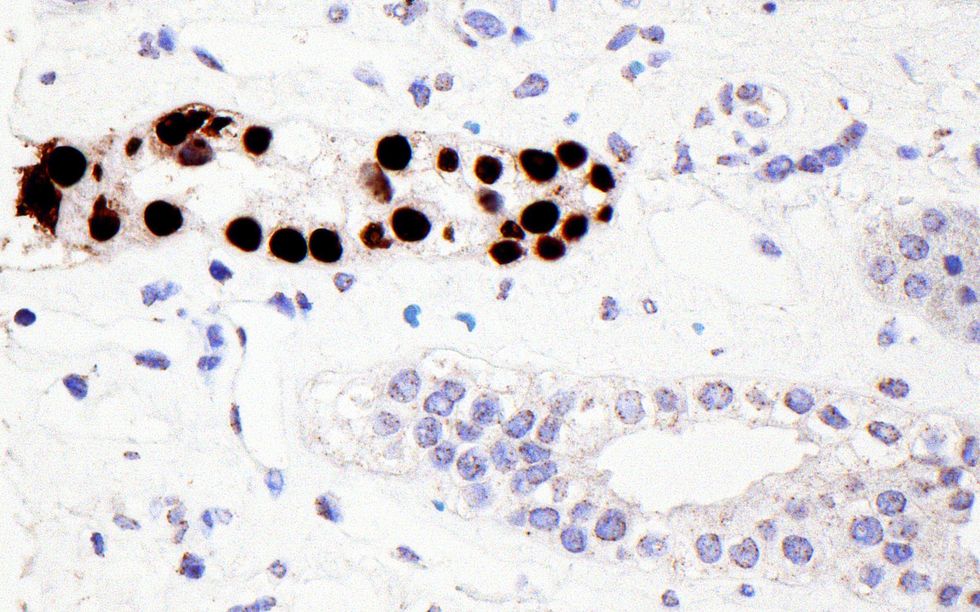
Published in Science Advances, the findings show that it's not the virus itself doing the damage directly, but that our body's own defence system causes what researchers are calling "friendly fire".
When cells fight off the BK virus, enzymes designed to attack the infection end up causing collateral damage to our own DNA instead.
TRENDING
Stories
Videos
Your Say

The findings help explain why bladder cancer doesn't cause obvious symptoms
|GETTY
Dr Simon Baker and his team made this discovery by studying urothelium – the tissue lining our urinary tract – in laboratory conditions.
They noted that the DNA damage doesn't just happen in cells that are actually infected.
It also occurs in neighbouring "bystander cells" that are simply witnessing the infection happening next door.
This finding is really important because it helps explain a puzzle that's baffled researchers for years, which is why most bladder cancers show absolutely no trace of the virus by the time they're diagnosed.
The virus itself typically hangs around quietly in the kidneys after we pick it up in childhood and doesn't cause obvious symptoms, explaining why many people have no idea they're carrying it.
This research hits close to home for Tim Tavender, 51, from Southampton, who received a kidney transplant in 2015 after developing a BK virus infection and later bladder cancer.
"It was a terrifying experience," Tim said. "BK virus made me feel sub-par, like constantly having the flu, and lowering my immunosuppressants to fight it left me walking a medical tightrope."
In 2021, he noticed blood in his urine. "It wasn't just a little bit, it was claret. That visit to the doctor probably saved my life."
LATEST DEVELOPMENTS
Tim underwent surgery lasting more than 13 hours to have his bladder removed.
"I hated it at first and felt quite down, but I'm grateful I don't have cancer anymore, and my body is working well," he shared.
He also said the research gives him hope, explaining: "If scientists like Dr Baker can find new ways to control BK virus, it could spare other people from going through what I did - and that would be life-changing."
Dr Baker described the findings as a major shift in how we think about where bladder cancers come from.
"Because kidney transplant recipients are affected by the BK virus and are over three times more likely to develop bladder cancer, we suspected that the BK virus was involved, but didn't know how," he said.
The discovery opens up new possibilities for prevention
|GETTY
The research opens up fresh possibilities for prevention, as current advice for reducing bladder cancer risk focuses on stopping smoking.
These findings suggest that identifying and controlling the BK virus earlier could offer another route to keeping people safe.
Dr Baker's lab is now working on new methods to control the virus.
Our Standards: The GB News Editorial Charter