










GB News Northern Ireland reporter Dougie Beattie was almost blown over live on air as Storm Chandra battered parts of Britain.
Battling winds of up to 75 miles an hour on the east coast of Northern Ireland, Dougie told viewers he could “feel [his] feet going from underneath” as violent gusts lashed the shoreline.
When asked by presenter Tom Harwood how difficult it was to stay upright in winds approaching 75 miles per hour, Dougie told him: "I’m actually leaning back against it, and when another gust comes in you can feel your feet being lifted from underneath you.
"It’s quite bizarre. I’m watching seagulls hovering above the sea, just holding themselves there, before diving back down again.
TRENDING
Stories
Videos
Your Say
"This is a tremendous wind hitting us, and in these areas there are already trees down. This is right across the east coast of Northern Ireland.
"For once, it doesn’t seem to have gone into Scotland. It came up past the south west of Britain last night, going going past Portsmouth and Plymouth and right up past Wales.
"This morning at four o'clock it hit us at then it was dead low for a couple of hours there at 11. But now it's really starting to pick up once more."
Storm Chandra made landfall in Northern Ireland during the early hours of Tuesday, striking at approximately 4:30am with heavy, driving rain and powerful winds.
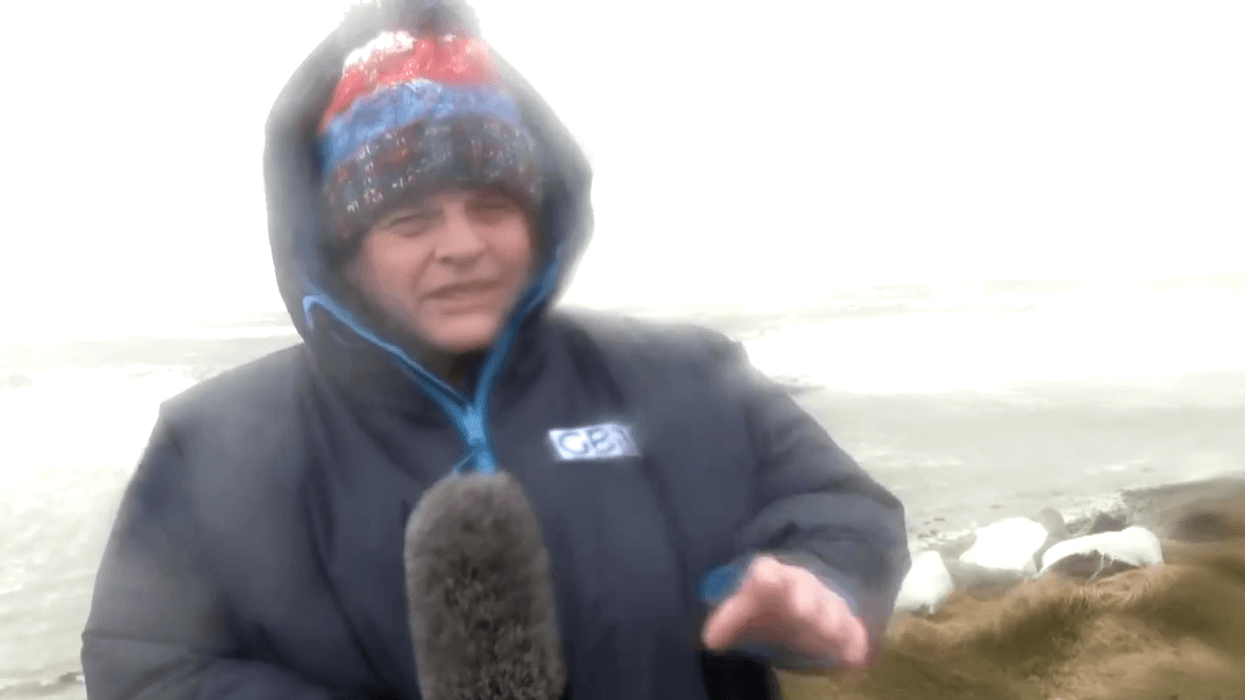
Dougie Beattie reported live from the treacherous conditions
|GB NEWS
The village of Ballyhalbert has been without electricity since 4am, with concerns mounting that additional homes could lose power as conditions intensify throughout the day.
The storm's impact on roads has been severe, with numerous trees brought down across the region and multiple vehicle collisions reported.
The waves were approaching the point of overtopping the walls once again as tidal waters continued their advance.
Police Service of Northern Ireland officers closed the Portaferry Road further along the coast, with expectations that seawalls would be breached once more as conditions worsened.
LATEST ON STORM CHANRA
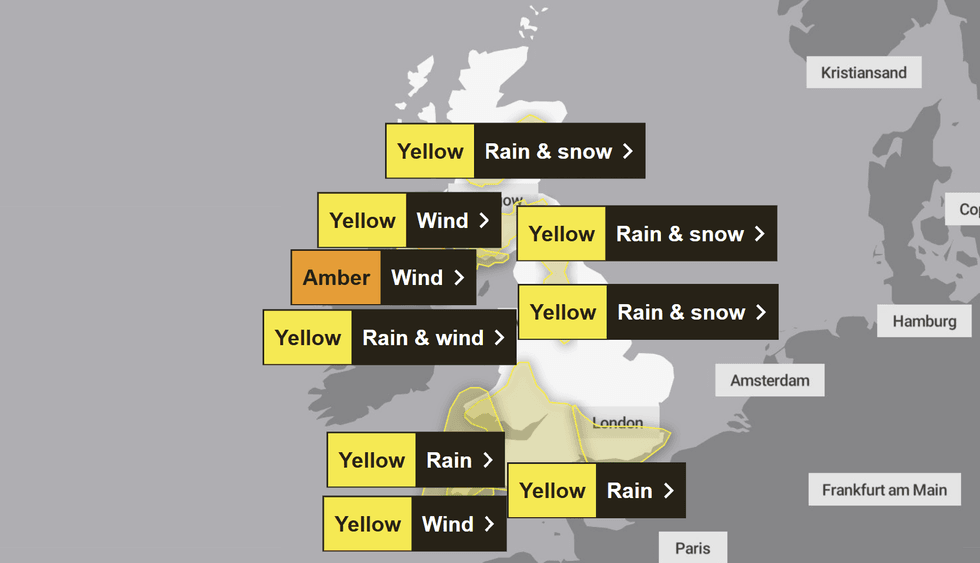
Storm Chandra battered Britain last night after the Met Office issued seven urgent warnings
|MET OFFICE
Storm Chandra carved a destructive path across Britain before reaching Northern Ireland, travelling past the south-west coast during the night of January 26 and sweeping by Portsmouth, Plymouth and up past Wales.
Across the wider United Kingdom and Republic of Ireland, the extreme weather has caused substantial travel chaos since Sunday evening, with roads, rail networks, ferries and air traffic all severely affected.
The Met Office had issued two amber warnings ahead of the storm's arrival, classifying it as a multi-hazard event bringing both powerful winds and heavy rainfall that triggered flooding and power cuts.
Snow was also forecast in parts of the country as a number of weather warnings came into force in the early hours of the morning.
Met Office chief forecaster Paul Gundersen said: "Initially, strong winds will impact the Isles of Scilly, western Cornwall and south-west Wales which are still vulnerable after Storm Goretti, gusts of 70 to 80mph are possible here.
"Heavy rain is an additional hazard as it falls on saturated ground in Dorset and southern parts of Devon, Somerset and Cornwall.
"As Chandra interacts with colder air further north snow becomes a hazard, with 10-20cm of snow possibly accumulating over higher ground in the Pennines, southern Scotland and the Highlands.
"With a complex spell of weather, its important people stay up to date with the forecast and any warnings in your area."