









You might want to think twice about when you wear your Meta Ray-Ban smart glasses – or where you leave them.
That's because these futuristic specs could be recording footage that you'd never want to share, according to a joint investigation from Swedish publications Svenska Dagbladet and Göteborgs-Posten. High-resolution video filmed by the Meta-designed glasses is purportedly being reviewed by contractors at a Kenya-based company called Sama — a company responsible for training data that powers your computer vision and Artificial Intelligence (AI) technology.
Workers at the Nairobi facility say they've seen everything from people going to the toilet, getting undressed, and even having sex. According to the bombshell new report, the footage arrives at their workstations largely unfiltered, meaning the Nairobi-based data annotators are watching deeply personal moments from glasses wearers.
It could also allow them to gain extremely personal information.
"In some videos you can see someone going to the toilet, or getting undressed," one contractor told the Swedish papers. "I don't think they know, because if they knew, they wouldn't be recording."
Smart glasses are meant to work as AI-powered eyewear that blends style with functionality. These specs let you capture photos and videos hands-free, listen to music, take phone calls, and access information on the go.
Advertisements show wearers capturing intimate first-person footage of young children, without any need to break the moment by putting a smartphone or point-and-shoot camera between you and your loved one. The specs are also popular with content creators, who want to film for social media.
With built-in voice activation, these glasses can handle real-time translations, object recognition, and contextual assistance — essentially giving you a lightweight wearable AI assistant. Because the glasses are fitted with a camera, you can ask the chatty AI to identify unknown landmarks, see turn-by-turn directions in real-time, and more.
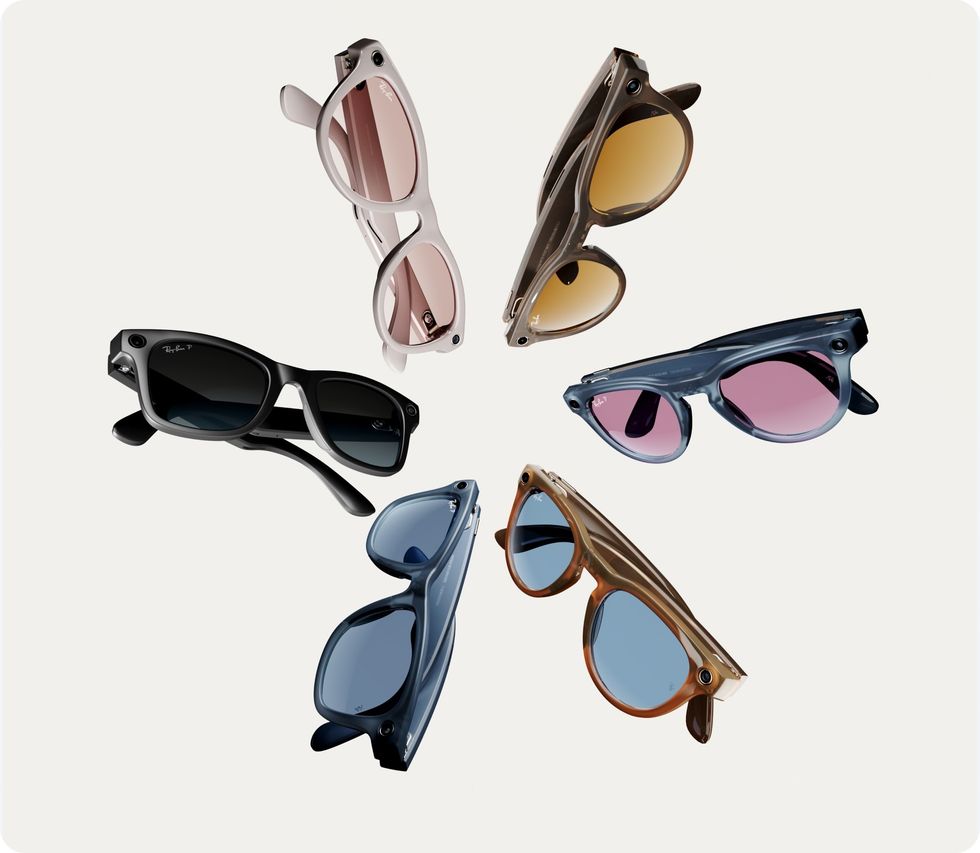 Meta AI glasses made their initial appearance in 2021, but it wasn't until the release of Meta Ray-Ban glasses in 2024 that they began flying off the shelves. | META PRESS OFFICE
However, the presence of a camera in the frames of these glasses can also lead to some serious security concerns. When you glance down at your phone while wearing the glasses, they can also capture your text messages. Pop into a shop to pay for something, and your credit card details – including the full account number – might end up on a stranger's screen in Kenya, the sensational new report alleges.
Some footage gets even more graphic.
Workers told Svenska Dagbladet and Göteborgs-Posten they've seen pornography that glasses wearers were watching, and in some cases, the glasses recorded the owners' own intimate moments.
One contractor described footage where a user placed their glasses on a bedside table, only for their wife to walk in and undress, completely unaware she was being watched. The workers at Sama are expected to meticulously label everything seen on-screen to help train Meta's AI systems, no matter how private or uncomfortable the content, the report claims.
"You understand that it is someone's private life you are looking at, but at the same time you are just expected to carry out the work," one employee explained to the Swedish journalists.
And if these workers attempt to raise concerns, they could be left unemployed.
"You are not supposed to question it. If you start asking questions, you are gone," the contractor added.
LATEST DEVELOPMENTS
Marijus Briedis, Chief Technology Officer at NordVPN said in a statement, "With a smartphone, you make a conscious decision every time you open the camera or type a query — there’s a moment of intent. Smart glasses erase that moment. You’re generating data just by living your life. Walking through your house, glancing at a bank statement on your desk, passing by your partner getting dressed.
"The real privacy risk here is everything people don’t realize they’re sharing simply because they forgot the glasses were still on. That risk is amplified by a dangerous assumption taking hold with consumers. If AI runs on a wearable device, the data stays on that device. It doesn’t. Most AI-powered glasses need to send your voice, images, and video to cloud servers for processing — and once that data leaves your device, it can end up being reviewed, stored, or used in ways you never anticipated. Before putting on any smart device, you should ask yourself: Where does my data actually go?”
Meta does cover this usage in its terms of service. The Californian company's small print states it can review your interactions with its AI products, either through automated systems or actual human beings, including third-party vendors. However, the contractors argue this isn't good enough.
They believe users have no real idea that human eyes are watching their footage. "You think that if they knew about the extent of the data collection, no one would dare to use the glasses," one worker said. When the Swedish papers spent weeks seeking comment, Meta pointed them to its privacy policy and terms of use.
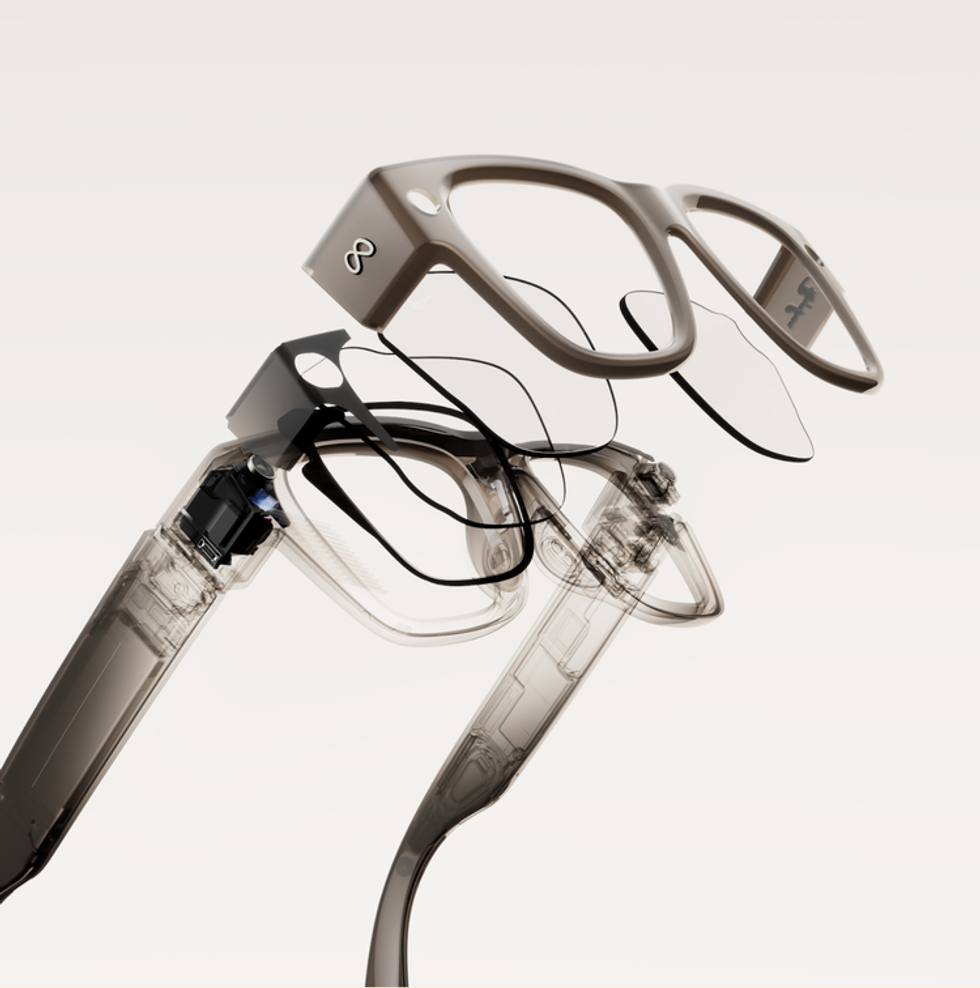
Meta announced a new pair of smart glasses designed to sport a high-resolution, colourful screen in the top right lens late last year
| META PRESS OFFICEMr Briedis also said, “Once you understand that your data is leaving the device, the next step is to take control of when and where that happens. Turn off AI features the moment you step into a private space. Review your privacy settings every once in a while, not just at setup. And critically, read the terms of service for the AI features specifically — not just the hardware. These are often separate documents with very different implications for your data.
"I think most people would be genuinely shocked if they could see a full log of the data their smart glasses have transmitted in a single week. When a product feels as simple as putting on a pair of sunglasses, people naturally lower their guard. But simplicity in design should never mean ambiguity in data practices. Consumers deserve to understand what happens to every image and voice clip their glasses capture.”
If all this has you feeling a bit uneasy, there's now a way to know when someone nearby might be wearing these devices. A new Android app called Nearby Glasses has just launched, designed to scan for Bluetooth signals from smart glasses made by companies like Meta and Snap. When it detects one, you get an alert.
The app's creator, Yves Jeanrenaud, didn't mince words about why he built it. He described smart glasses as an "intolerable intrusion, consent-neglecting, horrible piece of tech."
Mr Jeanrenaud said he was motivated by "witnessing the sheer scale and inhumane nature of the abuse these smart glasses are involved in."
The app lets you add custom Bluetooth identifiers, too, which in simple terms are the unique "fingerprints" or "serial numbers" that Bluetooth devices use to find, recognise, and connect. Although Mr Jeanrenaud warns that false positives can occur. An iPhone version has been requested, but is not currently available.
You can download the app for free on the Google Play Store.
GB News has reached out to Meta for comment.