










You'll soon be able to check if someone is tricking you with the use of Artificial Intelligence (AI) and deepfakes, confirms Google CEO, Sundar Pichai.
Speaking at this year's Google I/O, Mr Pichai announced that Google is expanding its SynthID Detector technology — Google's tool for identifying AI-generated content — into the Chrome browser.
The move comes as generative AI tools make it easier to create highly realistic text, images, audio, and video, raising concerns about misinformation and deepfakes online. In response, Google launched SynthID Detector, a verification tool designed to identify AI-generated content created with Google’s own AI models, including Gemini, Imagen, and Veo.
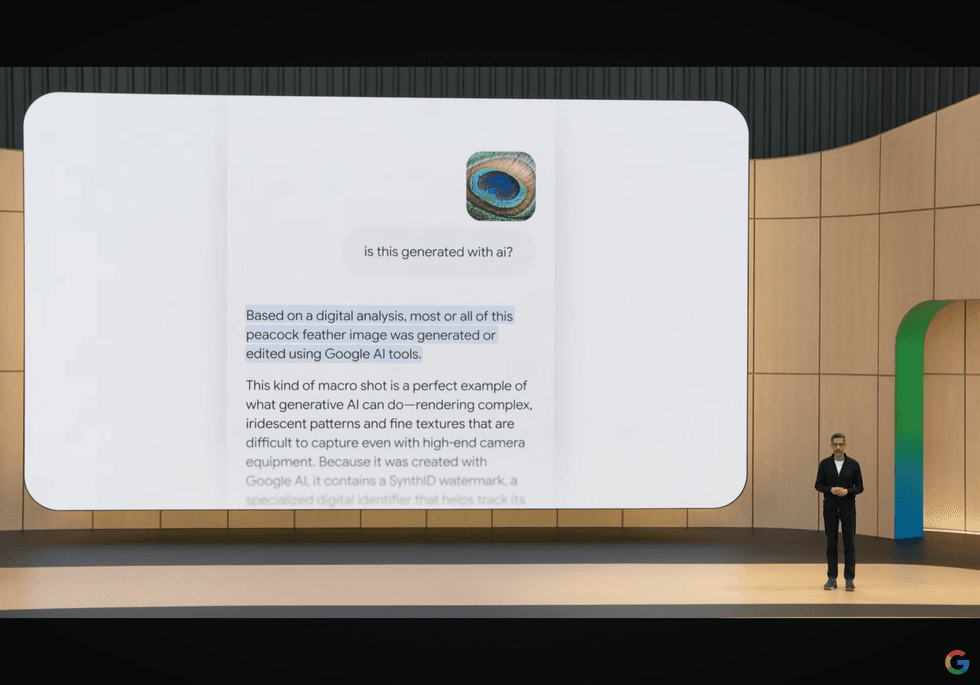
SynthID is Google's tool for identifying AI-generated content
|The system scans uploaded media for invisible SynthID watermarks embedded in AI-generated content. If a watermark is detected, the platform highlights the sections most likely to contain AI-generated elements, helping users better assess the authenticity of what they see online.
Mr Pichai said: "Since launch, Synth ID has now watermarked over 100 billion images and videos, along with 60,000 years of audio assets. Millions of people are using our Synth ID detector in the Gemini app to verify AI-generated content. We are now going a step further and adding content credentials verification across products.
"We want more people to have easy access to these tools, so we are expanding both Synth ID and content credentials verification to Search and Chrome."
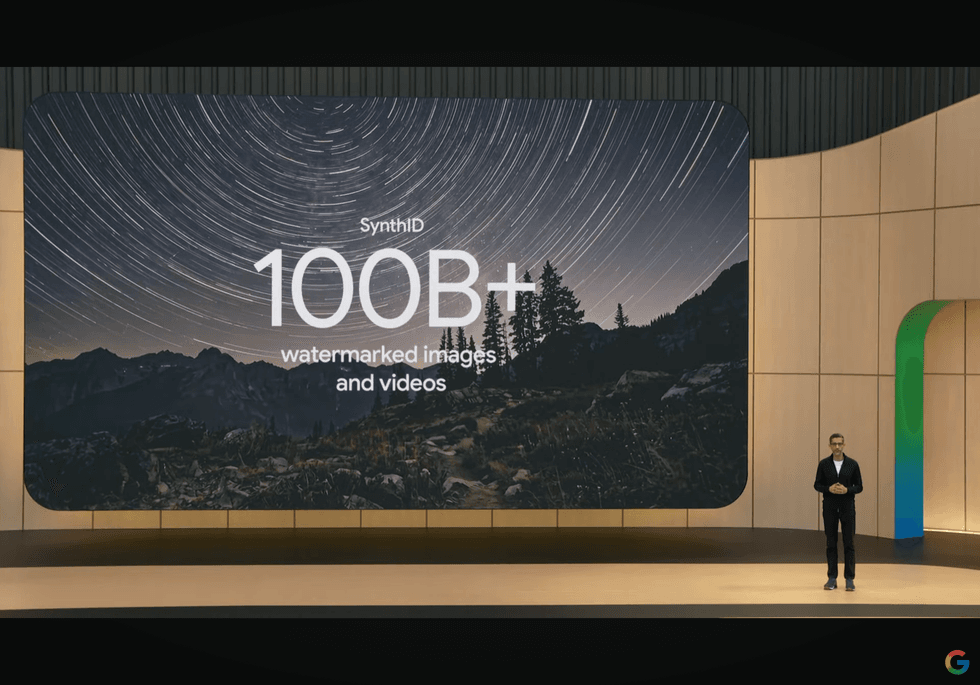
Google is expanding its SynthID Detector technology into the Chrome browser, which will help spot if photos have been made with AI
|The expansion of this feature arrives at a good time, too. Mr Pichai said, “Research shows people can correctly identify high-quality deepfake videos only about 25% of the time.”
To use Chrome to help identify fake images, Mr Pichai said: "You can simply circle to Search or right-click in Chrome and ask, was this generated with AI? And you'll get a clear response along with other helpful context."
Mr Pichai used the example of a viral photo that displayed him seated, eating a hamburger. While he knows that this photo was fake, it fooled several users when it was first posted across social media platforms.
Google's Gemini app is set to get this feature beginning today, with expansions into Chrome and Search expected in the "coming months."