









Football has witnessed its fair share of ugly matches. Fierce rivalries. Reckless tackles. Mass confrontations.
But no World Cup game has ever descended into chaos quite like Chile versus Italy in 1962.
Known forever as the "Battle of Santiago", the match remains the most violent contest in World Cup history. More than six decades later, it is still spoken about with a mixture of disbelief and fascination.
The remarkable thing is that the bad blood started long before a ball was kicked.
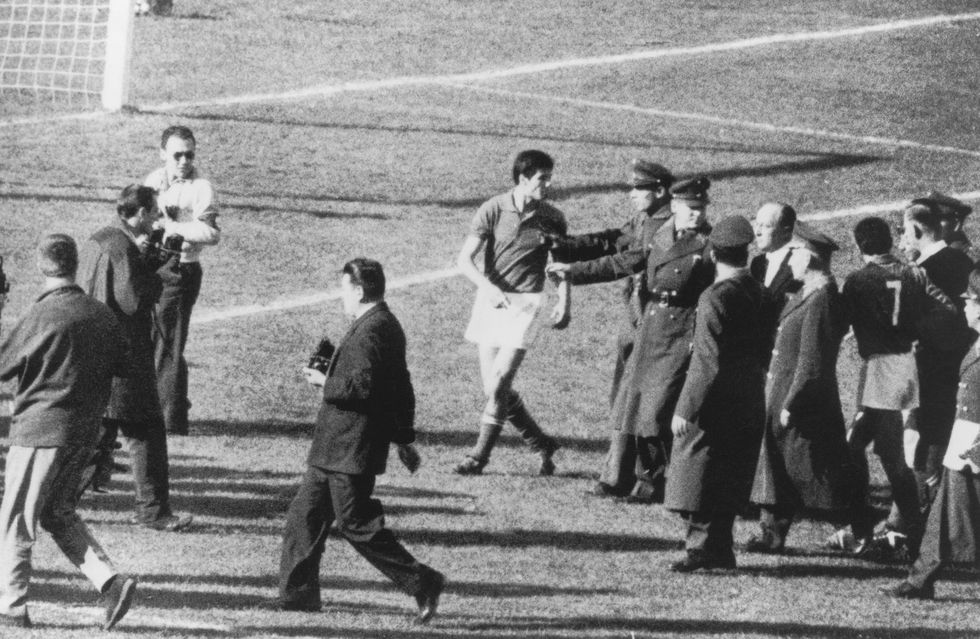
Police had to intervene after fights broke out on the pitch between Chile and Italy
|GETTY
Chile was hosting the 1962 World Cup just two years after a devastating earthquake had killed thousands and left much of the country in ruins.
When Italian journalists arrived to cover the tournament, some produced scathing reports about their hosts. They described Chile as impoverished, underdeveloped and backward.
LATEST DEVELOPMENTS
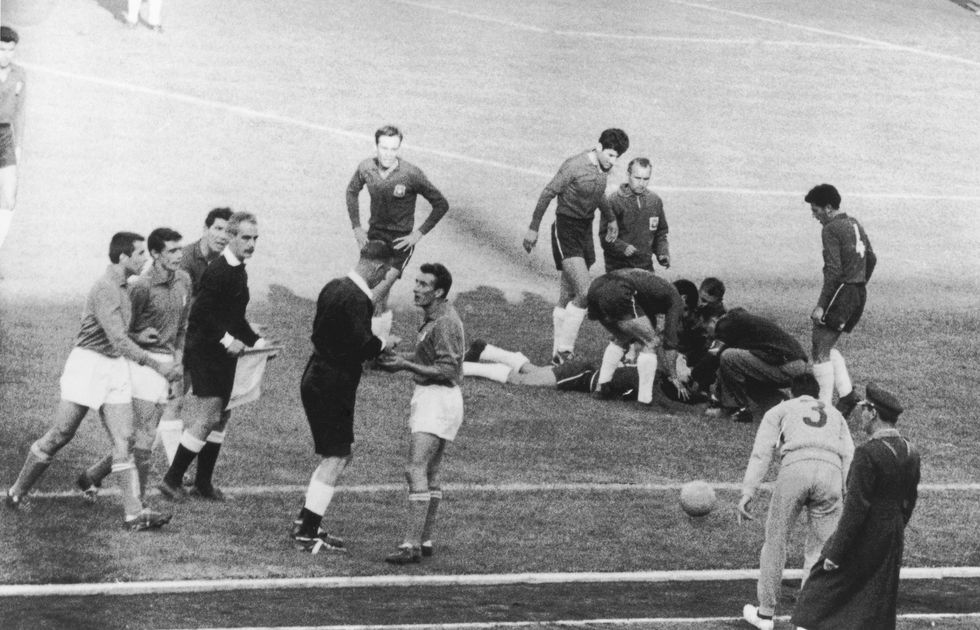
It took just 12 seconds before the first foul in a match later billed 'The Battle of Santiago'
|GETTY
One article even suggested the country was unsuitable for staging a World Cup.
The reaction in Chile was explosive.
Local newspapers hit back furiously. Italian journalists were branded arrogant outsiders. Italians themselves were denounced as fascists, gangsters and mafiosi.
By the time the two national teams met in Santiago on June 2, tensions were already at boiling point. What followed was less a football match than a public brawl.
The opening foul arrived after just 12 seconds. That set the tone for everything that followed.
Challenges flew in from every direction. Players kicked, punched, elbowed and wrestled one another with astonishing regularity.
The atmosphere inside the stadium became increasingly hostile as the game spiralled out of control.
English referee Ken Aston quickly found himself facing an impossible task.
Within minutes, Italy's Giorgio Ferrini was sent off for a foul. But Ferrini refused to leave the field.
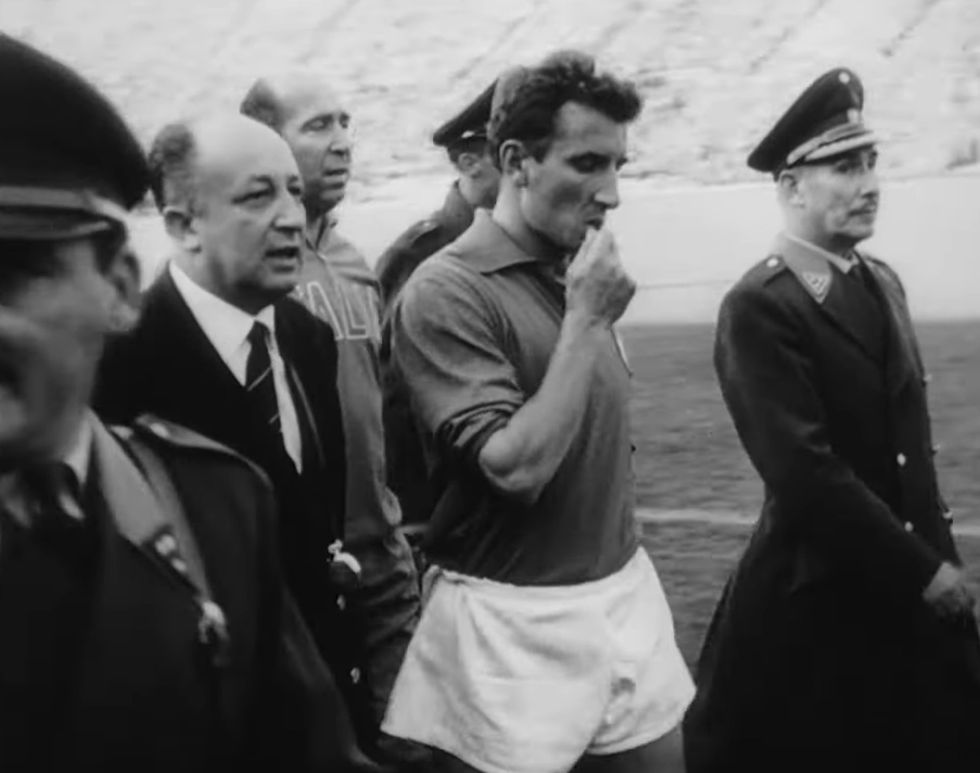
Italy's Giorgio Ferrini was sent off but refused to leave the pitch, as police officers were forced to escort him off the pitch
|FIFA
Armed police officers were forced to enter the pitch and physically escort him away while thousands of spectators roared from the stands.
It would not be the last time police intervention was required.
In total, armed officers entered the field four separate times to restore order as tempers repeatedly exploded.
The football itself became almost irrelevant.
The most notorious moment came when Chilean midfielder Leonel Sanchez struck Italian defender Mario David in the face with a vicious left hook. The punch broke David's nose.
Amazingly, Sanchez was not sent off. But David would later be dismissed instead after retaliating with a kick.
Television cameras captured the mayhem in full. Around the world, viewers watched in disbelief as players traded blows and police struggled to maintain control.
The BBC commentator David Coleman famously described the contest as "the most stupid, appalling, disgusting and disgraceful exhibition of football".
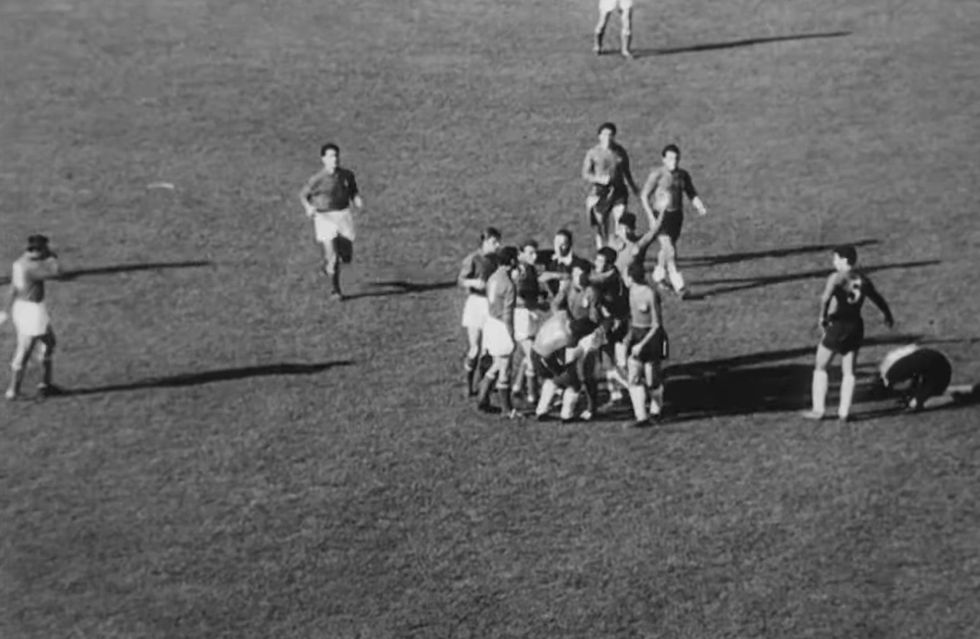
The match was described as "the most stupid, appalling, disgusting and disgraceful exhibition of football"
|FIFA
Few who watched disagreed. Chile eventually won the match 2-0. Yet the scoreline was little more than a footnote. The violence overshadowed everything.
What gives the Battle of Santiago its lasting significance is the impact it had on football itself.
Referee Ken Aston was deeply troubled by the confusion surrounding disciplinary decisions during the game. Players often appeared not to understand whether they had been cautioned, warned or dismissed.
Several years later, while driving through London and observing traffic lights, Aston came up with a revolutionary idea.
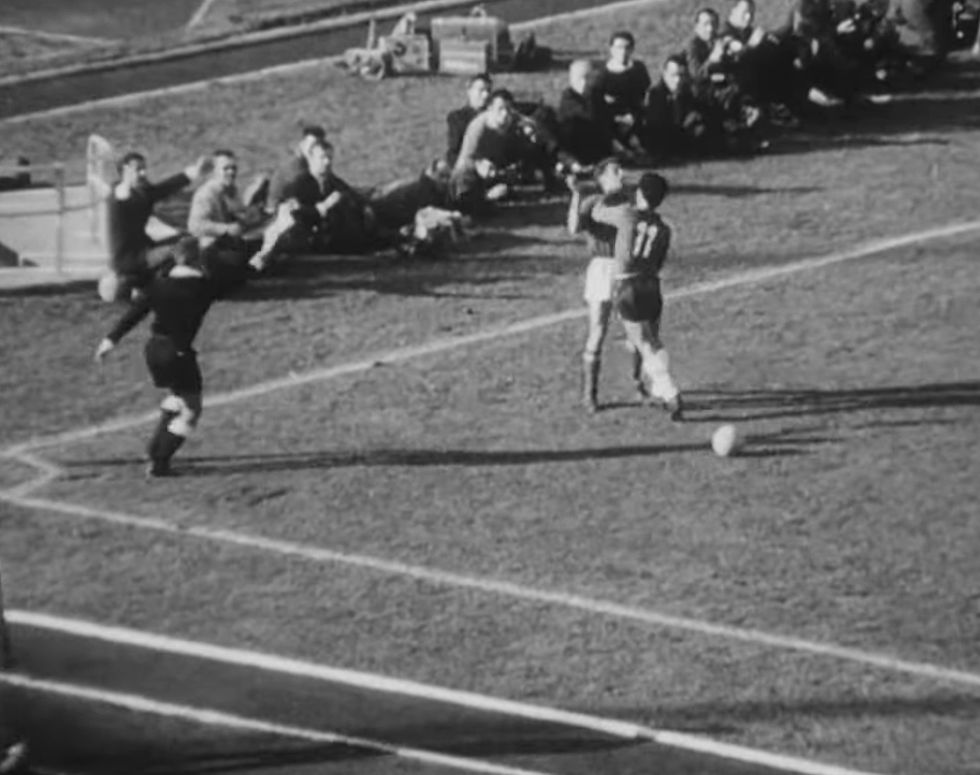
The match later would lead to one of the biggest rule changes in football history - the introduction of yellow and red cards
|FIFA
Yellow would mean caution. Red would mean stop. The yellow and red card system was eventually introduced to international football and transformed the way referees controlled matches.
In that sense, one of football's most important innovations can be traced directly back to the chaos of Santiago.
More than 60 years on, the Battle of Santiago remains unmatched.
It was a World Cup game fuelled by national resentment, media hostility and simmering anger.
It featured punches, police interventions, broken noses and scenes that would be unimaginable in the modern game.
And while football has changed dramatically since 1962, the Battle of Santiago still stands as the sport's ultimate cautionary tale — the day a World Cup match became an all-out war.