









Scientists have made an major breakthrough in solar physics after witnessing an unprecedented cosmic weather event.
Astronomers carried out an unprecedented 94-day continuous observation of a colossal sunspot that sparked Earth's most severe geomagnetic storm in over two decades.
The active region, designated AR 13664, was first detected in April 2024 and rapidly expanded to a diameter 15 times that of our planet by early May.
Between May 10 and 13, 2024, the sunspot fired a succession of coronal mass ejections towards Earth, triggering a G5 "extreme" geomagnetic storm that produced spectacular auroras visible across the globe.
Research published on December 5 in the journal Astronomy & Astrophysics documented the sunspot's behaviour across just over three complete solar rotations.
The investigation revealed that AR 13664 produced a staggering 969 solar flares during the observation period.
Among these eruptions were 38 "X-class" flares, the most intense category of solar explosion, alongside 146 M-class events capable of affecting Earth's magnetic field.
Researchers noted that Earth largely escaped further disruption because the majority of the most powerful blasts were aimed away from our planet.
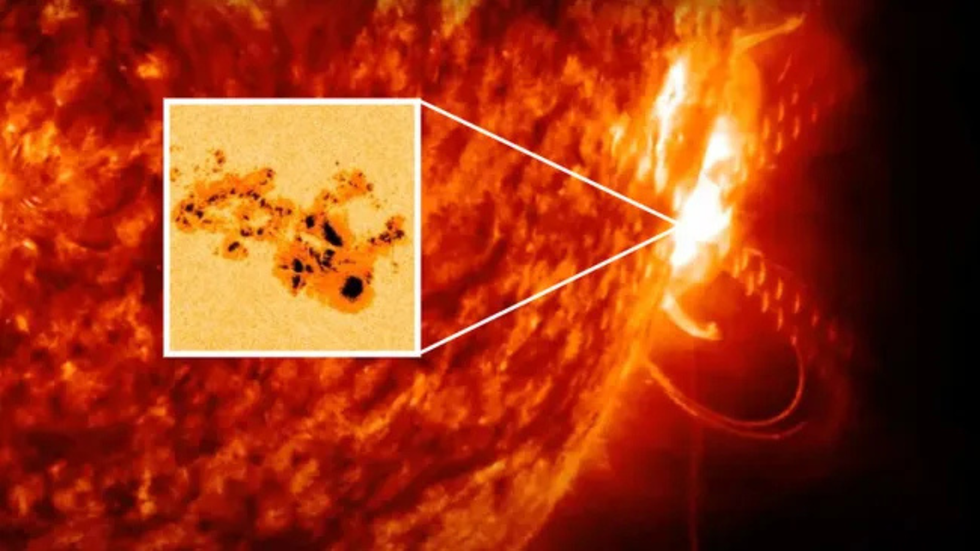
The active region, designated AR 13664, was first detected in April 2024 and rapidly expanded
|NASA
Nasa's Solar Orbiter spacecraft, which orbits the sun, enabled scientists to monitor the sunspot even when it rotated beyond Earth's line of sight.
The most formidable eruption detected was a suspected X16.5 flare that occurred on May 20, 2024, when the sunspot was positioned on the sun's far side from Earth.
This blast would substantially exceed an X9 flare recorded on 3 October 2024, which currently holds the official record as the strongest solar explosion in eight years.
However, because AR 13664's massive eruption was partially hidden by its location on the opposite side of the sun, scientists cannot formally confirm it as the most powerful flare of the current solar cycle.
SPACE - READ THE LATEST:
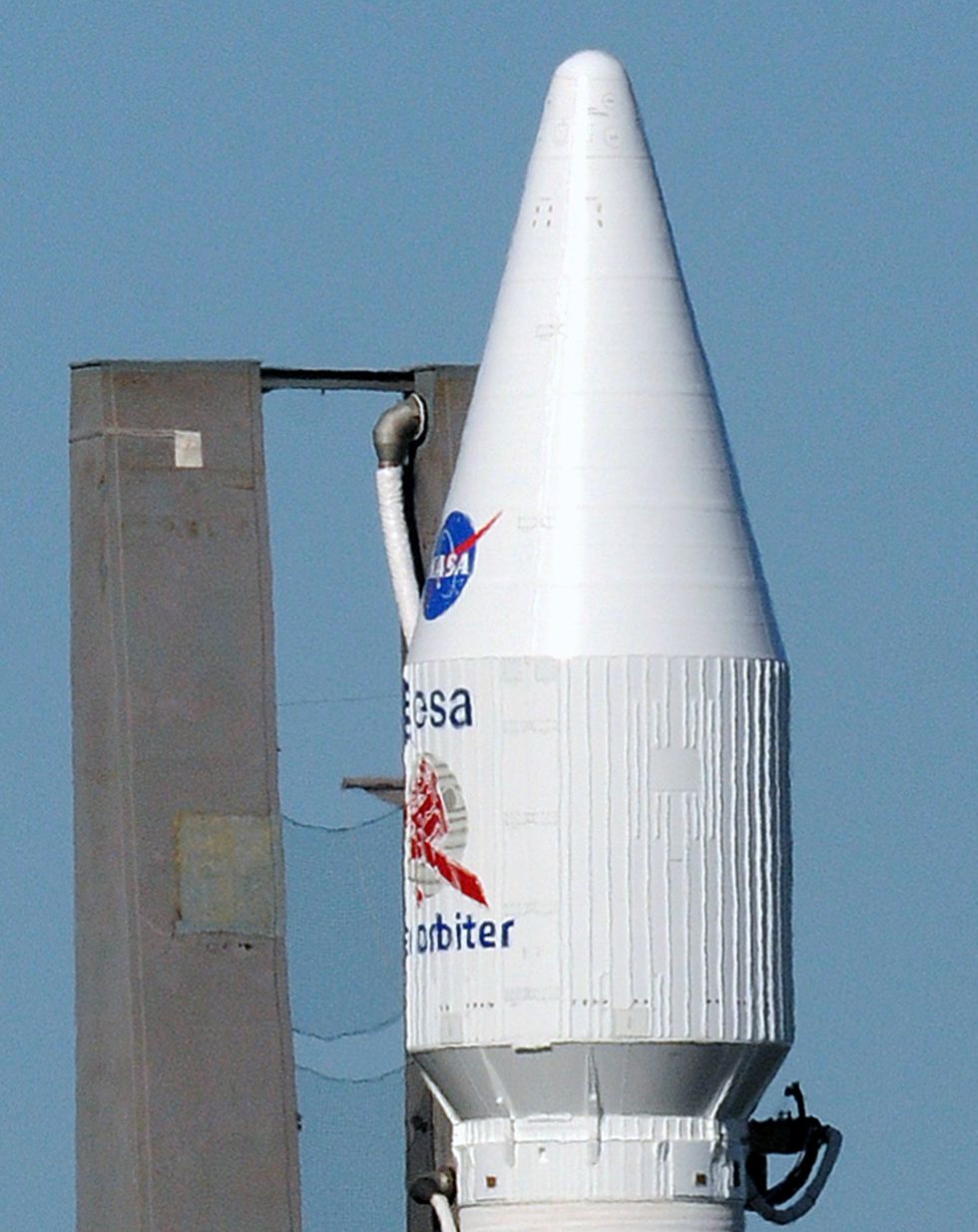
Nasa's Solar Orbiter spacecraft enabled scientists to monitor the sunspot even when it rotated beyond Earth's line of sight
|GETTY
The finding nonetheless suggests the sunspot may have quietly produced an unrivalled outburst.
The sunspot's remarkable journey underscores the immense energy of our star during solar maximum, the peak phase of its roughly eleven-year cycle when sunspot numbers and storm activity surge dramatically.
The recent maximum, which began in early 2024 ahead of predictions, proved exceptionally intense, featuring a 23-year high in visible sunspots and a record tally of X-class flares.
Study lead author Dr Ioannis Kontogiannis, a solar physicist at ETH Zurich, described the research as "a milestone in solar physics".
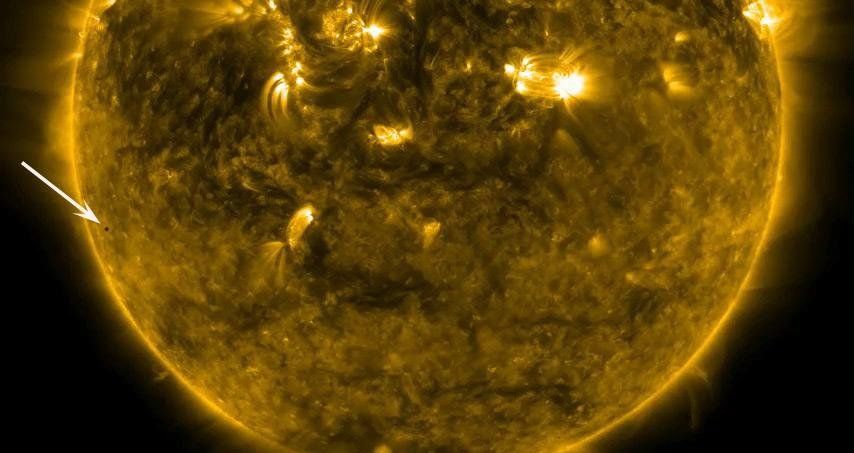
Sunspots are caused by intense magnetic activity on the surface of the mega star
|NASA
He noted that his team had successfully overseen "the longest continuous series of images ever created for a single active region".
"We live with this star, so it's really important we observe it and try to understand how it works and how it affects our environment," Dr Kontogiannis said.
Sunspots are caused by intense magnetic activity on the surface of the mega star.
By studying sunspots, astronomers are better equipped to better understand and prepare for major space weather events.
Our Standards: The GB News Editorial Charter