










A Nasa spacecraft weighing approximately 1,323 lbs is set to crash back through Earth's atmosphere this evening following almost 14 years orbiting the planet.
The US Space Force anticipates Van Allen Probe A will make its uncontrolled descent at roughly 7.45pm Eastern Time (11.45pm GMT), though this estimate carries a margin of uncertainty spanning 24 hours.
Given the satellite's tremendous velocity of thousands of miles per hour, combined with such a broad reentry window, pinpointing where any surviving fragments might land remains impossible.
While the vast majority of the craft should disintegrate during its atmospheric reentry, certain components are expected to withstand the fiery descent.
The twin spacecraft departed Cape Canaveral, Florida, on August 30, 2012, embarking on what was initially planned as a two-year investigation of the Van Allen belts.
These radiation belts, named after scientist James Van Allen, consist of charged particles held in place by Earth's magnetic field and serve as a crucial shield against cosmic radiation and solar storms.
The mission ultimately extended to nearly seven years, yielding remarkable scientific insights until both probes exhausted their fuel supplies in 2019.
Without propellant, the craft could no longer position itself towards the sun, prompting NASA to conclude operations.
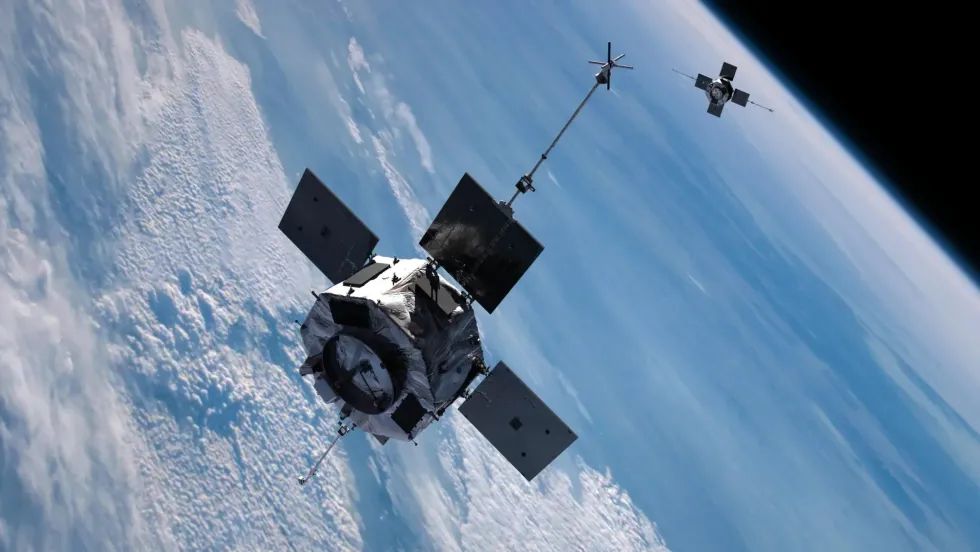
The Van Allen Probe A, a Nasa spacecraft weighing approximately 1,323 lbs, is set to crash back through Earth's atmosphere this evening following almost 14 years orbiting the planet
|NASA
Scientists had originally calculated that the satellite would not return to Earth until 2034, making this descent eight years ahead of schedule.
Those projections, however, preceded an unexpectedly vigorous solar cycle.
In 2024, researchers confirmed the sun had entered its solar maximum phase, unleashing powerful space weather phenomena.
This heightened solar activity expanded Earth's upper atmosphere, creating a substantially greater drag on orbiting objects than initially anticipated.
LATEST DEVELOPMENTS
The increased resistance effectively pulled the defunct probe towards Earth at an accelerated rate.
Meanwhile, Van Allen Probe B remains in orbit and is not anticipated to make its own atmospheric return before 2030.
The probability of anyone sustaining injury from the satellite's falling debris stands at roughly 1 in 4,200, equating to approximately 0.02 per cent.
This low risk stems largely from the fact that oceans cover some 70 per cent of the planet's surface, meaning any surviving pieces will most probably splash down harmlessly in open water.
While rare, space debris reaching Earth is not unprecedented. Over a 40-year period, an estimated 5,400 tons of material is thought to have survived atmospheric reentry.
Only one person has ever been confirmed to have been struck by manufactured space debris: Lottie Williams of Tulsa, Oklahoma, who in January 1997 was hit on the shoulder by a six-inch metal fragment whilst walking through a park. She escaped uninjured.
Our Standards: The GB News Editorial Charter