










Nasa has shown off an asteroid-hunting spacecraft set to help defend Earth from the threat of so-called "city-killer" asteroids in space.
The Near-Earth Object Surveyor - dubbed Neo Surveyor - represents the US space agency's first infrared telescope built specifically for detecting the cosmic threats.
The instrument is designed to uncover even the darkest objects in space, including those concealed by the Sun.
Scientists have so far identified fewer than half of the estimated city-killer asteroids that exist.
Without the £1.3billion telescope, locating all of them would require an additional three decades, according to the Planetary Society.
The organisation's director, Casey Dreier, said: "Because our night skies are now crowded with thousands of bright satellites and asteroids are tiny and dark, ground-based telescopes have trouble finding near-Earth objects quickly.
"Placing a small telescope in space solves both these problems."
"Within 10 years this telescope is predicted to find more [of them] than found in the last 50 years," he added.
 Nasa shows off asteroid-hunting spacecraft set to help defend Earth from 'city-killer' meteors |
 NASA
The telescope is scheduled to lift off in September 2027.
It will journey approximately one million miles from Earth to a gravitationally stable position known as the Sun-Earth Lagrange point, or L1 point.
The mission is expected to last for a minimum of five years.
Similar to Nasa's James Webb Space Telescope, the Neo Surveyor will identify objects through their thermal signatures.
SPACE - READ THE LATEST:
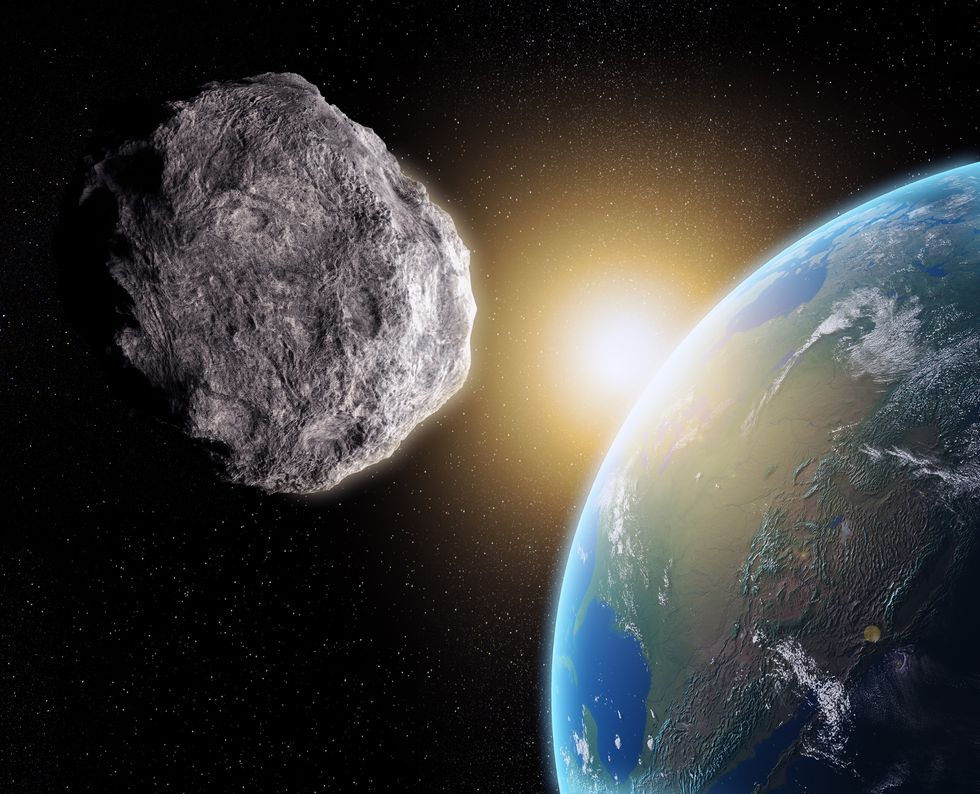
Scientists have so far identified less than half of the estimated city-killer asteroids that exist
| GETTYHowever, the heat emitted by asteroids and comets originates from solar warming rather than internal processes.
"Earth-approaching asteroids and comets are warmed by the sun, and they give off heat that the Neo Surveyor mission will be able to pick up," explained the University of Arizona's Professor Amy Mainzer, who leads the mission.
"Even asteroids as dark as a chunk of coal won't be able to hide from our infrared eyes."
The telescope's forerunner, Neowise, also possessed infrared detection capabilities but was not originally constructed for asteroid hunting when it launched in 2009.
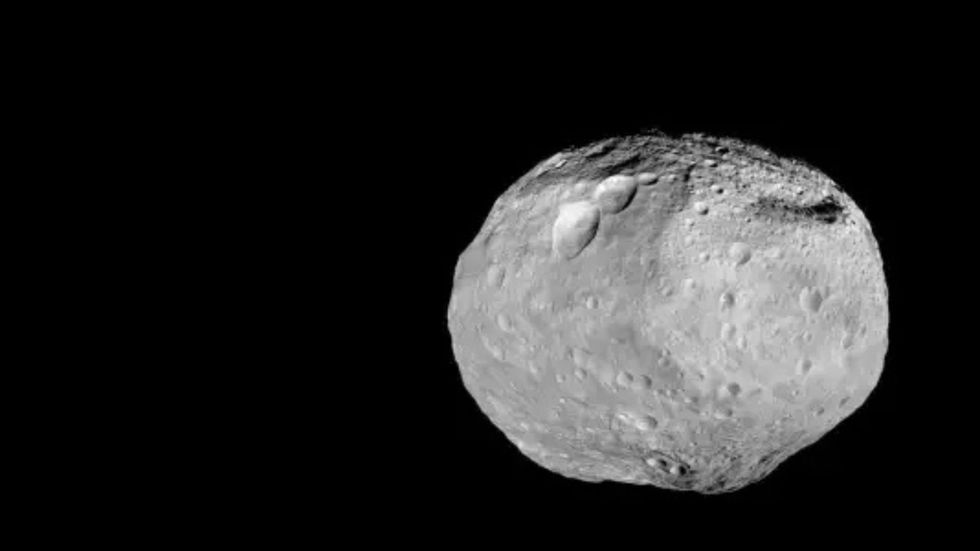
The Surveyor aims to locate 90 per cent of objects measuring 460 feet or larger in diameter within 10 years of launch
| NASAThat instrument discovered over 34,000 previously-unknown asteroids and more than 3,000 near-Earth objects before its mission concluded in 2024.
The European Space Agency says astronomers have now detected more than 40,000 near-Earth asteroids.
The Neo Surveyor aims to locate 90 per cent of objects measuring 460 feet or larger in diameter within 10 years of launch.
"We think there are about 25,000 Neos large enough to wipe out an area like Southern California," Prof Mainzer said.
"Once they get bigger than about 450 feet in diameter, they can cause severe regional damage. We want to find these, and as many smaller ones as possible."
The spacecraft features a 20-foot sun shade to prevent solar interference with observations.
A 12-foot protective enclosure shields the technology, whilst two advanced cameras incorporate lenses nearly 20 inches wide.
Engineers are conducting focus tests at the Space Dynamics Laboratory in Utah within a chamber replicating deep space conditions.
"Neo Surveyor is a one-of-a-kind mission designed to solve a specific challenge: finding asteroids and comets that pose the greatest risk to Earth," said Jim Fanson, the project manager at Nasa's Jet Propulsion Laboratory.
Mission data will be transmitted to the California Institute of Technology's Neo Surveyor Survey Data Centre before being shared with the international Minor Planet Center.