









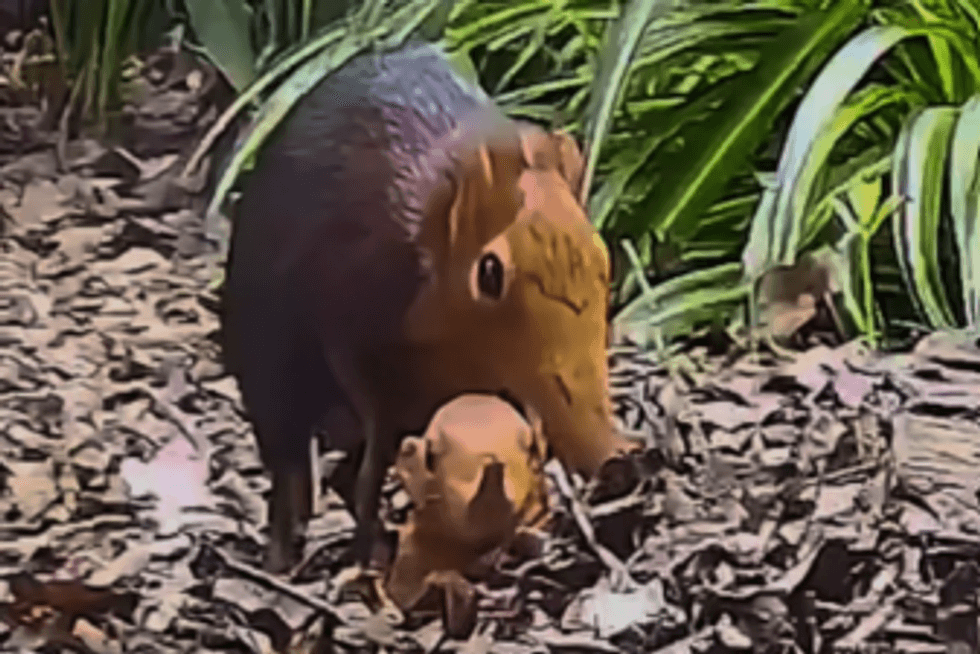
Hertfordshire Zoo has achieved a remarkable second consecutive breeding success with its rare black and rufous sengi, commonly known as elephant shrews.
The twin pups arrived on April 22 to parents Nuru and Mala, just months after the pair produced the first-ever UK-born litter of this unusual African species in March.
Weighing merely 30 grams at birth — equivalent to a standard first-class letter — the tiny newcomers remained hidden in their family nest box for several weeks before emerging this week.
Keepers confirmed the births using non-invasive infrared cameras after observing behavioural changes in mother Mala.
Tyler Whitnall, Managing Director at Hertfordshire Zoo, described the achievement as extraordinary.
"To have one historic birth was a privilege, but to welcome a second litter so quickly is beyond anything we could have hoped for," he said.
"It is a massive boost for the captive population of this species within the UK and Europe."
Hertfordshire Zoo has achieved a remarkable second consecutive breeding success with its rare black and rufous sengi
|HANDOUT
The facility now houses the majority of Britain's elephant shrew population, with fewer than ten of these animals residing anywhere in the country.
Such rapid, successive breeding is exceptionally uncommon in captivity for the species, offering researchers valuable insights into their reproductive patterns.
Despite their common name, elephant shrews are not actually related to shrews at all.
LATEST DEVELOPMENTS
Scientific research has placed them within the Afrotheria superorder, meaning they share closer evolutionary ties with elephants, manatees, and aardvarks than with rodents or insectivores.
Their distinctive flexible snouts and remarkable speed have previously captured attention online, generating worldwide interest in this lesser-known species.
The young sengi are now flourishing, having started to sample solid food alongside their milk diet. Increasingly confident, they have begun exploring their enclosure with their older siblings and can now be seen by zoo visitors.
Our Standards: The GB News Editorial Charter