










A shark with a face "not even a mother would love" has been spotted at sea by some of the world's leading marine scientists.
Live goblin sharks were captured swimming in their natural deep-sea environment for the first time in recorded history, ending decades of mystery surrounding these ancient predators.
The remarkable spot, made by research teams from Australia and Hawaii, were published in the Journal of Fish Biology in a landmark moment for marine science.
Prof Alan Jamieson, director of the Minderoo-UWA Deep-Sea Research Centre and co-author of the study, likened the extraordinary discovery to encountering the near-mythical colossal squid.
"They've captured the imagination of so many people, but we've never really seen them alive," he said. "We actually know virtually nothing about them."
The species has existed for approximately 125 million years, making it a genuine "living fossil" that swam alongside dinosaurs.
The two sightings occurred thousands of kilometres apart in the central Pacific, with the first captured in 2019 near Jarvis Island, roughly 1,200 miles south of Hawaii.
A remotely operated vehicle called Hercules filmed a goblin shark at 1,237 metres depth during that expedition, though the footage was initially overlooked because researchers did not believe the species inhabited that region.
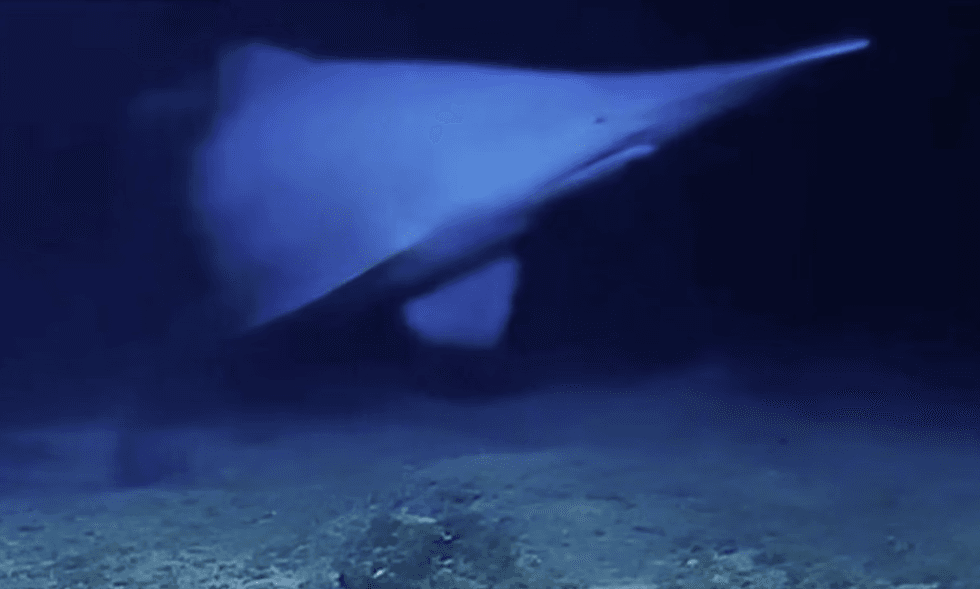
Scientists offered a damning review of the shark's aesthetics
|MINDEROO-UWA DEEP SEA RESEARCH CENTRE
Lead author Aaron Judah from the University of Hawaii only identified the creature after reviewing archived material from the Ocean Exploration Trust dive.
The second observation came during the 2024 Inkfish Open Ocean Expedition aboard the R/V Dagon, when cameras recorded an individual at 1,997 metres in the Tonga Trench.
This depth exceeded previous records by 700 metres, establishing it as the deepest-known sighting of any white shark species.
Goblin sharks possess one of the most unusual appearances in the animal kingdom, with elongated blade-like snouts packed with electroreceptors that detect prey in complete darkness.
Their jaws can extend outward at remarkable speed in what scientists describe as "slingshot feeding" – a mechanism that has drawn comparisons to the creatures in the film Alien.
LATEST DEVELOPMENTS:
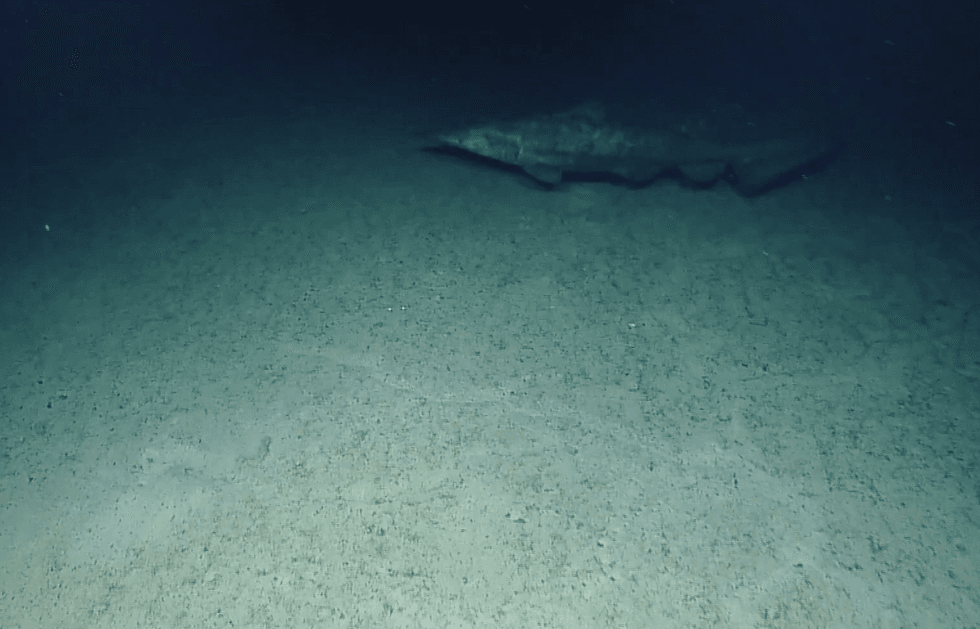
Underwater footage captured the extraordinary find
|MINDEROO-UWA DEEP SEA RESEARCH CENTRE
"It's the most bizarre animal," Prof Jamieson added.
"They have this incredible mouth that kind of protrudes down from the head, and does a kind of slingshot feeding thing."
Prof Culum Brown, a fish expert at Macquarie University, offered a much blunter assessment of their appearance.
"They are ridiculously horrendous to look at," he said. "Not even their mother would love their faces."
These sharks can grow up to seven metres long, with flabby pink-grey bodies and small fins suited to their slow-paced existence in the deep.
Prior to these discoveries, goblin sharks were believed to inhabit only narrow coastal zones off western America, Australia and Japan in the Pacific, with isolated populations in the Atlantic and Indian Oceans.
Both central Pacific sightings substantially expand that known geographic range, demonstrating what Prof Jamieson described as "a classic case of a deep sea animal that has very low abundance, but an absolutely massive geographical range."
The footage itself – just over 20 seconds captured during 50 days of continuous filming – stresses how extraordinarily difficult these creatures are to observe.