









A revolutionary satellite network is enabling scientists to monitor wildlife behaviour from orbit in an effort to protect endangered species such as cheetahs, rhinos and elephants from poachers.
Dubbed the "Internet of Animals", the Icarus system tracks animal movements on a global scale, allowing conservationists to identify when human intruders enter protected areas.
Researchers at Okambara Elephant Lodge, a private wildlife reserve 100 miles from Namibia's capital Windhoek, have been conducting experiments to develop real-time tracking capability.
Sierra Jane Mattingly, ecologist at the Max Planck Institute of Animal Behavior in Germany, described the 169 square kilometre reserve as the "perfect site to test the system."
At Okambara, five per cent of all large animals now carry GPS tags that record their location around the clock.
During simulated poaching exercises conducted over three days in mid-2024, researchers fired 30 rounds while an overhead drone captured the animals' responses.
Each species displayed characteristic flight behaviours when threatened - springbok antelope bounded away, zebras galloped in panic, and wildebeest stampeded hundreds of metres across the reserve's salt plains.
Giraffes, however, proved useful as natural lookouts, typically remaining calm and observing threats from their elevated vantage point, with their heads oriented towards the danger.
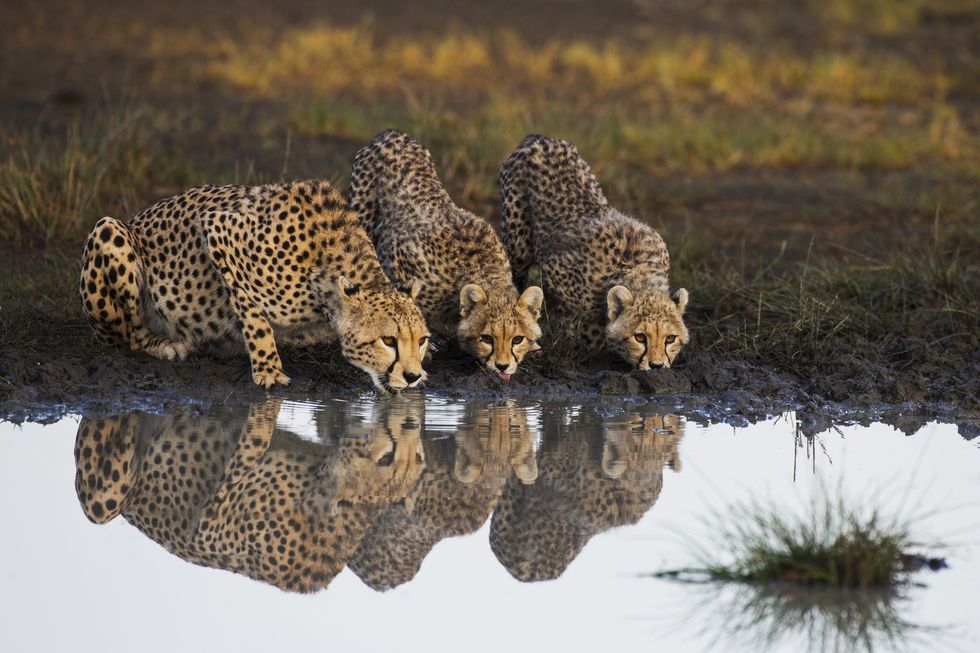
Dubbed the 'Internet of Animals', the Icarus system tracks animal movements on a global scale
| GETTY IMAGES"We have the other animals protecting the rhinos because they tell us when the butchers are coming," said Martin Wikelski, the ornithologist leading the project and head of the Max Planck Institute.
By fitting ear-mounted tags to various species, these animals become unwitting guardians of more vulnerable creatures like rhinos.
The tracking technology has advanced dramatically since the first animal tag was fitted to an elk in Wyoming in 1970, when devices weighed 10 kilograms.
LATEST DEVELOPMENTS
Modern tags have shrunk to the size of a grain of rice, small enough for butterflies to carry, and can monitor GPS position, heart rate, body temperature and atmospheric pressure.
Timm Wild, an electrical engineer at Max Planck, explained how supercapacitors now power these sensors, enabling what he calls "lifetime tracking" of long-lived species.
The first Icarus satellite launched in November aboard a SpaceX Falcon 9 rocket from California - part of a €70 million EU-backed fleet of scientific satellites.
A second microsatellite named Raven reached orbit this month, and following several months of testing, the system will begin receiving data from tagged animals this summer.
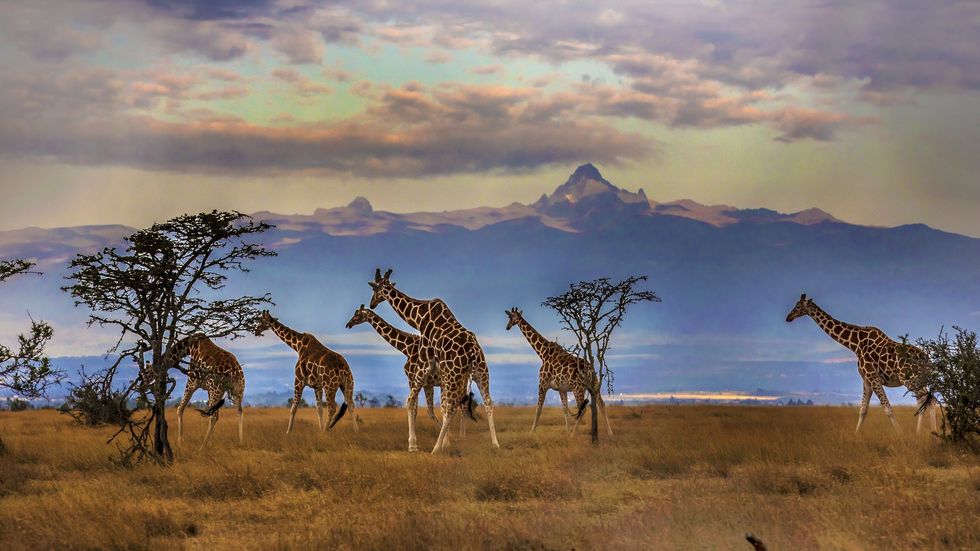
By fitting ear-mounted tags to various species, giraffes become unwitting guardians of more vulnerable creatures like rhinos
| GETTYAt Kruger National Park in South Africa, home to 3,000 rhinos, the technology has already demonstrated potential by helping rangers locate 80 wild dogs trapped in snares.
However, Louis van Schalkwyk, a wildlife veterinarian at Kruger, acknowledged the system is not yet operational for daily anti-poaching use, noting: "We don't have an alarm going off here saying there's 10 zebras telling us there's someone walking in the bush."
The park has fitted approximately 3,000 ear tags to 1,500 animals across multiple species, though its vast 19,485 square kilometre expanse presents significant coverage challenges.
Mr Wikelski aims to tag 100,000 animals worldwide by 2030, with the satellite network expected to prove most valuable in remote regions like the Congo Basin and Amazon where ground-based receivers are impractical.