









The four Artemis II astronauts have been seen struggling to walk after their return to Earth from the Moon.
Reid Wiseman, Victor Glover, Christina Koch and Jeremy Hansen re-entered the atmosphere at speeds approaching 25,000mph on Friday afternoon.
Their capsule touched down gently at 19mph in the Pacific near San Diego at 5.07pm, local time.
After being pulled from the Orion module, the crew were transported by helicopter to the USS John P Murtha, an amphibious Navy vessel.
Each astronaut needed support from two aides while crossing the deck, with a wheelchair following close behind as a precaution.
Nasa quickly confirmed the astronauts were in "excellent shape" after landing.
Commander Wiseman reported all four crew members were "stable" and "green".
A day after splashdown, the crew appeared at Ellington Air Force Base in Houston, Texas to address the world for the first time since their record-breaking journey.
Nasa chief Jared Isaacman welcomed them home with an acknowledgement of the challenges involved in space travel.
"There is no doubt there is a price to pay when it comes to exploring the cosmos, but there is also a return, a return in the jobs that creates the technologies that improve life here on earth and the inspiration that sparks all those who choose to follow and to people all around the world who look up and dream about what is possible. The long wait is over," he said.
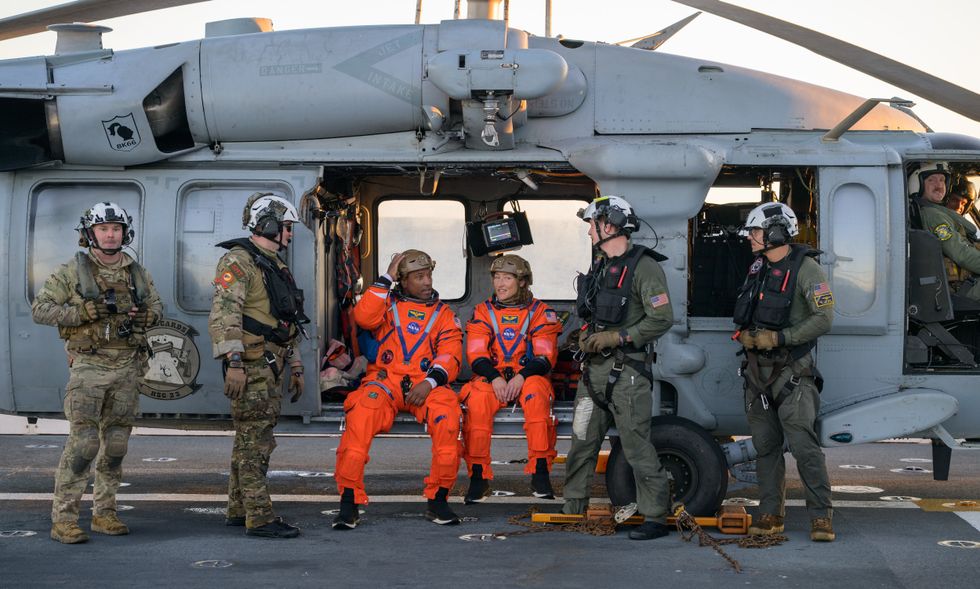
Nasa confirmed the astronauts were in 'excellent shape' after landing
|NASA
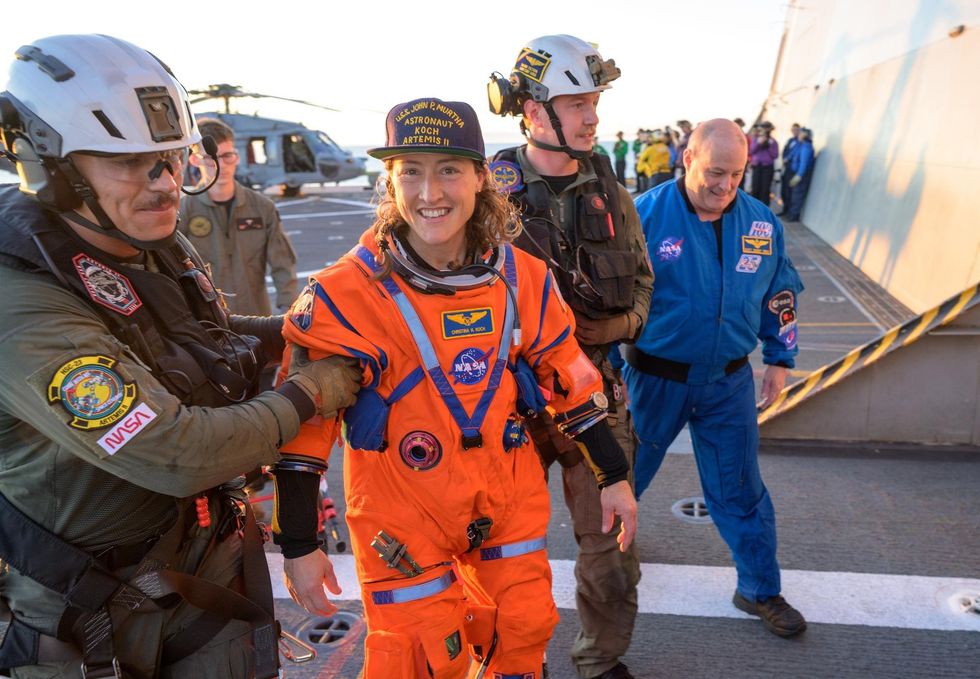
Astronauts needed support from two aides while crossing the deck
|NASA
"After a brief 53-year intermission, the show goes on, and Nasa is back in the business of sending astronauts to the moon and bringing them home safely."
Extended periods in microgravity can lead to health issues for returning astronauts.
These include inner-ear balance issues, nausea, immune system complications, sleep disruption and vision difficulties caused by blood pooling in the head and affecting the optic nerve.
Weightlessness can also lead to significant physical deterioration - which is why the lunar module carried a compact, 30-pound flywheel exercise device on board.
Muscle mass can drop by 20 per cent after just a fortnight in space.
ARTEMIS II - AS IT HAPPENED:
- Watch the historic moment Nasa's Artemis II mission blasted off to the Moon
- Artemis II crew in tears after breaking Apollo 13 record by travelling 248,655 miles from Earth
- 'No words to describe what we're looking at!' Artemis II crew reveal 'sci-fi' sighting in space
- When is Artemis III? Nasa to make major next step in returning to the Moon after historic success
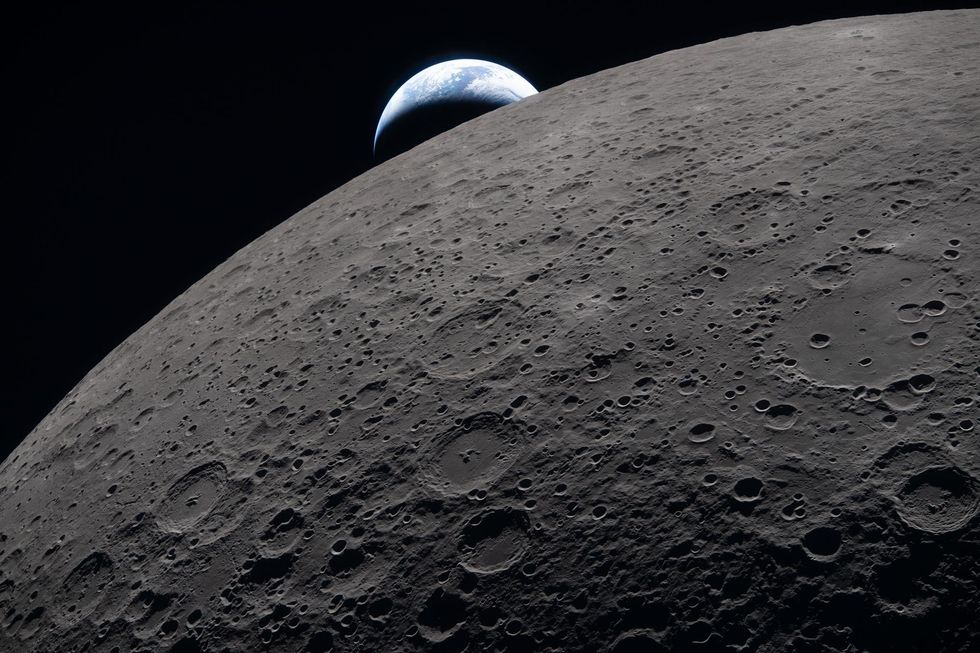
An astronaut's muscle mass can drop by 20 per cent after just a fortnight in space
|NASA
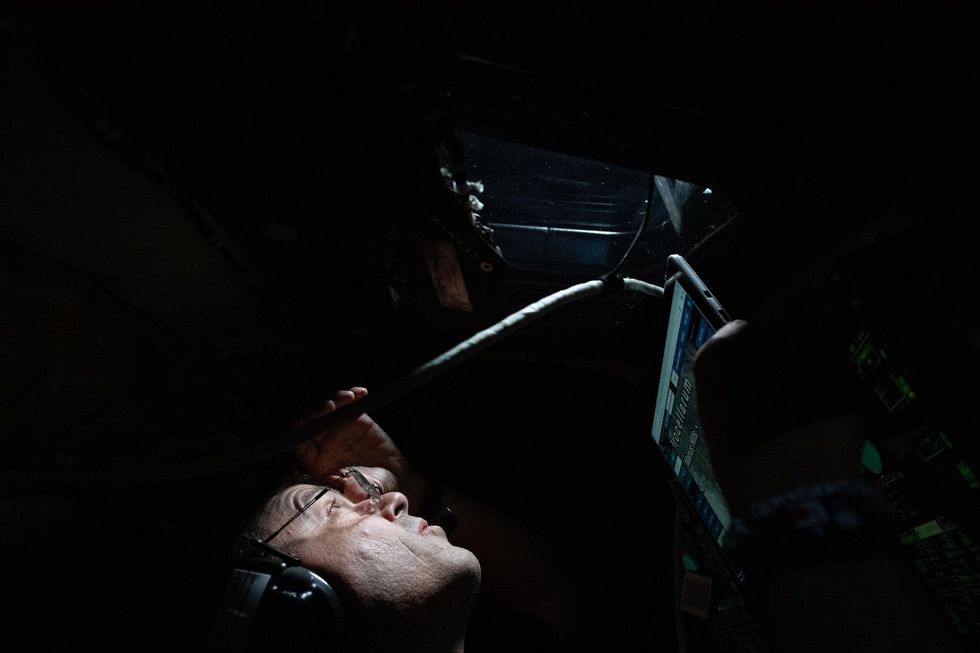
PICTURED: Reid Wiseman peers out of the Orion module over the Moon. He and his crewmates should avoid serious complications given their relatively brief 10-day mission
|NASA
Astronauts also lose approximately two per cent of their bone density each month because their bodies no longer need skeletal support in a weightless environment.
The longer space travellers remain off-planet, the more vulnerable they become to gravity-related health issues upon return.
However, the Artemis II crew should avoid serious complications given their relatively brief 10-day mission.
The astronauts are scheduled to complete an "obstacle course" including ladder climbing to assess their readjustment to Earth's gravity and collect data for future missions.
Speaking on Saturday, Mr Wiseman joked that he had "absolutely no idea what to say" when addressing the crowd.
"Twenty-four hours ago, the Earth was that big out the window, and we were doing Mach 39, and here we are back at Ellington at home," he said.
He went on to described the bond between the four crew members as "forever".
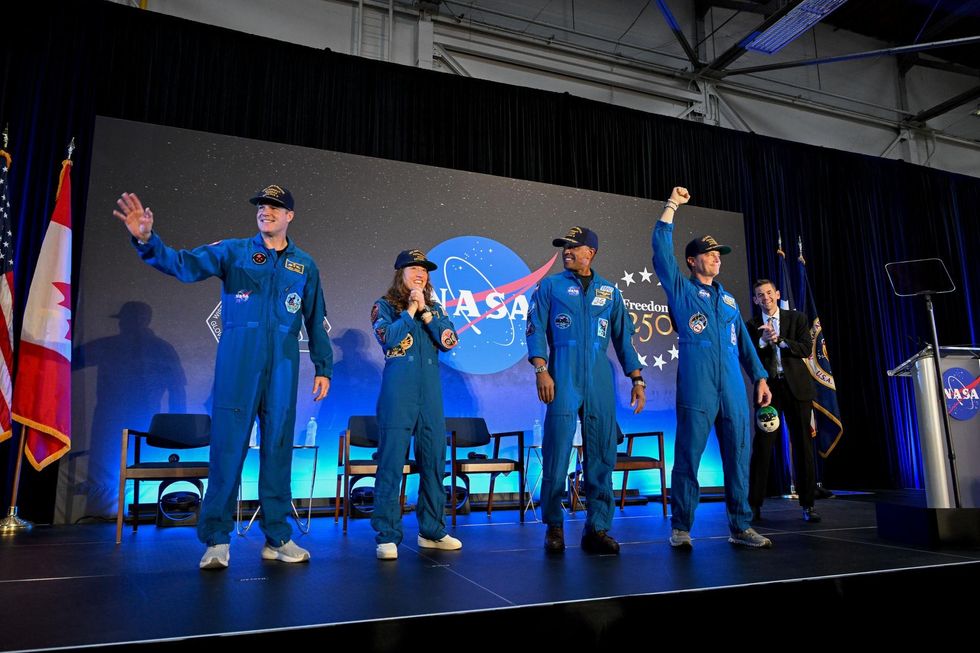
The four astronauts made it to their feet to address crowds on Saturday
|NASA
"It's a special thing to be human, and it's a special thing to be on planet Earth," he said, adding that he and his colleagues were now "bonded forever" before they embraced.
Mr Glover said he was still processing the experience, thanking God "because, even bigger than my challenge trying to describe what we went through, the gratitude of seeing what we saw doing what we did and being with who I was with, it's too big to just be in one body."
Mr Hansen thanked everyone who supported the crew and its mission.
"I don't think people will really ever fully comprehend how well supported and trained we were. It is almost unbelievable," he added.
Ms Koch, meanwhile, reflected on the personal moments that bookended the mission.
"Ten days ago, this journey started with our mission manager, Sean Duvall, knocking on my door in crew quarters and whispering: 'Christina, We're go for launch. Get up!' And it ended last night when my nurse on the ship put me to bed and said, 'Ma'am, can I get a hug?'"