










The four astronauts aboard the Artemis II spacecraft are set to become the first humans to see one of the Moon’s most mysterious features in sunlight.
Those aboard will transition to the far side of the Moon on Monday, where they will set their eyes on the Mare Orientale, or Eastern Sea.
A 200-mile-wide crater, formed over 3.7billion years ago by an asteroid smashing into the Moon’s surface at nine miles a second.
All contact with Earth will be cut by the Moon, meaning that Commander Reid Wiseman, mission specialists Christina Koch and Jerry Hansen, and pilot Victor Glover, will be the only four people to see the crater as they circle around the Moon.
TRENDING
Stories
Videos
Your Say
The destruction caused by the impact is beyond anything seen on Earth, with the asteroid thought to be three times the size of the one believed to have wiped out the dinosaurs.
The three Americans and one Canadian aboard will see the crater from a much higher altitude than Apollo astronauts, who only saw the unprecedented damage in the dark.
Surrounding the crater are mountain ranges, with bullseye rings created from debris following the impact.
Previously, the best images of the Mare Orientale were taken by Apollo 17’s Ronald Evans, due to the low light, not much could be seen in them.
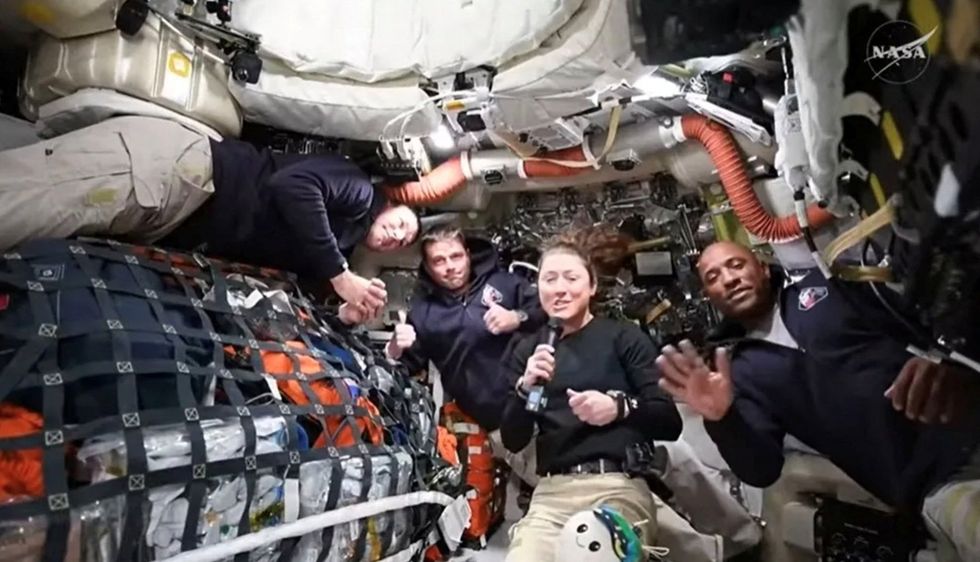
The crew are see the Mare Orientale in sunlight as they travel over the Moon
|REUTERS
As Artemis II will be directly over the top of the crater at the same time as the sun, there should be no such issues this time.
Attempts have been made to photograph the dark side of the Moon, but taking them from Earth is hampered by the “tidal locking” phenomenon.
Tidal locking ensures that the Moon takes exactly the same time to spin in a full circle as it does to orbit the Earth monthly.
Nasa states it’s: “Like a dancer circling, but always facing, its partner.”
LATEST DEVELOPMENTS:
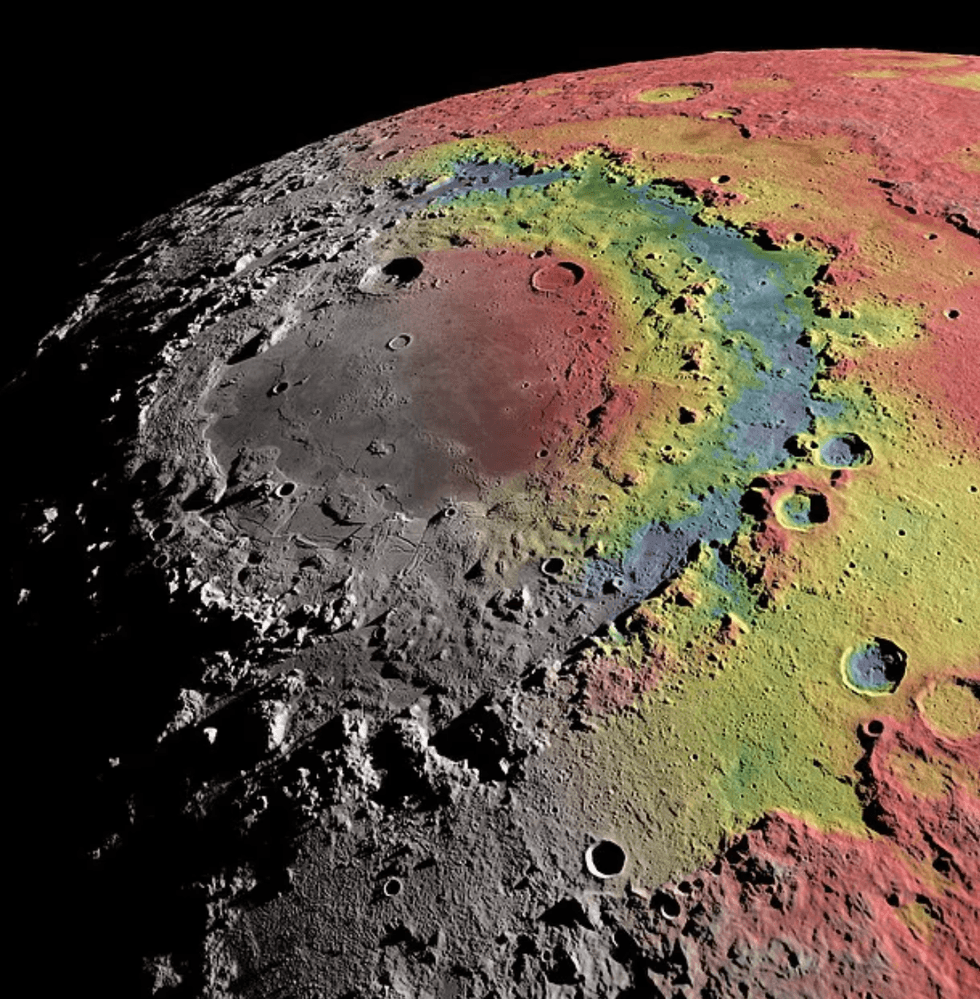
The Artemis II crew are set to get the best look at Mare Orientale in human history
|NASA
On rare occasions, “libration”, a wobbling of the axis, allows the carter to be seen as a shadowy smear, but nothing more.
Tidal locking is a result of the Earth’s gravitational pull over billions of years, which has caused the Moon to slow its spin to synchronise with its orbit.
The crew is set to study the surface of the Moon to learn more about the various craters formed by years of asteroid hits.
Ms Koch has described the Moon as a “witness” to everything that has happened on Earth.
She said: “We can learn more about solar system formation, about how planets form... about the likelihood of life out there, starting with studying the Moon.”
The astronauts took staggering photos of the Earth from aboard the craft as they continued their journey to the Moon.
Mission control was required to shift the craft's position, leading to Earth filling the windows for all four astronauts to see.
“It was the most spectacular moment, and it paused all four of us in our tracks,” Commander Wiseman said in an interview.
Astronaut Christina Koch added: “There’s nothing that prepares you for the breathtaking aspect of seeing your home planet both lit up bright as day, and also the moon glow on it at night with the beautiful beam of the sunset.”
The four astronauts are the first to go to the Moon since Apollo 17 in 1972.