








A new scientific study suggests our ancient ancestors interbred between Neanderthal men and modern human women.
Scientists have known for more than a decade that our ancient ancestors interbred with Neanderthals, but the new discovery reveals most of these interactions were not what we expected.
Neanderthals, evolutionary cousins of modern humans, are formally recognised as a separate species having evolved in Europe and western Asia hundreds of thousands of years ago.
Stockier in build and with larger brains than humans, the species disappeared around 40,000 years ago.
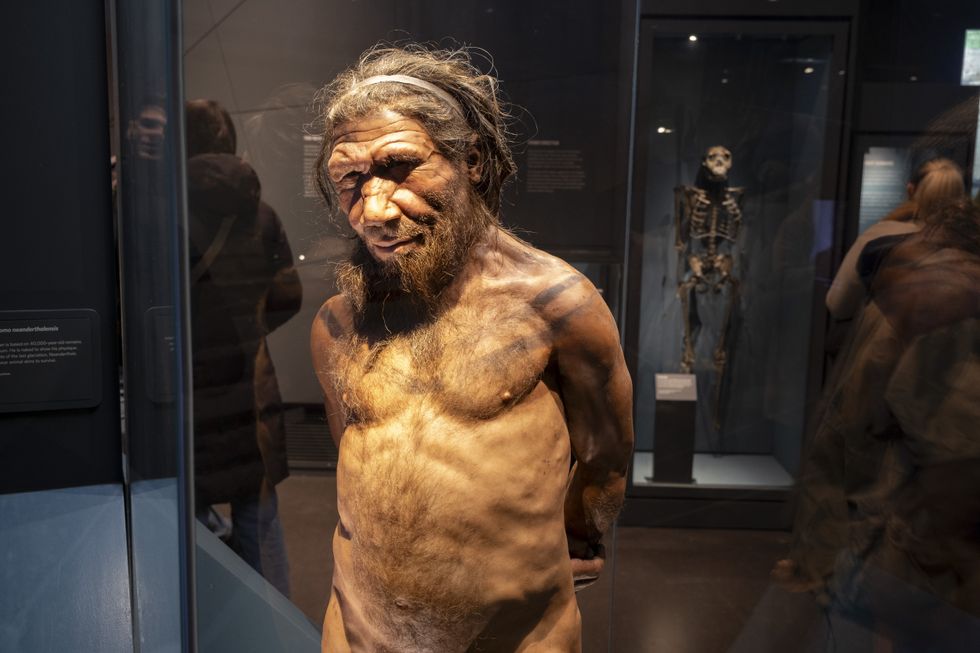
Researchers believe their findings may be the last common ancestor of modern humans and Neanderthals
| GETTYAlthough, thanks to interbreeding roughly 45,000 years ago, most people alive today outside of Africa have a small amount of Neanderthal DNA in their genetic make-up.
The new study looks at how the genetic legacy of Neanderthals has spread, with large blank patches discovered when mapping Neanderthal DNA in the modern human genome.
Striking gaps in the X chromosome have puzzled researchers, with more Neanderthal DNA discovered in Y chromosomes.
To test this, researchers led by Alexander Platt at the University of Pennsylvania examined traces of early modern human DNA found in Neanderthal remains from about 250,000 years ago, when interbreeding also occurred.
They wanted to see whether Neanderthal genes simply did not function well on modern human X chromosomes and were gradually filtered out, or whether fewer Neanderthal X chromosomes entered the human population in the first place, because of who was having children with whom.
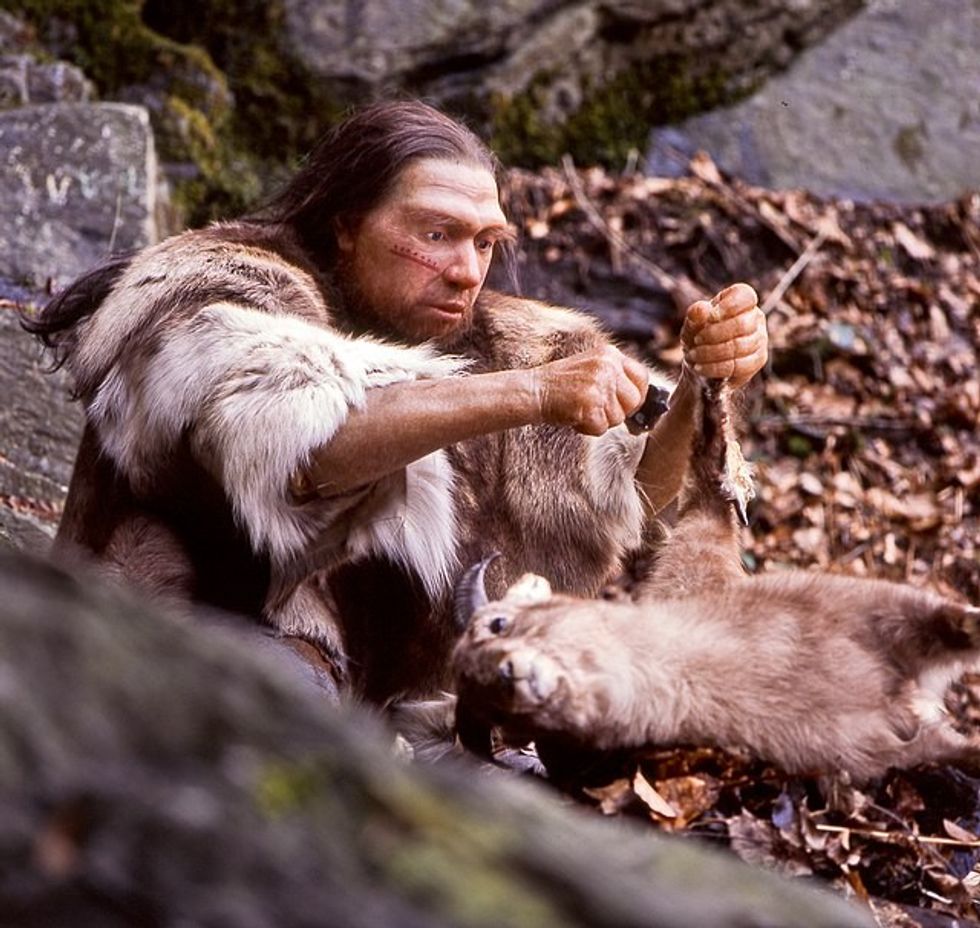
Neanderthals ate lots of maggots and were not total carnivores as people often believed they were
| WIKIMEDIA COMMONSLATEST DEVELOPMENTS
- WATCH: Bev Turner and Tom Harwood blow lid on 'sectarian' Muslim voting in Gorton and Denton
- WATCH: Polling expert outlines huge political shift in snap verdict on Gorton and Denton by-election
- New Green MP makes major promise to Muslim communities and rages at 'scapegoating' after by-election victory
If the former was the case, the Neanderthals should have had unusually low levels of modern human DNA on theirs - disproved by Neanderthal X chromosomes containing more modern human DNA than expected.
Researchers also looked at where the human DNA appeared to see if it concentrated in the most important parts of the genome, however it was relatively scarce in those “functional” areas.
Altogether, the results suggest the shortage of Neanderthal DNA on the modern human X chromosome today was not caused by those genes being weeded out by evolutionary forces over time.
There was no sign of human genes being inherently “better” than Neanderthal ones, despite expectations to see patterns across species based on the presence of foreign DNA.
After ruling out other explanations, researchers deemed a simple explanation - more Neanderthal men mated with modern human women than the other way around.
Because women carry two X chromosomes and men only one, if most unions were between Neanderthal males and modern human females, the mother would always pass on one of her X chromosomes.
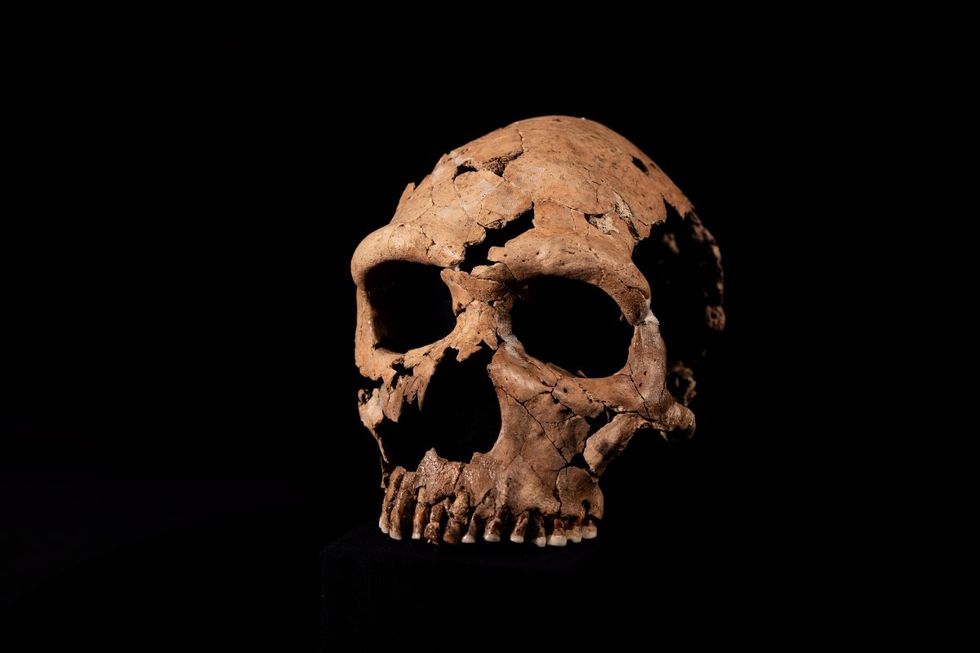
A 75,000-year-old Neanderthal skull
| PAThis would mean relatively fewer Neanderthal X chromosomes spreading through later generations.
After tens of thousands of years, the result would look as it does today - traces of Neanderthal ancestry across much of our DNA, but comparatively little on the X chromosome.
As Platt and his colleagues write in the journal Science: “Fundamentally, the patterns that we observed, were likely coloured by a persistent preference for pairings between males of predominantly Neanderthal ancestry and females of predominantly anatomically modern human ancestry over the reverse".