










An international team of archaeologists has confirmed the location of Alexandria on the Tigris, a long-lost ancient metropolis established by Alexander the Great in the fourth century BCE.
Professor Stefan Hauser of the University of Konstanz led the research effort that pinpointed the site at Jebel Khayyaber in southern Iraq.
The city, which later became known as Charax Spasinou, had vanished from historical memory following late antiquity.
For centuries, scholars only knew of its existence through ancient texts, yet its precise whereabouts remained elusive.
TRENDING
Stories
Videos
Your Say
The settlement once served as a vital commercial gateway, connecting Mesopotamia with distant lands including India, Central Asia and China.
Following his conquest of the Achaemenid Persian Empire, Alexander sought to return to Babylon via water routes around 324 BCE.
Ancient accounts indicate he discovered existing harbours had become unusable due to sedimentation, prompting him to commission an entirely new port.
The Macedonian conqueror selected a location of considerable strategic value, positioning his new city where the Tigris and Karun rivers met.
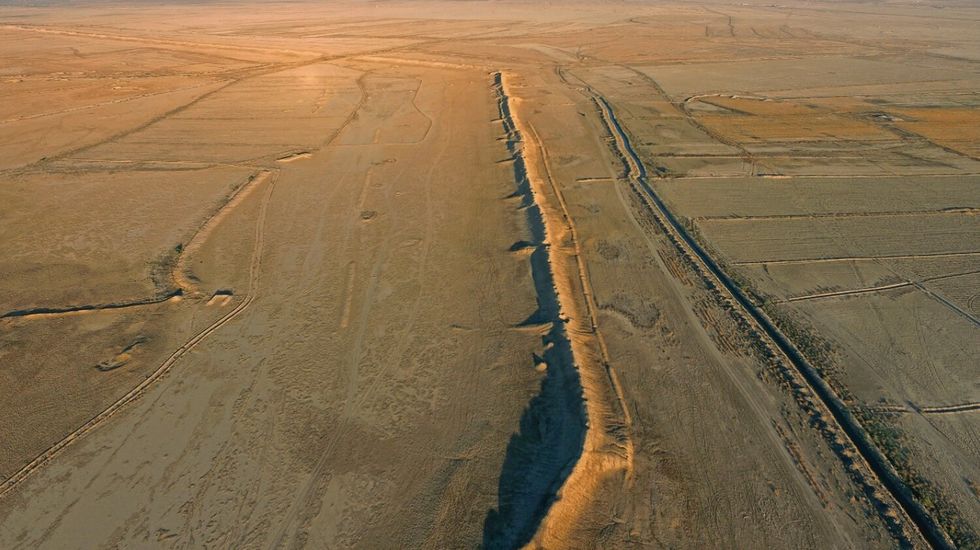
An international team of archaeologists have confirmed the location of Alexandria on the Tigris, a long-lost ancient metropolis established by Alexander the Great in the fourth century BCE
|CHARAX SPASINOU PROJECT, STUART CAMPBELL
At that time, the Persian Gulf lay less than two kilometres away, making it an ideal maritime gateway between East and West.
Historical references to the settlement, later called Charax Spasinou or Charax Maishan, have been found as far afield as Roman-era Syria.
Despite these documented mentions across the ancient world, the city's exact position eluded historians for centuries until the present breakthrough.
The initial breakthrough came in the 1960s when British researcher John Hansman spotted what appeared to be a vast settlement in Royal Air Force aerial photographs.
However, instability along the Iran-Iraq border prevented fieldwork for decades, with the site even serving as a military position during the conflict.
LATEST DEVELOPMENTS
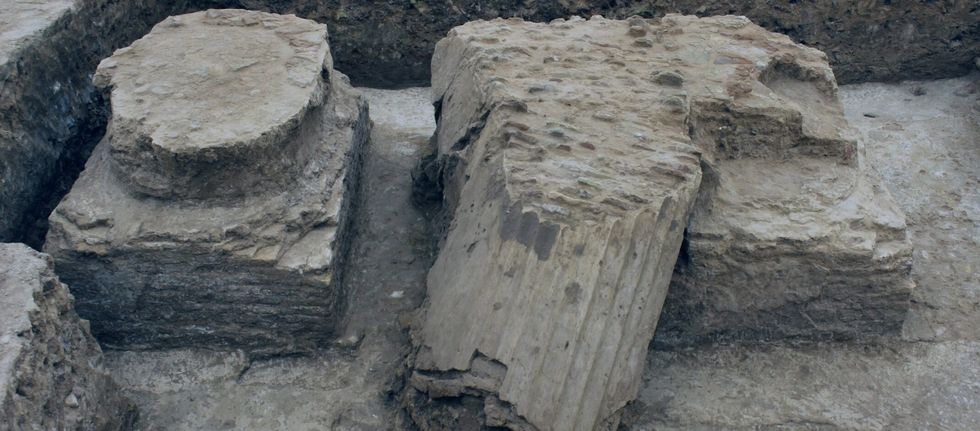
The city's exact position eluded historians for centuries until the present breakthrough
|CHARAX SPASINOU PROJECT, ROBERT KILLICK
Archaeological teams finally gained access in 2014, discovering fortification walls rising up to eight metres high.
Professor Hauser joined the project in 2016, and his team subsequently covered more than 500 kilometres on foot, documenting surface finds.
"Over the years, we then walked the entire area, over 500 kilometers in total, and documented all the surface finds, especially shards and broken bricks, that give us clues to a former settlement," Prof Hauser explains.
Drone technology and caesium magnetometers eventually mapped a meticulously planned urban centre featuring residential blocks, temples, waterways and what appears to be a palace.
A substantial irrigation network to the north suggests the population may have numbered between 400,000 and 600,000 inhabitants.
From roughly 300 BCE to 300 CE, the settlement flourished as a principal conduit for long-distance commerce, with virtually all maritime trade from India believed to have passed through its harbour.
Goods were then transported northward along the Tigris to imperial centres such as Seleucia and Ctesiphon.
"We now realise that we really have the equivalent of Alexandria on the Nile, the famous city in Egypt," says Prof Hauser.
"The situation is actually the same: a city is founded where the open sea and the river systems meet."
Environmental forces ultimately sealed the city's fate, as the Tigris gradually migrated westward through sedimentation.
By the third century CE, the settlement found itself too far inland to function as a port.
Basra subsequently inherited its commercial significance as the region's primary maritime hub.