








The US House of Representatives has passed war powers resolution to block further Iran strikes in a major blow to Donald Trump.
The Republican-controlled House of Representatives has passed a Democrat-introduced resolution which instructs the President to block US forces from engaging in further hostilities with Iran unless Congress declares war or authorises action.
The House voted 215 to 208, with four Republicans voting with Democrats and seven representatives not voting.
Despite the blow, the vote is largely symbolic as it must pass the Senate before becoming law, and there is debate if the war powers resolution would be constitutional even if approved.
The Senate advanced a separate but similar resolution in a procedural vote last month, but further votes have not yet been scheduled.
Republicans have also downplayed the significance of the Senate vote, noting that three GOP Senators were absent.
The four House Republicans who voted with the Democrats were Representatives Tom Barrett of Michigan, Warren Davidson of Ohio, Brian Fitzpatrick of Pennsylvania, and Thomas Massie of Kentucky.
Mr Barret had previously supported the President's military engagement in Iran.
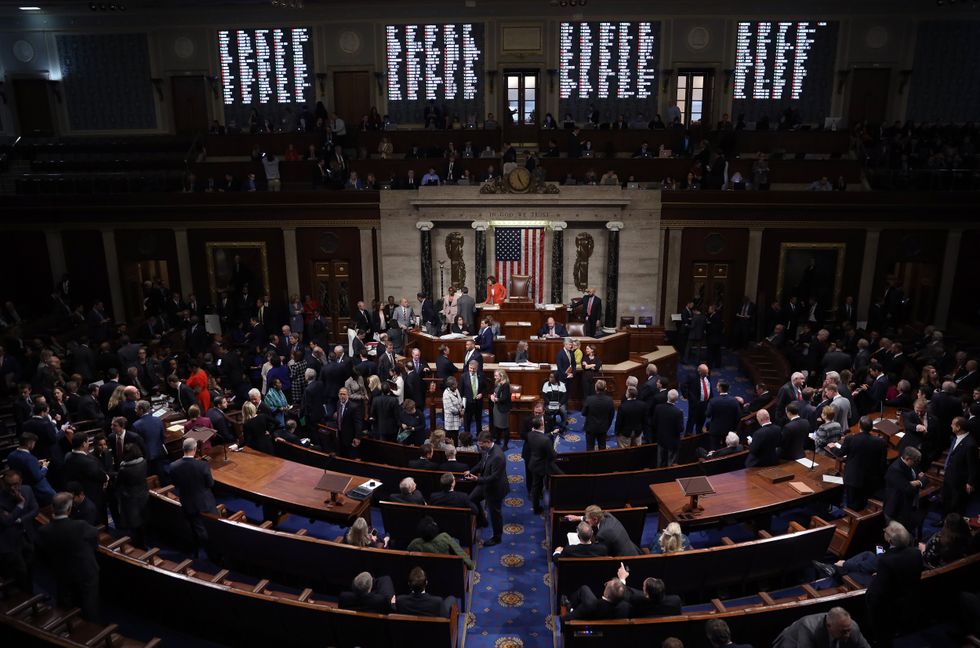
The US House passed a resolution with the aim to end the Iran war on Wednesday
|GETTY
He said after the vote: "Congress alone declares war, that's something certainly we need to be protective of."
When asked if he feared retribution from Mr Trump, he said: "I vote my conscience for what I think is right and willing to accept that."
Last month, Mr Massie, who had served in the House since 2012, lost his Republican primary election to Mr Trump-endorsed Ed Gallrein in the most expensive primary in history.
The Representative from Kentucky had been outspoken of his criticism against the Iran war and, jointly with California Representative Ro Khanna, lead calls for the release of the Epstein files.
LATEST US POLITICS NEWS:

Thomas Massie, who lost his primary to a Trump-endorsed challenge was one of four Republicans to vote with Democrats to pass the measure
|GETTY
House Democrats had attempted to pass war resolutions which would limit Mr Trump's ability to conduct military operations in Iran.
"Following repeated attempts to get sycophants in the Republican-controlled House to join us, House Democrats successfully passed our war powers resolution today to stand up for the American people and hold Donald Trump accountable," leading House Democrats Hakeem Jeffries of New York, Katherine Clark of Massachusetts and Pete Aguilar of California said in a statement.
Congressman Jared Huffman of California told The Hill the passage of the measure was "very powerful".
"We're inching closer to having both chambers of Congress declare this an illegal war. That's huge. It's just becoming more and more untenable, what he [Mr Trump] has done," he added.
The resolution sponsored by Representatives Greg Meeks of New York, the senior Democrat on the House Foreign Affairs Committee, directs Mr Trump to remove all US forces "from hostilities" with Tehran "unless explicitly authorized by a declaration of war or a specific congressional authorization for use of military force against Iran."
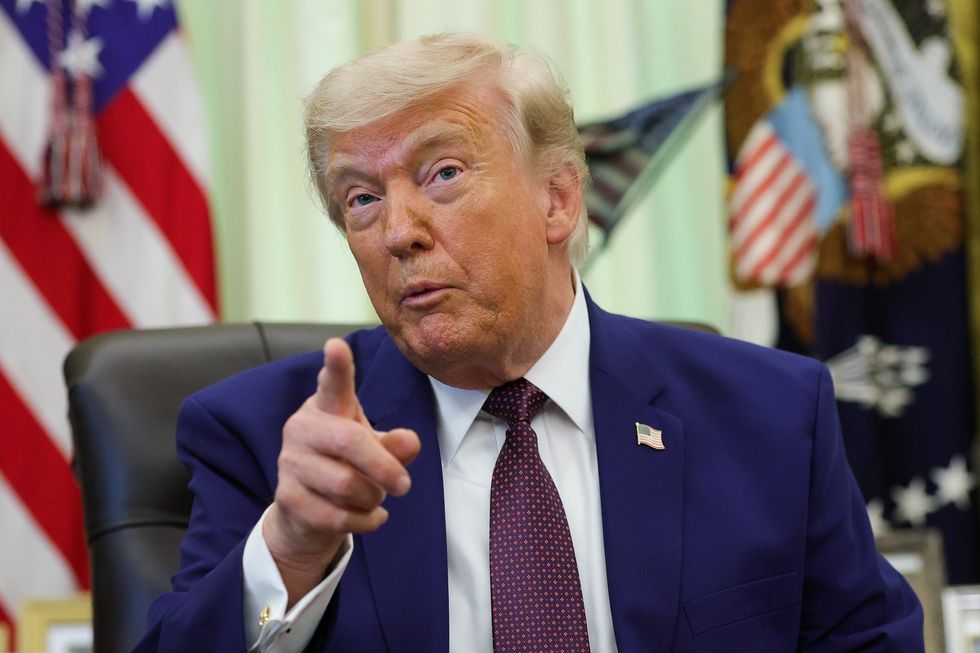
Donald Trump's administration had formally opposed the resolution, declaring it an 'unconstitutional legislative veto'
|GETTY
In a statement after its passage, Mr Meeks said: "The passage of this WPR today signals a significant turning point: more and more Republicans are listening to their constituents who do not want another open-ended war in the Middle East."
But the White House has described the resolution as a "unconstitutional legislative veto" over executive powers.
Mr Trump's administration has also said the conflict ended when the President called for a ceasefire in early April.
In a document formally opposing the passage of the resolution, the Trump administration said: "There are no present hostilities from which to remove US Armed Forces.
"The hostilities that began on February 28, 2026, have terminated with the ceasefire ordered by the President on April 7, 2026."
Our Standards: The GB News Editorial Charter