










Archaeologists from the Museum of London Archaeology (Mola) have completed an excavation at Stanton Cross in Wellingborough, Northamptonshire, revealing what has been described as a "remarkable window into life in the area during the Roman period".
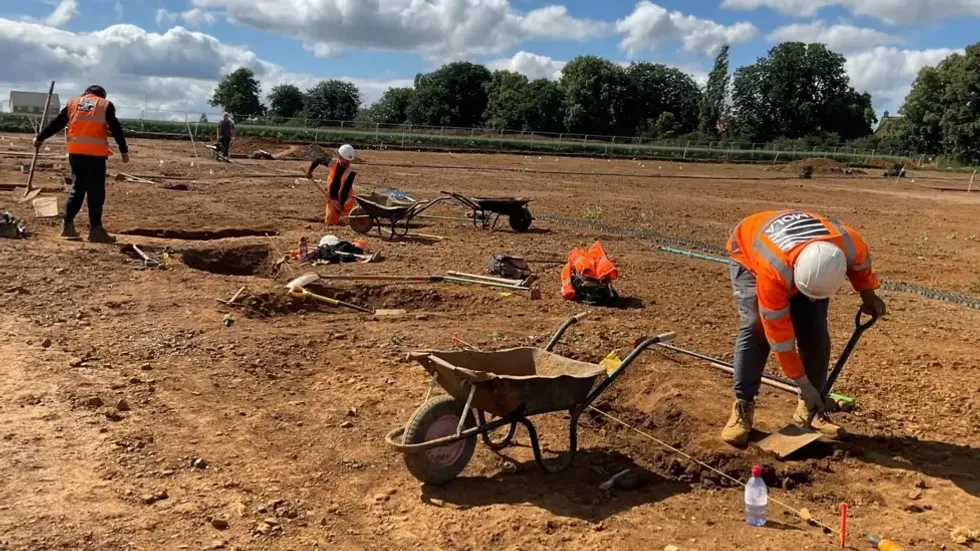
The dig covered nine hectares at a new housing development situated near Chester House Estate, where evidence of an ancient Roman settlement had previously been discovered.
Tony Walsh, who managed the project for Mola, described the findings as "particularly exciting", noting "these discoveries tell the story of an established agricultural community that fed into the main Roman town nearby".
The excavation has revealed evidence of a farming community that operated in proximity to the larger Roman settlement.
The excavation work was carried out between March and December 2024, with key discoveries now being made public.
Most of the uncovered items date from the Roman and Iron Age eras, beginning from approximately 400BC onwards, and according to Mola they illustrate a "vivid picture of what life was like for agricultural communities living in the shadow of the Roman town".
Archaeologists discovered extensive field systems alongside ditches and various enclosures, with horse paddocks amongst the structures identified.
The team also unearthed remnants of agricultural buildings used for farming purposes and facilities for storing goods.
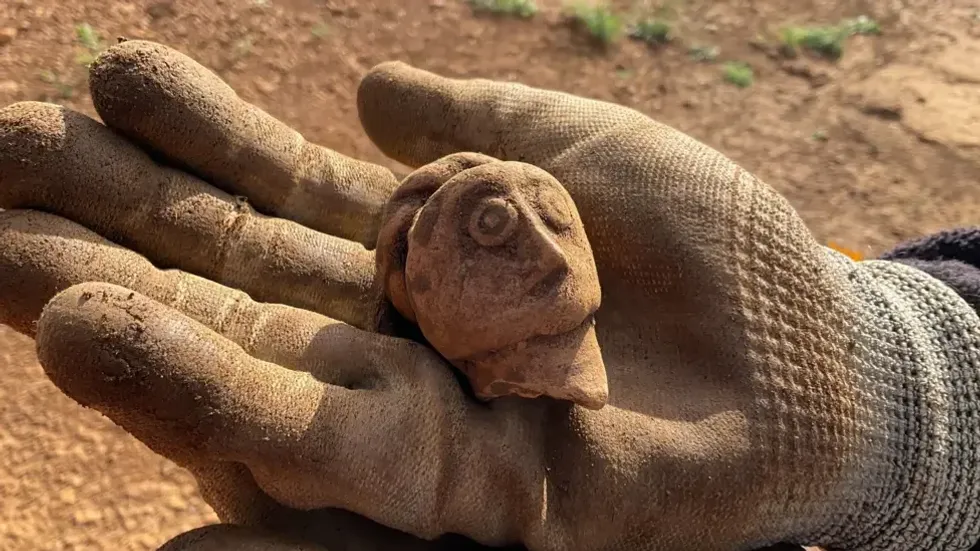
The excavation has revealed evidence of a farming community
|MOLA
Mola indicated the project had yielded "a series of historical insights", amongst them elaborately decorated pottery pieces.
Mr Walsh said: "The personal items uncovered, like the imported Samian pottery and the decorative head-shaped flagons, offer a glimpse into the lives of the people who lived there, while also revealing a level of artistry and craftsmanship that we had not expected from the period."
However, one discovery has particularly puzzled the archaeological team.
A mould for making swords, dating to the Bronze Age, was found amongst the Roman-era materials despite being roughly 1,500 years older than the surrounding finds.
LATEST DEVELOPMENTS:
One artefact puzzled archaeologists - a mould for making swords, dating to the Bronze Age
|MOLA
Mr Walsh commented: "There's also the sword mould, which is a complete puzzle, given that it dates from the Bronze Age and is around 1,500 years older than the Roman finds.
"It is an intriguing mystery, and one our team is determined to solve."
Specialists are currently undertaking cleaning and assessment work on the discovered items, with comprehensive analysis anticipated to finish over the coming twelve months.
The county archive store situated within the historic Roman town will serve as the permanent repository for all the artefacts once this process concludes.
The collection will be maintained for research purposes and will provide the foundation for public exhibitions showcasing the discoveries.
Organisers are arranging provisional exhibitions for local residents to view the findings.