









A landmark High Court ruling involving one of Britain’s oldest aristocratic families has sparked questions over centuries-old Royal Family succession laws.
The Marquess of Bath secured a major legal victory today, enabling his younger son, who was born through surrogacy in the United States, to potentially inherit part of the family’s £157million estate.
But the case has also prompted queries about hereditary families being forced to reinterpret ancient inheritance rules, and whether this same debate could reach the Royal Family in the future.
The issue has never previously arisen within the Royal Family, meaning the question has not historically needed to be addressed in law or practice.
Ceawlin Thynn, owner of the historic Longleat House estate, brought the case over nine-year-old Henry, his second child with wife Emma Thynn.
Henry was born via a surrogate in America in 2016, creating legal uncertainty over whether he could benefit from three family trusts worth millions.
The legal complication stemmed from trust wording based on a common law definition of “children” established before 1970, decades before surrogacy and modern fertility treatments entered mainstream family life.
Despite the technicalities, Mr Justice Matthews ruled in Lord Bath’s favour, stating it would be “unfair on Lord Bath and on Henry” to regard the child as anything other than his father’s son.

Emma Thynn (pictured) has a son, Henry, born via surrogacy in 2016
|GETTY
In his judgment, the judge said: “Henry is the son of Lord and Lady Bath.
“Not only is he treated by them and will be treated by the world in general as a child of Lord and Lady Bath’s marriage but he is also their genetic child.”
For now, trustees have only been given permission to add Henry as a potential beneficiary rather than immediately distributing assets, partly to avoid possible US tax complications linked to his American birth.
The Bath family turned to surrogacy after doctors warned another pregnancy could prove fatal for Lady Bath.
LATEST ROYAL DEVELOPMENTS
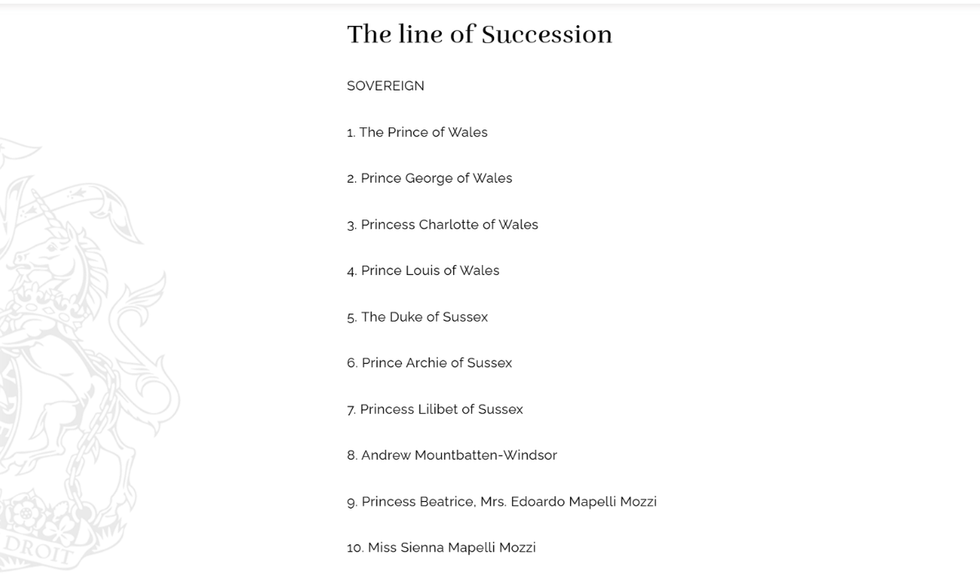
The current line of succession to the British throne
| ROYAL.UKDuring her first pregnancy with son John in 2014, she developed hypophysitis, a rare inflammatory condition affecting the pituitary gland, which caused bleeding in her brain.
She later described the pain as “like a knife stabbing at my brain”, revealing doctors were forced to deliver her first child by emergency caesarean section because a natural birth could have triggered a stroke.
Henry is thought to be the first British aristocrat born through surrogacy.
While the ruling marks a major moment for Britain’s hereditary elite, it is thought that it has no immediate impact on the Royal Family.
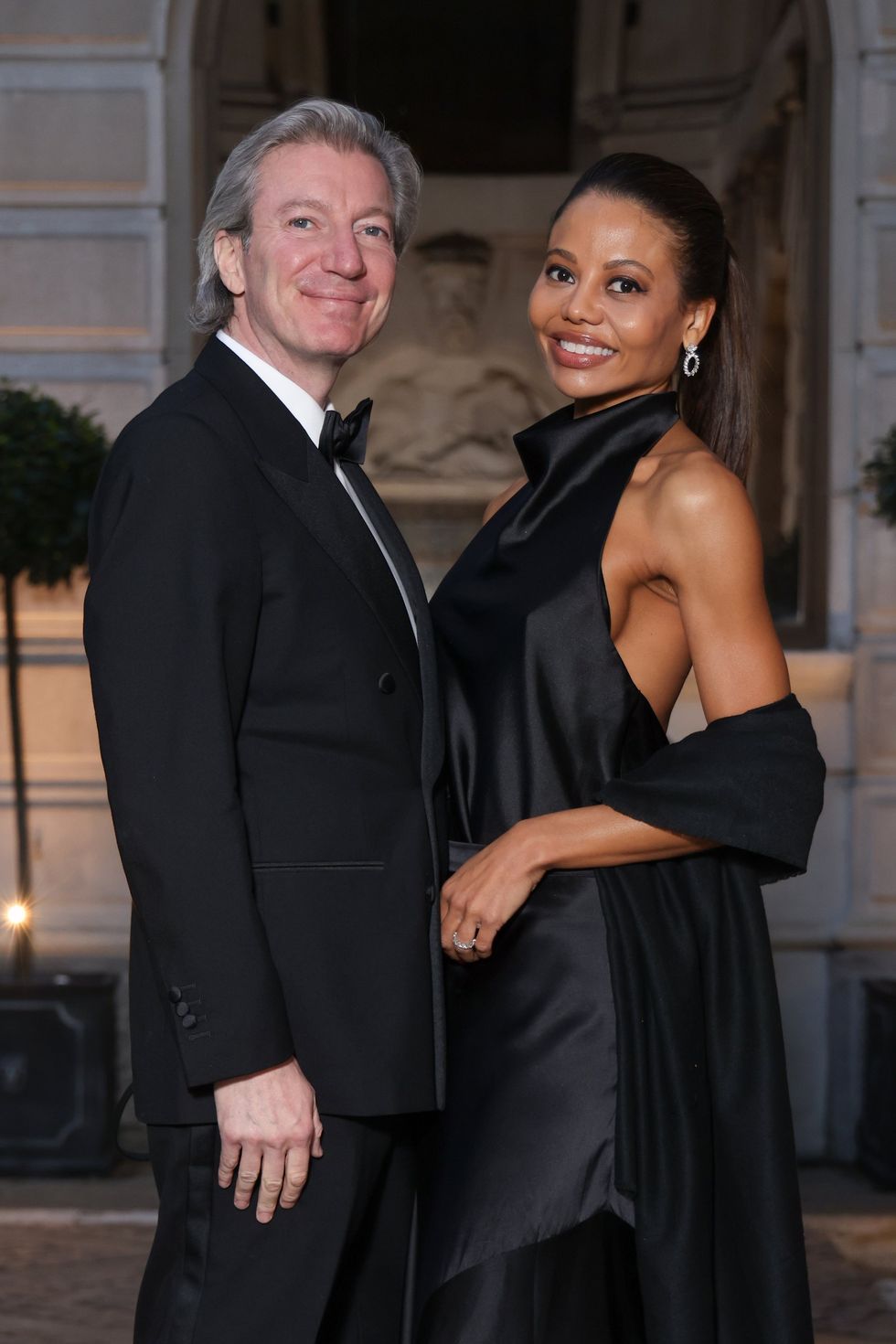
Ceawlin Thynn, 8th Marquess of Bath and Emma Thynn, Marchioness of Bath, pictured at the Koala Gala 2026 at Drapers' Hall
|GETTY
The Act of Settlement 1701 still requires heirs to the throne to be “heirs of the body”, a phrase historically interpreted to mean children physically born to a royal mother.
Under current law, children born through surrogacy or adoption remain excluded from the line of succession, regardless of genetic parentage.
GB News has contacted Buckingham Palace seeking clarification on the rules governing surrogacy and royal succession.