









Nasa's Artemis II mission is set to launch tonight, marking humanity's return to lunar orbit for the first time since the Apollo era more than half a century ago.
The two-hour launch window opens at 23:24 this evening, with four astronauts aboard the Space Launch System rocket and Orion spacecraft departing from Florida.
This historic flight represents Nasa's inaugural crewed voyage using both the massive SLS rocket and the Orion capsule.
Apollo 17, which touched down on the lunar surface in December 1972, was the last occasion astronauts made the voyage to the Moon.

The monarch acknowledged the growing importance of responsible stewardship as space exploration and the commercial space sector continue to expand rapidly.
|PA
TRENDING
Stories
Videos
Your Say
The King has sent a personal letter to Canadian Space Agency astronaut Colonel Jeremy Hansen, who becomes the first Canadian to participate in a Moon mission, praising his leadership and vision.
The monarch acknowledged the growing importance of responsible stewardship as space exploration and the commercial space sector continue to expand rapidly.
In his message to the crew, the King said: "As you embark on this momentous endeavour, I send you and your fellow crew members my heartfelt good wishes.
“May the stars align in your favour, and may your safe return inspire countless others to uphold the values of sustainability, cooperation and wonder that the Astra Carta inspires."
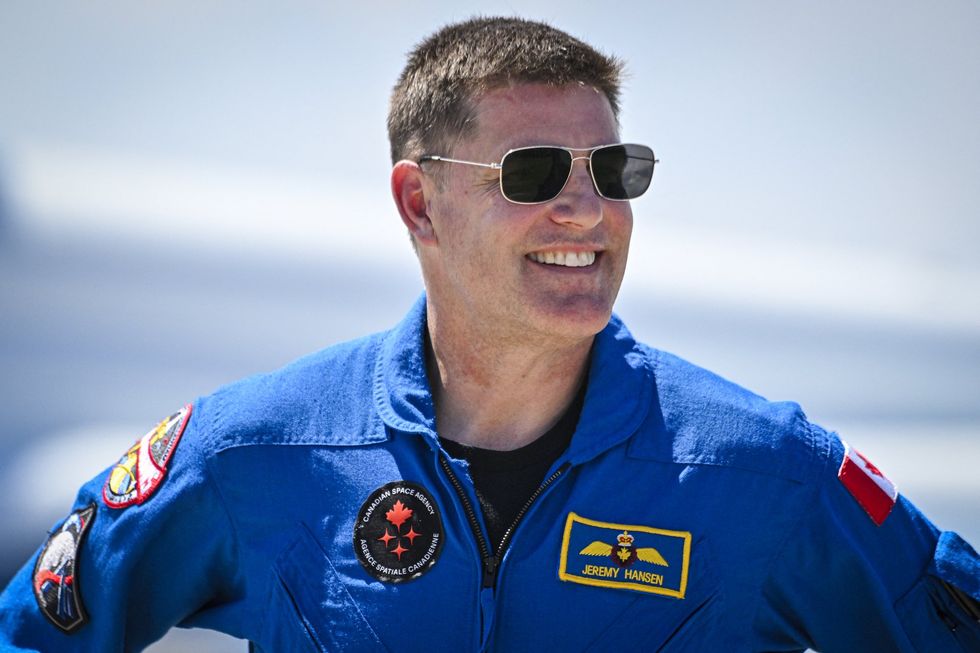
The King has sent a personal letter to Canadian Space Agency astronaut Colonel Jeremy Hansen, who becomes the first Canadian to participate in a Moon mission, praising his leadership and vision.
|GETTY
The crew comprises Nasa commander Reid Wiseman, pilot Victor Glover, and mission specialist Christina Koch, alongside Colonel Hansen serving as the second mission specialist.
During their voyage, the astronauts will travel thousands of kilometres beyond the Moon itself, pushing further into deep space than any previous human explorers.
Throughout the mission, crew members will serve as medical test subjects, transmitting data and imagery back to Earth from their unprecedented distance.
Working conditions aboard the compact Orion cabin will see the team operating in weightlessness, with radiation exposure higher than levels experienced on the International Space Station, though remaining within safe limits.
Upon completing their journey, the astronauts face a turbulent atmospheric re-entry before splashing down in the Pacific Ocean off America's west coast.
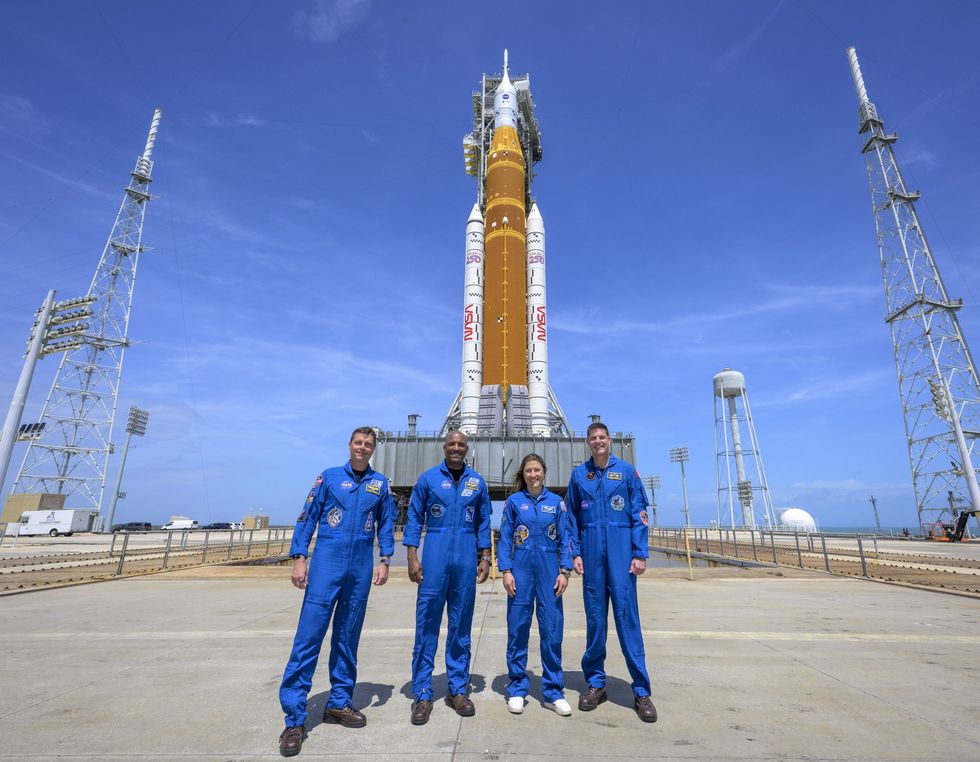
This historic flight represents Nasa's inaugural crewed voyage using both the massive SLS rocket and the Orion capsule.
|GETTY
The primary objective involves thoroughly evaluating Orion's life support, propulsion, power and navigation systems during the deep space portion of the flight.
Astronauts will also practise manually piloting the spacecraft while in Earth orbit, rehearsing the steering and alignment manoeuvres essential for future lunar landings.
This mission establishes the foundation for subsequent Artemis flights, with Nasa planning a crewed test mission designated Artemis III for 2027 to practise docking procedures with lunar landers and potentially trial new spacesuits.
The agency has selected competing commercial landing vehicles from SpaceX and Blue Origin for the programme.
Artemis IV, scheduled for 2028, aims to deliver astronauts to the Moon's south pole, representing the first human lunar landing since the Apollo programme concluded over five decades ago.
Our Standards: The GB News Editorial Charter