








Five environmental activists who poured red dye into the Queen Victoria Memorial fountain at Buckingham Palace have failed in their attempts to overturn their sentences at the Court of Appeal.
The court on Tuesday rejected appeals from Claire Smith, Louis McKechnie, Riley Ings, Rachel Steele and Christopher Bennett, ruling that the punishments handed down for the August 2021 protest were appropriate.
Dame Victoria Sharp, sitting with Mr Justice Bryan and Mrs Justice Steyn, dismissed arguments that the sentences were "manifestly excessive".
The Crown Prosecution Service had opposed the appeal bids, which challenged convictions for causing £7,080 worth of damage to the Grade I listed memorial.
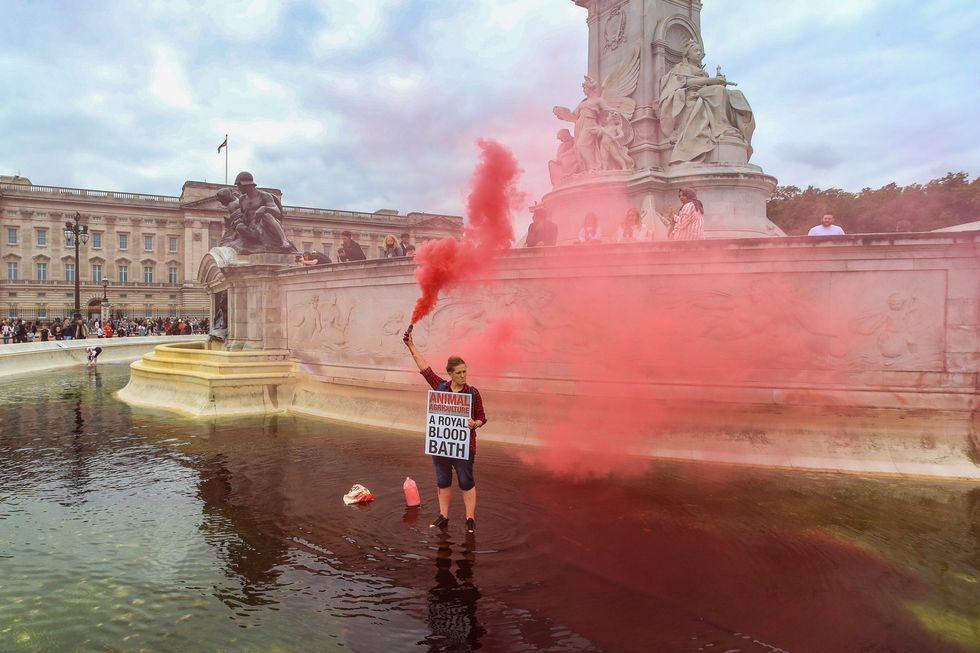
Buckingham Palace environmental protesters lose bids to challenge sentence in fresh blow
|GETTY
Four of the activists – Ms Smith, Mr McKechnie, Ings and Ms Steele – received 18-month prison terms suspended for two years when sentenced in October 2024.
Mr Bennett, however, was given an immediate custodial sentence of 18 months, running alongside an existing term of equal length for an unrelated public nuisance offence.
Judge Gregory Perrins, who presided over the original sentencing, ordered Mr McKechnie, Ings and Ms Smith to each pay £500 in compensation to the Royal Parks, while Ms Steele was ordered to pay £1,000.
All four were additionally required to complete 200 hours of unpaid work.
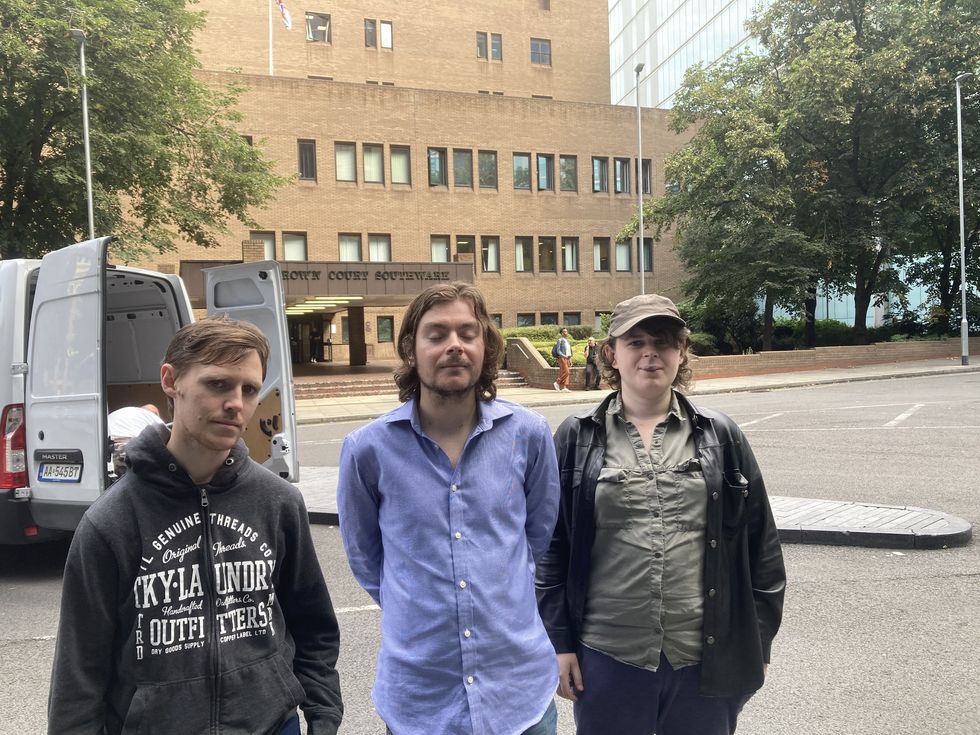
Christopher Bennett, 27, Louis McKechnie, 23, and Riley Ings, 27, three of five Animal Rebellion protesters who were found guilty of causing £7,080 of criminal damage to the Queen Victoria Memorial water feature in 2021
|PA
The protesters ranged in age from 23 to 48 when they carried out the demonstration.
The activists' legal representatives argued at a London hearing that the sentences failed to account for their clients' "conscientious objectives" and represented a disproportionate interference with their human rights.
Defence barristers further contended that neither significant planning nor serious harm resulted from the incident, with lawyers for Ms Steele and Mr Bennett additionally claiming the judge had not properly differentiated between individual defendants.
Dame Victoria rejected these submissions, stating in her ruling that the demonstration aimed to "create the impression of a bloodbath" and "involved foreseeable permanent damage to a memorial of very great national and historic importance".
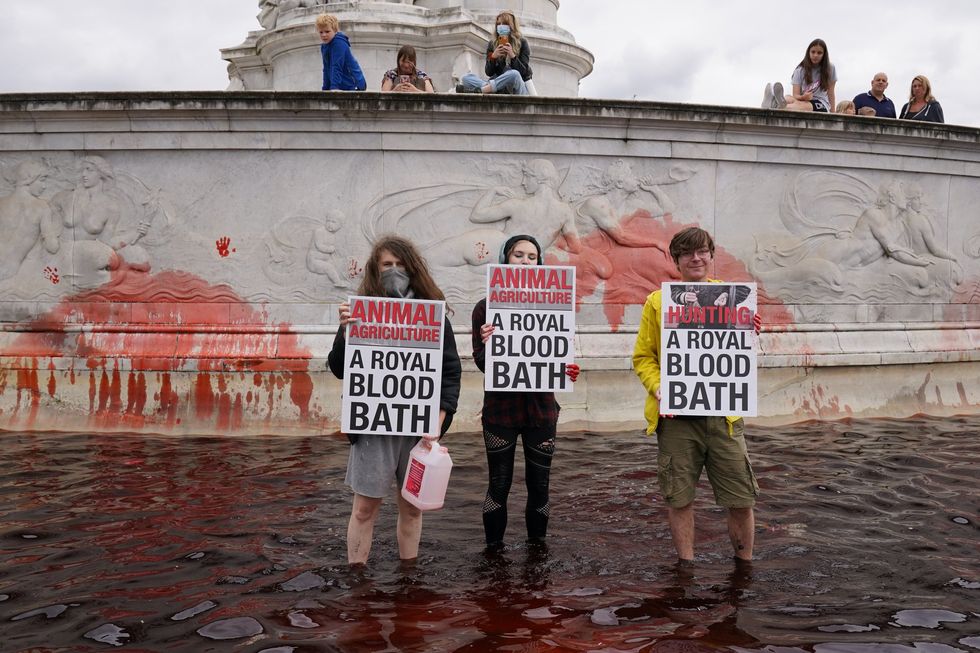
The protesters caused damage to the Buckingham Palace fountain by releasing red dye into it, changing the colour of the water and staining the stonework of the fountain
|PA
She concluded: "The applicants each participated in a well-planned operation with which they associated themselves, and which they put into effect."
The court acknowledged that the protesters' rights under articles 10 and 11 of the European Convention on Human Rights – protecting freedom of expression and assembly – were engaged in the case.
However, Dame Victoria noted that Judge Perrins correctly rejected claims that the activists' conduct constituted a proportionate exercise of those rights.
She observed: "There are in a democratic society many means of protest and opportunities for freedom of expression which do not involve the commission of criminal offences."
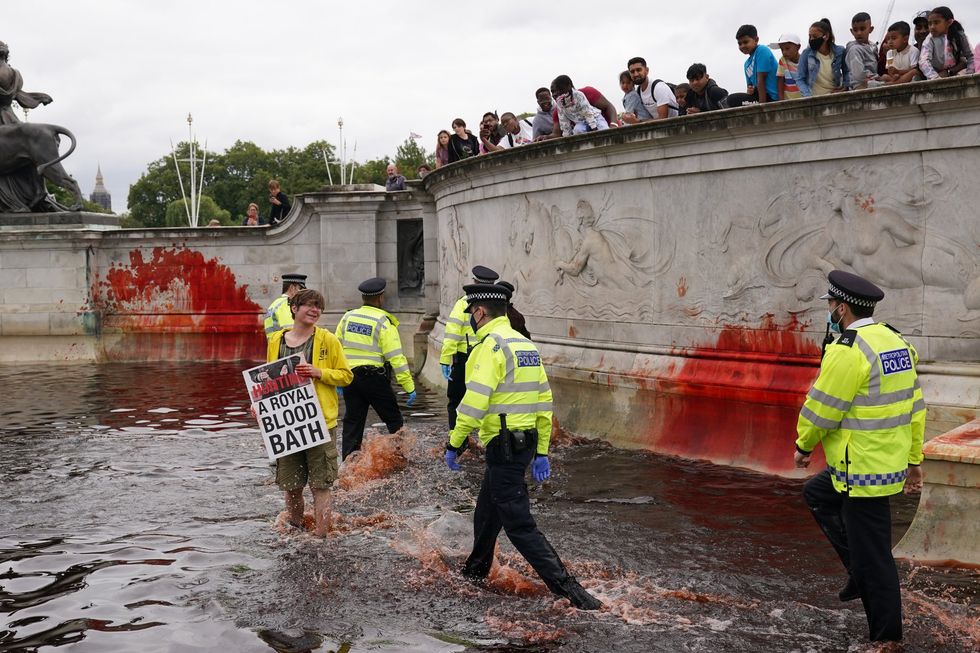
The ruling emphasised that criminal damage weakened the protections afforded by human rights provisions
|PA
The ruling emphasised that criminal damage weakened the protections afforded by human rights provisions.
Police were forced to physically remove the group from the fountain, which required 64 hours of cleaning.
The appeal court upheld the original judge's decision not to distinguish between defendants, finding "ample grounds for concluding they were equally responsible for the damage that occurred".