








The Home Secretary is facing a High Court legal challenge over rules that can see “hate crimes” recorded before any investigation — and without the person accused even being told.
Ex-police officer Harry Miller, co-founder of campaign group Fair Cop, says the Home Office’s national crime-recording rules are “unlawful” because they can force officers to log a hate crime based purely on someone’s perception, even when the facts are disputed.
At the centre of Mr Miller’s challenge is his claim that Lincolnshire Police recorded a hate crime against him without his knowledge, leaving him branded with a criminal record that could cause reputational damage and prejudice future job applications.
Under the current system, someone can be recorded as guilty of a hate crime but never investigated or charged — even though the crime still goes on their record and forms part of police databases and national statistics.
The underlying dispute involves trans activist Lynsay Watson — a trans woman and former Leicestershire Police constable. Lynsay Watson has also been involved in reporting multiple individuals to police over social media posts and alleged “hate incidents”, including Father Ted writer and comedian Graham Linehan. This includes reports believed to have led to Mr Linehan’s arrest at Heathrow Airport last September.
Mr Miller’s legal team say Lynsay Watson “stalked and harassed Mr Miller for many years” before she was dismissed for gross misconduct in 2023 following a police disciplinary process.
This included posting more than 1,200 messages on social media over an 18-month period branding Mr Miller a “Nazi”, a “bigot”, a “wife beater”, and a “wingnut”.
Mr Miller says he tweeted four times during 2023 and 2024 about Lynsay Watson’s behaviour towards him and his family, and celebrating the fact she had been sacked. Lynsay Watson complained that those tweets were “malicious”. Mr Miller says he was invited to a police interview, explained his position, and then heard nothing further.

Home Secretary Shabana Mahmood is set for a legal wrangle
| PA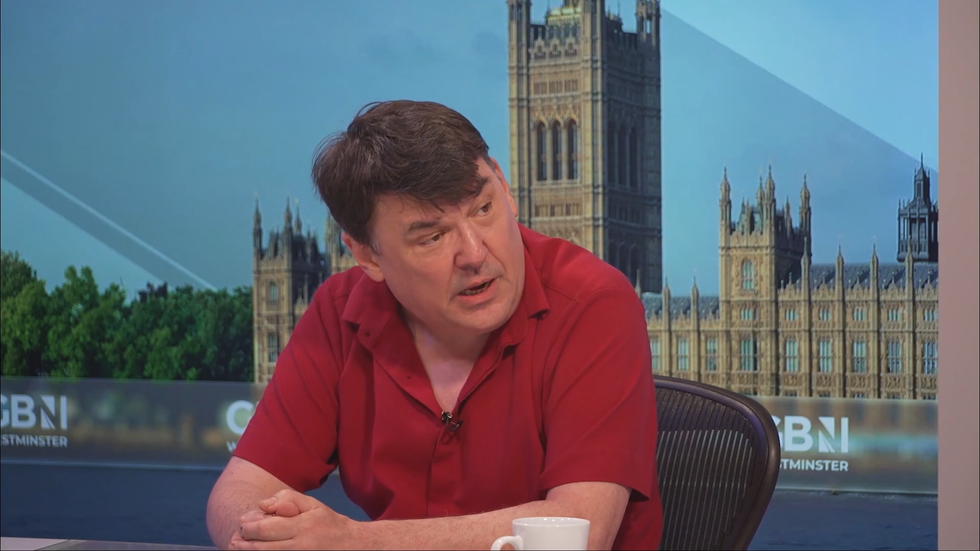 Graham Linehan recently spoke out on GB News about his arrest | GB NEWS
Almost a year later, he says he discovered a crime had been recorded against him, with “prejudice” markers — flags to identify that an offence is being treated as ‘hate-related’.
He complains that he was formally recorded in police systems — and that he was not informed at the time.
In a statement released with his planned claim, Mr Miller accused police leaders, detectives, and the Home Office of allowing “gender identity” disputes to be weaponised.
He said: “Home Office crime-recording rules, as they currently stand, mandate police officers to dismiss objective evidence in favour of a perception of hurt feelings. Everyone is therefore at risk of being criminalised by both the local police force and the state. This is an assault on common sense, and on the established rules of evidence. It gives the police a Government licence to bypass even the most elementary burden of proof, and to criminally pursue and record entirely innocent individuals. With this court action, we aim to put right this blindingly obvious wrong on behalf of all who fall within the scope of British jurisprudence.”
LATEST DEVELOPMENTS
- Donald Trump confirms he will SUE the BBC for 'fake news' in scathing takedown: 'They used AI!'
- Keir Starmer hit by defection deluge as five swap Labour for Green Party
- Martin Daubney left gobsmacked at 'astonishing revelation' from antisemitism campaigner
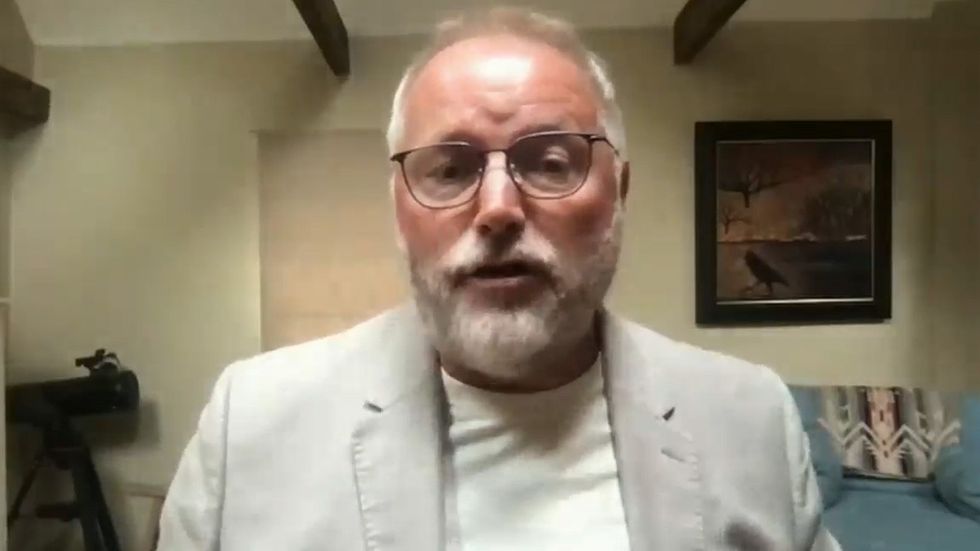
Harry Miller says the Home Office’s national crime-recording rules are 'unlawful'
| GB NewsHis solicitor, James Gardner, partner at Conrathe Gardner LLP, says the heart of the case is free speech — and that the rules are “skewed in favour of victims” when the allegation is about words, opinions, or online disputes.
He said: “These crime-recording rules have a chilling effect on free speech. This travesty is a vivid illustration of what happens to innocent people when the police record a hate crime without giving the accused a chance to respond.”
He added: “The Home Office rules are clearly skewed in favour of victims and need to be withdrawn and rewritten. As they currently stand, they are unlawful.”
The legal argument, set out in a pre-action judicial review letter, attacks the crime-recording rules on two fronts: basic fairness and freedom of expression rights.
The letter alleges the rules direct police to record a crime “before any investigation” and to record a hate crime “based solely on the perception of the victim or person reporting it” — without informing the accused or giving them a chance to respond.
Supporters of the current framework argue consistent recording is necessary so victims are taken seriously and patterns are identified.
However, Mr Miller is seeking: a declaration that the rules are unlawful where they fail to protect free expression; an order quashing the recorded hate crime; and an order requiring the entry to be “excised from all local, regional and national crime statistics”. He is also seeking damages.
A Home Office spokesperson said: “We’ve been clear that we need a consistent, common-sense approach that protects the fundamental right to free speech.
“A review is currently underway into public order and hate crime laws. We do not wish to pre-empt the final findings of the review, which we have asked to be completed at pace.”