








Ed Miliband has rejected calls to “open up the North Sea” as war rages in Iran, claiming that the biggest “long-term threat multiplier” to UK security is the climate crisis.
Earlier this week, President Trump urged the UK Government to exploit North Sea resources, with oil and gas prices spiking because of the Middle East war. MPs and industry bosses have also called for more exploration.
But Energy Secretary Mr Miliband insisted that issuing new North Sea licences would make no difference to UK bills, as prices are set by international markets.
Under government plans, existing North Sea fields will be kept open but no new licences for exploration will be issued. Insisting he would not change this position, Mr Miliband said: “This Government will not ignore the biggest long-term threat multiplier to our security and stability that we face – the climate crisis.”
The term “threat multiplier” has been used in relation to climate change for a number of years. It suggests climate change can exacerbate existing threats and drive instability, adding to security risks.
Mr Miliband said that the Iran conflict has shown why calls to change course on renewable energy “would be such a dangerous and reckless strategy”.
He said: “The lesson of Russia’s invasion of Ukraine and the lesson of recent days is that the only route to greater energy independence for Britain is our mission and we will double down on it, because every solar panel we install, every wind turbine we put up, every nuclear power station we build makes us more secure as a country and protects families and businesses from these kind of energy shocks.
“In an unstable world, we will keep driving for energy sovereignty and abundance with clean, homegrown power.”
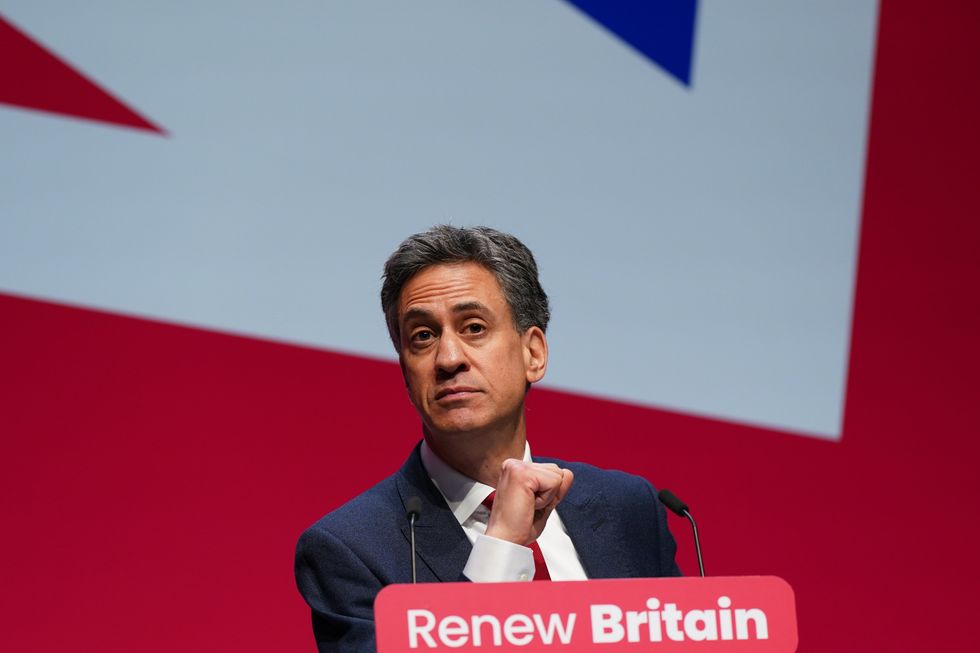 Ed Miliband wants to accelerate the move away from gas | GETTY
He told MPs that he was confident that the country’s energy supply is robust. He said: “I’ve been in touch with National Gas and Neso (National Energy System Operator), who are confident about our security of supply (of gas).
“On oil, we hold substantial emergency commercial stocks and stand ready to work with the International Energy Agency to support the stability of oil markets if needed.”
Speaking from the Conservative frontbench, Harriet Cross urged the Government to rethink its approach to North Sea gas and oil. She said: “It is a vital energy source. Every molecule of gas produced by the UK in the North Sea is piped on to our shores and into our grid.
“The oil produced comes on shore either here or to Europe to be refined. It does not, and cannot, get caught into the Straits of Hormuz or elsewhere. It is a secure supply of oil for the UK.”
LATEST DEVELOPMENTS
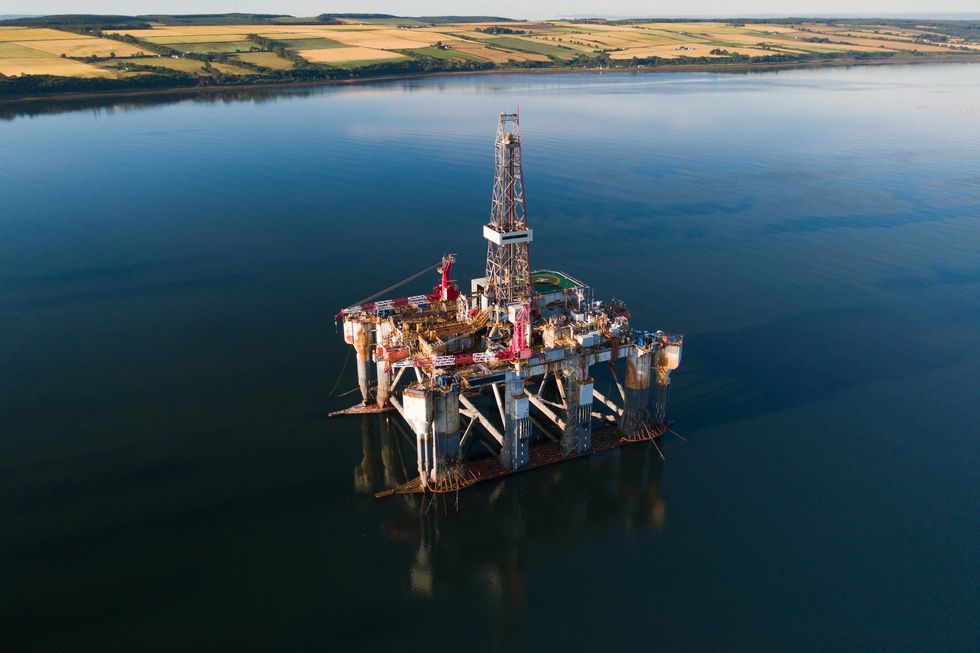 Experts warn drilling for more North Sea gas won’t fix the underlying problem | GETTY
The Tory MP for Gordon and Buchan added: “It is a resource that the Government and this Secretary of State is actively trying to shut down, however.”
Mr Miliband replied: “On the North Sea, I think she said it’s an incredibly important resource, which is exactly what I said in my statement, and indeed we listened to the industry and took a pragmatic approach on tiebacks to existing fields, welcomed by the industry, to keep our manifesto commitment of keeping existing oil and gas fields open for their lifetime.”
Outside of Parliament, the boss of Britain’s biggest gas and electricity supplier joined calls to “use what’s available from the North Sea”.
Reacting to Mr Miliband’s address to the Commons, Maurice Cousins, Campaign Director at Net Zero Watch, labelled it “deeply concerning”.
He said: “Britain needs secure, abundant and reliable energy. That means recognising the continuing strategic importance of domestic oil and gas, maintaining domestic production and preserving the industrial capacity required to sustain ourselves in a dangerous world. “Instead, the Government is doubling down on naive peacetime policies that weaken our hard power foundations just as the world becomes more dangerous.
Greg Jackson, the founder and chief executive of Octopus Energy, told the Telegraph that Britain is “staring down the barrel” of another energy crisis.
Pointing out gas prices have doubled since Iran in effect closed the Strait of Hormuz, he wrote: “Hikes in energy prices are bad enough, but they feed through to inflation, which in turn raises interest rates, compounding the economic damage.
“The UK needs more sovereign energy, and this requires practical, pragmatic decisions. Ideology, wishful thinking, nostalgia and culture wars don’t provide actual solutions. We should use what’s available from the North Sea.
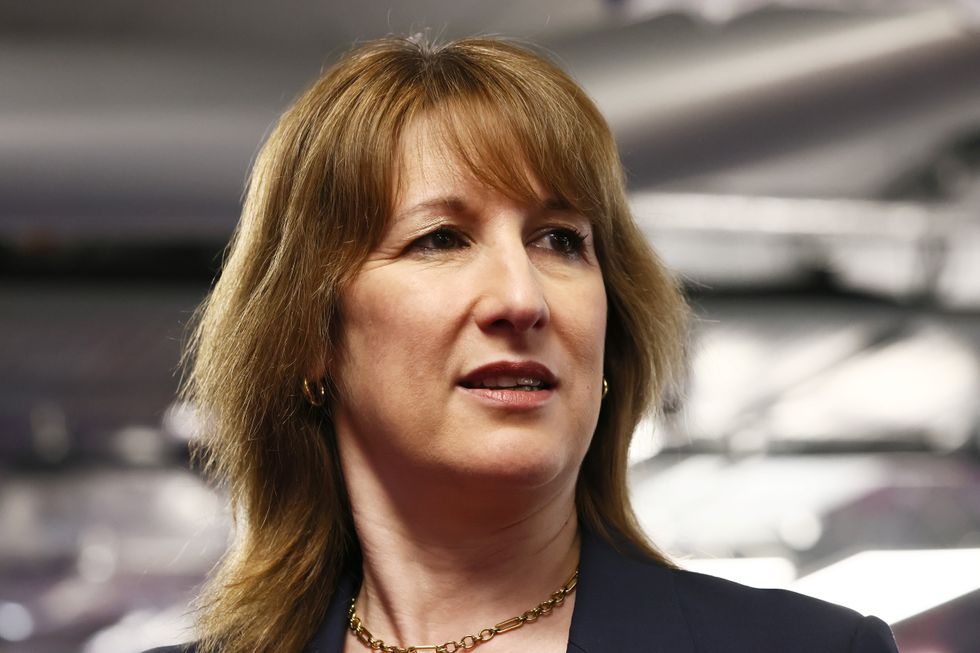
Rachel Reeves met energy bosses this week
| PA“While the price is set globally, there’s no point shipping gas from the other side of the world when we have it here.”
He said this would not be a “panacea”, pointing out that the most abundant reserves have been depleted and what remains is both less productive and more expensive.
“But it makes sense to use what we have whilst we’re so dependent on gas,” he wrote.
The comments come a day after Chancellor Rachel Reeves met energy bosses and reaffirmed her commitment to end the windfall tax on North Sea oil and gas. Introduced by the Tory government in the wake of the war in Ukraine – which sparked a sharp rise in energy prices – the charge was brought in to claw back some of these unexpected profits for the Treasury.
When added to existing charges it made the combined tax rate on North Sea profits 78 per cent. Critics have said keeping it in place would cost thousands of UK jobs and lose the Treasury billions in future tax revenue.
After the talks, a government source said: “The Chancellor was clear with industry that she wants the energy profits levy to come to an end. “She has made that promise and she stands by it. Indeed, it was a commitment she wanted to make this week. “But the crisis in the Middle East has had real-time consequences on oil and gas prices and it is right that we respond to this.”