










Unemployment is going up. And things are going to get worse. According to the British Chambers of Commerce (BCC), we can expect nearly half a million additional people to be on the dole by 2028.
Youth unemployment is already at its most severe for over a decade and the picture will be bleaker still in two years’ time, with another 167,000 out of work.
None of this should come as much of a surprise – either politically or economically. Unemployment always seems to rise under Labour governments, which is particularly ironic given the party’s name and its supposed purpose.
This isn’t an “iron rule” (the first Labour government in the 1920s presided over a modest drop in unemployment), but it is a very good rule of thumb.
Anyone with the most basic grasp of rudimentary economics will be similarly unsurprised by the BCC’s grim forecast. One of the first things you are taught as an A-level economics student is the law of supply and demand.
If the price of a good or service increases, more people are willing to offer it, but fewer are willing to buy it. You don’t need to have any formal background in economics to appreciate the concept.
You will generally start to buy fewer chocolate bars if the price of confectionery rises. In contrast, if the price of a holiday falls, you are more likely to buy one or have a longer one.
At some sort of gut level, Rachel Reeves seems close to understanding this idea. Her recent announcement that VAT would be reduced for family days out over the summer means – she feels sure – that more people will visit amusement parks and zoos.
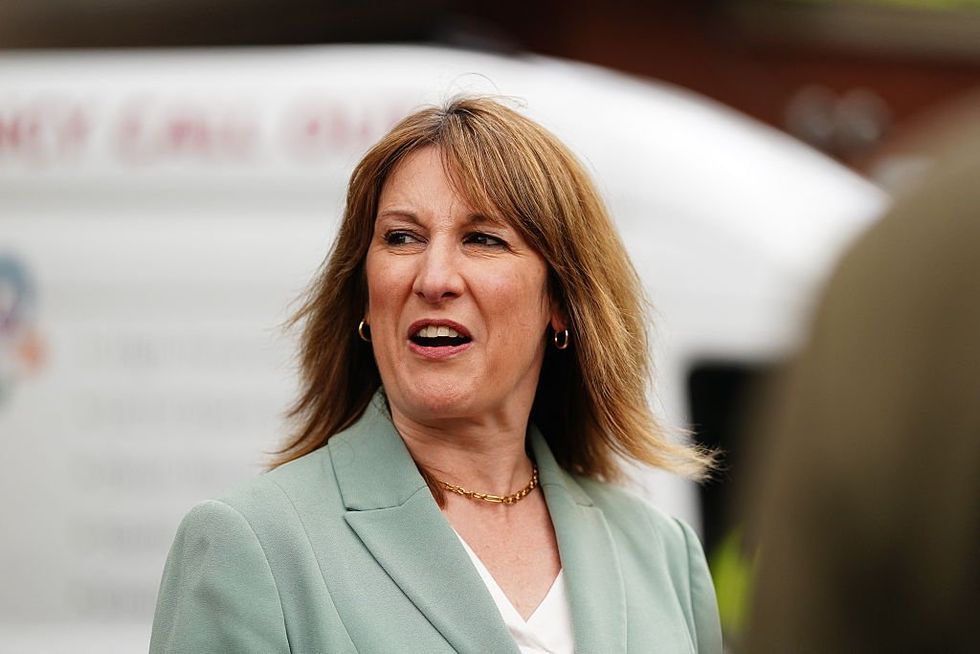
'It would be helpful – despite her claims of a lengthy and senior career at the Bank of England – if the Chancellor were asked to resit her economics A-level'
| GETTYBut on the other side of the coin, what does she think happens if you put up the price of employing someone? Suddenly, Reeves has a convenient but irritating blind spot. However, the same principle applies.
If you make it more expensive (or riskier) for businesses to take on additional workers, fewer will do so. Big hikes in the minimum wage can be expected to lead to a reduction in entry-level jobs.
The costs aren’t limited to the exact headline salary you have to pay. If workers have greater entitlements to sick leave, parental leave, claims for wrongful dismissal and the like, then expect there to be downward pressure on the number of employment opportunities available.
Again, like Labour governments, always increasing unemployment, it’s not an iron rule. Decisions made in a complex economic environment involve a myriad of factors.
LATEST DEVELOPMENTS
If business confidence is sky-high, you might find that companies are willing to put up with substantial pay hikes, as they are so optimistic about what the future will bring. But these metrics are also not in our favour – confidence is on the floor.
It would be helpful – despite her claims of a lengthy and senior career at the Bank of England – if the Chancellor were asked to resit her economics A-level.
Unfortunately, she is practising on the country at large without grasping some of the simplest principles.
Our Standards: The GB News Editorial Charter