







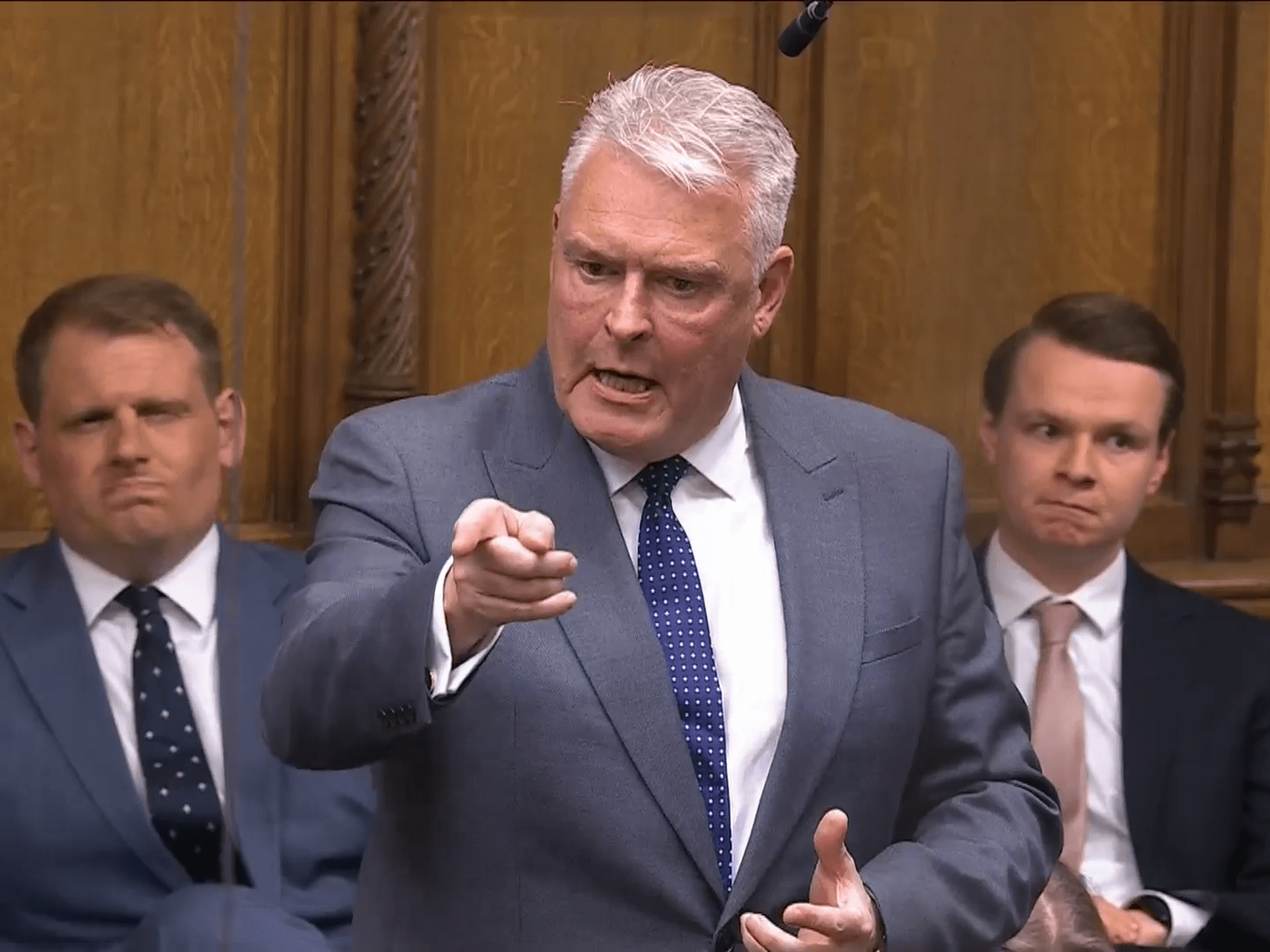
Scottish Labour politician Graeme Downie MP has set a hare running in the continuing debate on how the UK can raise its defence budget to a realistic level.
In an article published last week in ‘The House’ – “a weekly, non-partisan political publication considered the official magazine of the UK Parliament” – Downie raised the idea that Britain’s old age pension triple lock should not be sacrosanct when discussions are held over where the additional money for defence should be found.
This is a political hot potato. As of February 2025, approximately 13.1 million people in the UK were receiving the state pension.
This figure is expected to grow by 55 pr cent over the next 50 years, leading to a projection of 19.5 state pensioners by 2075. That’s a powerful voter bloc.
All political parties are rightly wary of crossing or upsetting them. Downie was quizzed on his article on BBC 5 Live radio over the weekend, with the presenter repeatedly asking him exactly how his proposition might be implemented. Answer came there none.
In other words, his idea falls into the “something must be done” category with no cogent, costed roadmap showing how it might be achieved, not yet anyway.
But it’s an idea which we shouldn’t dismiss out of hand. Let us have a quick look at the scale of the problem. As everyone surely knows by now, Britain currently spends roughly 2.3 per cent of its GDP on defence, approximately £60.2billion in 2024-25.
However, if you strip out from this the costs of maintaining the nuclear deterrent and associated works plus military pensions, it transpires that this figure reduces to 1.4 per cent of GDP, or just over £45billion.
This is clearly woefully inadequate given the challenges the UK faces and well below NATO aspirations for Alliance members.
 Political hot potatoes have left Britain vulnerable to attack as her enemies arm up - Lt Col Stuart Crawford |
 Getty Images
Compare and contrast with our spending on welfare. The UK’s welfare budget, at approximately £333billion for 2025-26, is between five and six times what we spend on defence.
A considerable part of this welfare spend, around £146billion, goes on state pensions. So if it seems perfectly reasonable that welfare cuts should be at least considered as a way of funding defence, then it also seems reasonable that pensions should be part of that consideration.
And obviously, the triple lock needs to be part of that calculus. Using figures that Downie himself quoted in his article, maintaining the triple lock will add £15billion per year to the pension bill by 2029-30.
Modifying or – Heaven forfends – abolishing the triple lock altogether could make some or all of that money available for future defence spending.
The problem is that the sum would hardly touch the sides of the budget hole in today’s defence budget, with a shortfall of some £280billion estimated over the next four years.
The long-promised Defence Investment Plan, meant to be published last autumn, has still not been produced due to a three-way Mexican standoff between the MoD, the Treasury, and 10 Downing Street over how to finance the shortfall.
Against this background, tampering with the triple lock is small beer indeed and probably not worth the political fallout.
However, Graeme Downie deserves some kudos for at least starting the debate, even though he provides no solution. What the UK needs is robust and decisive leadership from 10 Downing Street on the issue. Is that too much to ask?