







The appointment of Peter Mandelson and the subsequent security vetting failures have raised a fundamental question: who is actually running Britain?
This cannot be dismissed as a minor administrative oversight. It goes to the heart of how the country is governed.
How can Keir Starmer, the Prime Minister, say he was unaware of concerns raised during the vetting process of Peter Mandelson, a figure publicly linked to convicted sex offender Jeffrey Epstein?
The claim is not that he was informed too late or that he disagreed with a recommendation. It is that he was not informed at all, while the process continued regardless.
To be clear about the sequence of events, this relates to a diplomatic appointment process between December 2024 and January 2025.
During this period, senior-level vetting procedures were carried out as part of efforts to place Peter Mandelson into a senior ambassadorial role within the UK diplomatic service.
Within that process, security checks were conducted through established Civil Service channels. These procedures exist to assess risk and to escalate any concerns through official routes, particularly where issues of vulnerability, compromise or reputational damage may arise.
The key issue is that concerns were identified during vetting, but the process continued; the appointment proceeded. Only later did it emerge publicly that those concerns had existed.
Downing Street has stated that those concerns did not reach the Prime Minister during the decision-making process.
That leaves several possible conclusions: either the concerns were deemed insufficient to escalate, or decisions were taken within the system that did not reach elected leadership. If it is the latter, it raises serious constitutional questions.
The Civil Service is not elected. It is intended to be neutral, professional and efficient, operating on behalf of the British public. However, neutrality does not mean absence of accountability.
When a process of this significance fails to escalate key information, it prompts a central question: who made the decision and why?
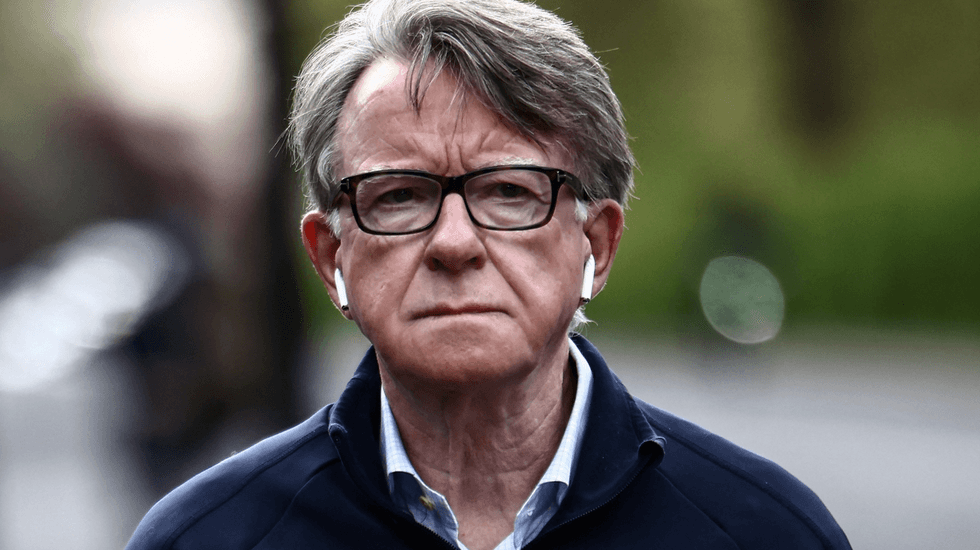
Who is actually running Britain? The Mandelson scandal raises the fundamental question - Bev Turner
|Getty Images
Systems do not fail in isolation - decisions are made by individuals operating within them.
This concern is not new, of course; talk of the 'Deep State' has gained momentum since the unanswered questions about the pandemic.
It has been raised previously by former senior figures within government, such as former Prime Minister Liz Truss, who has argued that parts of the state have accumulated excessive influence and that ministers do not always retain full control over actions taken in their name.
Former No.10 adviser Dominic Cummings has repeatedly warned that decision-making within Whitehall can become opaque, slow and disconnected from elected authority.It feels like he is shouting into the void - his stunning comments about the theatre of politics are roundly ignored by the Establishment media, perhaps because they are too seismic to portray and risk collapsing a system that serves many masters.
Whatever Truss and Cummings' political positions are, both point to a broader concern. That the practical centre of power in Britain does not always align with the public understanding of where authority lies.
In Washington, a failure of this scale would likely trigger immediate congressional scrutiny. Officials would be summoned to hearings.
Committees would demand explanations. The White House would face sustained pressure to clarify events quickly and publicly.
In Britain, the explanation is often framed as part of “the process”.
But this is not what voters expect. We choose politicians to make decisions and to be held accountable for them.
If key information does not reach elected leaders, the question becomes unavoidable. Who is actually making the decisions?
This is where the issue moves beyond Westminster and into a broader question about democratic accountability.
If decisions can be made without the knowledge of elected leadership, what else is occurring outside public scrutiny, and who benefits from it?
Whether described as a system failure, bureaucratic drift or something more structural, the concern remains the same.
If the Prime Minister is not fully informed about what is happening within his own government, then voters are entitled to ask a simple question. Who is really in charge?
And unless we answer that question, voters will grow increasingly despondent and detached from the gift of voting in a democracy.As one passer-by said to a GB News reporter yesterday, "What's the point? They're all the same." Unless we agree on who "they" truly are, our democracy becomes a joke.