








Timing is everything – and the UAE has seized its chance.
Its decision to quit Opec could leave it free to produce another 1.5 million barrels of oil a day, making the most of a fuel-starved market.
It’s a bold move, and, analysts say, it throws the UK’s apparent paralysis over the North Sea into sharp relief.
While the UAE gets to work on its new domestic oil strategy, work has ceased at Rosebank, an oil field, and Jackdaw, a gas field, pending legal challenges on climate grounds.
“It remains frustrating that while countries like the UAE are taking advantage of the oil crisis to grow their economy, the UK Government is still dithering over whether to approve two fields,” says Andy Mayer, energy analyst at the Institute of Economic Affairs.
The middle of an energy crisis might seem a strange time for the UAE to leave Opec, after nearly 60 years of membership.
The Strait of Hormuz remains blocked, critical infrastructure around the Gulf is in ruins and President Trump’s repeated threats to bomb Iran’s power networks hang heavy over the region.
But it is perhaps because of this chaos that it has chosen to jump.
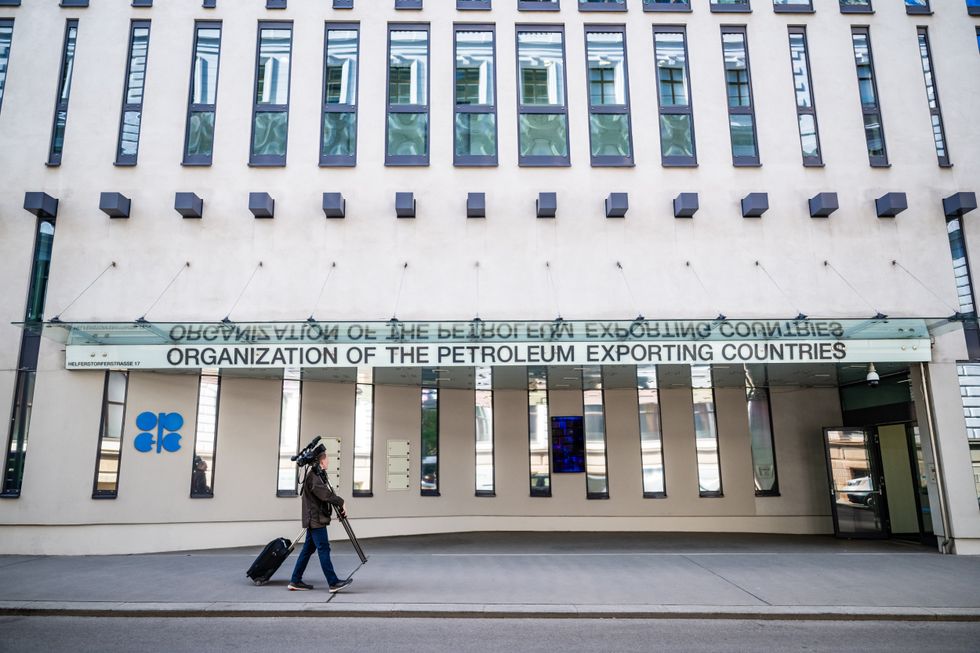
The UAE left Opec after nearly 60 years of membership
|GETTY
It says its decision “is based on our national interest and our commitment to contributing effectively to meeting the market’s pressing needs”.
It knows that the market needs oil. Before the announcement, the price had already risen above $110 a barrel, the highest in three weeks.
It knows it wants to produce 5 million barrels of oil a day by next year - some 1.5 million above its Opec allowance.
Jorge Leon, head of geopolitical analysis for energy research group Rystad, said: “The timing tells you something about where the oil market is going.
“With demand nearing a peak, the calculation for producers with low-cost barrels is changing fast, and waiting your turn inside a quota system starts to look like leaving money on the table.”
LATEST DEVELOPMENTS
Despite the promise of such a production glut, the impact is not likely to be felt immediately, experts say, because the war has frozen supply chains.
UAE’s energy minister, Suhail al-Mazrouei, hinted this was the point.
He explained: “The timing in our view is right because it has a minimum impact on all of the producers.”
Michael Brown, senior research strategist at Pepperstone brokerage, said the announcement was still “undoubtedly a pivotal event for the global energy market”.
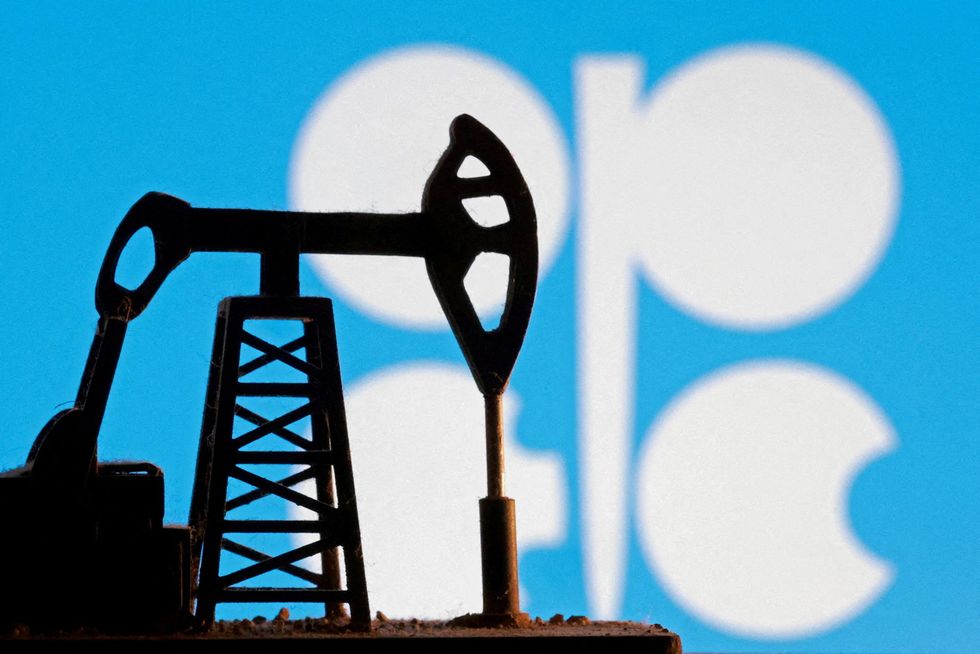
Before the announcement, the price of oil rose above $110 a barrel, the highest it's been in three weeks
|REUTERS
Opec controls up to 40 per cent of the world’s oil and its members sit on 80 per cent of the proven reserves.
It has used its power to influence world events, most memorably the oil shock that followed the 1973 Yom Kippur war.
Traditionally, it has kept a united front. In 2016, it expanded to create an OPEC + group, with Russia taking a seat at the table. But cracks had begun to appear.
Qatar left in 2019, ostensibly to focus on gas, its main market, but also because it wanted autonomy from its Gulf neighbours.
The UAE had previously hinted at leaving, complaining its lower-cost barrels were being held back by quotas.
In addition, it has a longstanding disagreement with Saudi Arabia over Yemen, which some analysts say has become a proxy war between the countries.
UAE-backed forces have clashed with those supported by Riyadh.
“Growing tensions between the two – including over Yemen and the UAE’s expanding production ambitions – are likely a more important driver of this decision than recent Gulf instability alone,” says Mr Mayer.
Even if not completely unexpected, the announcement will still sting the remaining members.
The UAE has been part of Opec since 1967 and is the fourth largest producer within the group. Saul Kavonic, head of energy research at MST Financial, suggested the loss of the UAE was "the beginning of the end of Opec".
“With the UAE leaving, Opec loses about 15% of its capacity and one of its most compliant members,” he explained.
The news is also likely to please President Trump, who has previously accused OPEC of “ripping off the rest of the world” by inflating oil prices.
And Mr Mayer predicted that, even if there might be “dithering” on the North Sea front, the outcome could ultimately be beneficial for the UK.
“For Britain, the likely implication is positive: greater competition among producers should, over time, put downward pressure on prices.
“As a net energy importer, the UK benefits when exporters compete to sell oil and gas rather than coordinate to restrict supply.
“If this marks the start of a broader weakening of OPEC, many consumers would see that as a welcome development.”