




Britain already has its fair share of awful Muslim politicians. The mayor of London, Sadiq Khan, is certainly one. Sufficiently bad to have consistently drawn the ire of Donald Trump. The former First Minister in Scotland, the execrable Humza Yousaf, is another.
But is there any evidence that their religious identity has made them less effective politicians? Or are they simply woeful public servants, regardless of whose god they worship?
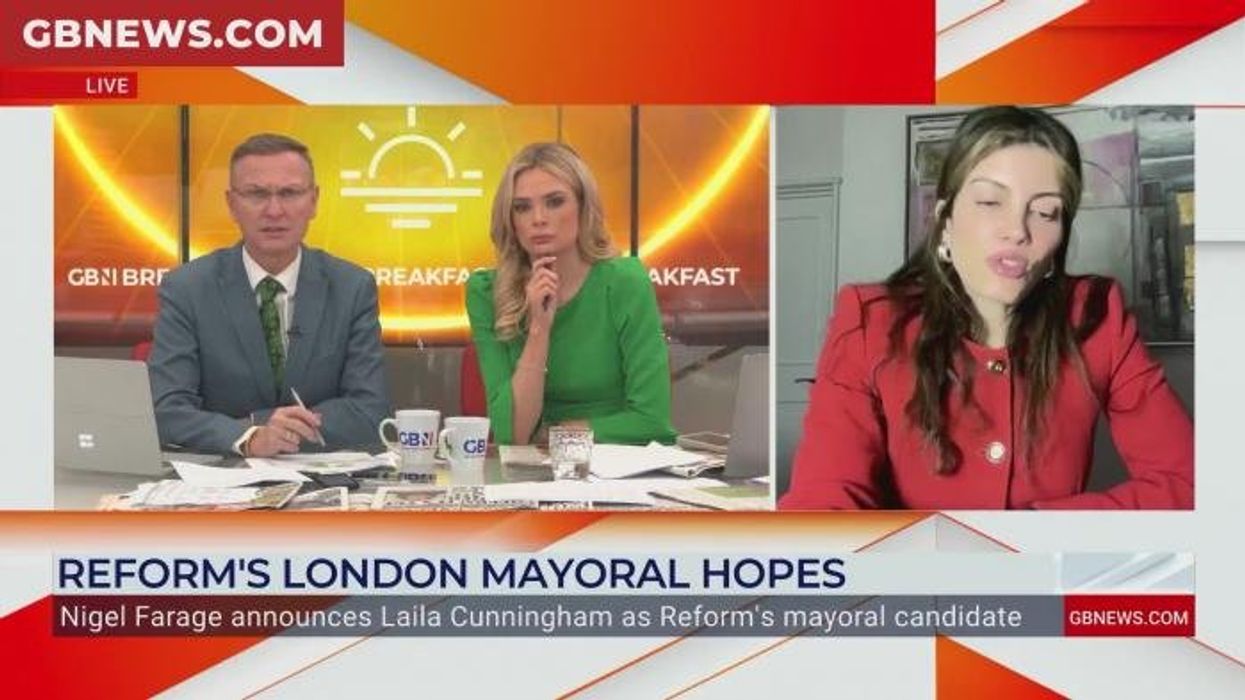
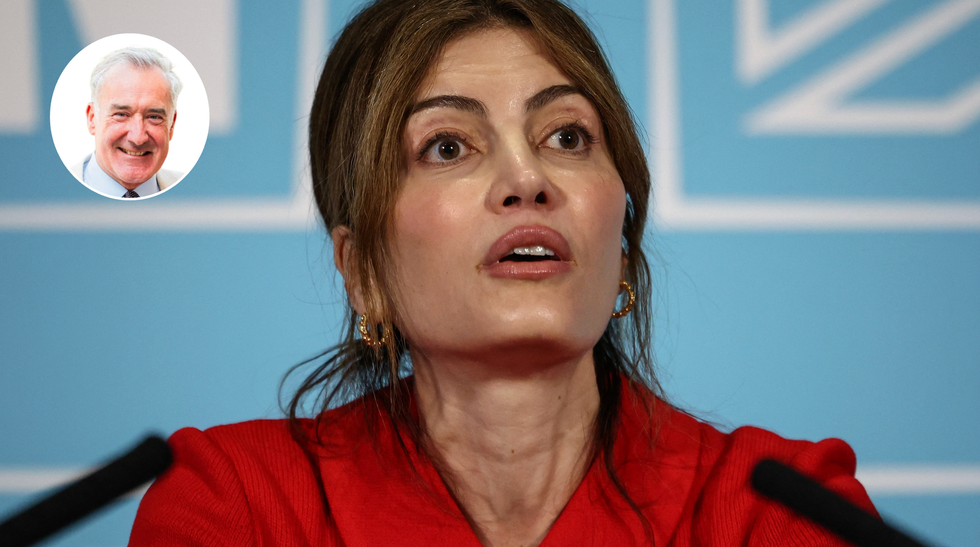
That is the substantive question that lies behind the hue and cry that met Laila Cunningham’s unveiling as Reform’s candidate to be the next mayor of Britain’s capital this week.
On Twitter, I wrote that I recently worked with her at Reform HQ. I said: “She is whip-smart, articulate and nuanced. Her views were thought-through, coherent and firmly of the Right. I fail to see why having Muslim parents puts her beyond the pale for some parts of the conservative movement.”
For me, Cunningham’s faith is not irrelevant. Those who think even asking whether her faith is a question to be addressed are missing the point. But nor is it critical. Let me explain my reasoning.
First, I am no fan of Islam as an ideology, a creed which forswears any distinction between mosque and state. As a Christian, I think the biblical injunction to “render unto God what is God’s and render unto Caesar what is Caesar’s” is something Islam feels the want of.
For adherents, Islam seeks to govern all aspects of life, giving it a poor historical track record of arranging human affairs and progressing the story of human advancement.
I say this as someone who has worked as a journalist in many Muslim countries, including several months in Pakistan. In my opinion, Islam - particularly of the Wahhabi variety so popular in madrasas - is one reason India has forged ahead of its neighbour and rival.
Nigel Farage has made the right choice for London mayor - Colin Brazier
|Getty Images
Take, for instance, the aforementioned Humza Yousaf. Two years ago, when he invited the media to witness the first-ever Muslim prayers inside the First Minister’s Edinburgh residence, there was general rejoicing in Scotland’s MSM.
And yet the same commentariat had been outraged about the orthodox Christian values being espoused by his former leadership rival Kate Forbes. If you doubt the truth of this, try imagining the response if Bute House had hosted a Bible prayer meeting. Unthinkable.
So, do I think faith is relevant? Absolutely. Are the so-called ‘Gaza independent’ MPs more interested in the fates of their co-religionists far away in the Middle East than they are in some of the more prosaic problems of their near neighbours? Sure.
Is that because they are Muslims? Partly, yes. So personal religion matters. When Tony Blair was asked if he’d prayed with George W Bush, his spin doctor Alistair Campbell famously stepped in and said: “We don’t do God.” But we should. We deserve to build the fullest possible picture of those who seek to rule our lives. And their belief, or not, forms part of our understanding.
I say all this as a mass-going Catholic. I think the word Islamophobic is a political contrivance to close down legitimate debate. But if we take the word at face value, then I am one.
I am fearful of Islam and what it might do to the world. If that is an irrational phobia, then that is for other people to decide. But - as a Catholic - I also believe that all men are my brothers, made in the image of God. At the very least, people should be judged - first and foremost - by their actions and the content of their character, not their religious identity.
And yet that is not how some on the Right see things. My fellow Catholic, Connor Tomlinson, an influential and articulate figure on Twitter and elsewhere, said this week - point-blank - that he would “refuse to vote for a Muslim candidate”.
Online, people explained why. One post in my timeline said Cunningham’s “first loyalty is to the ummah [the global Islamic people], not to the UK or London”.
Others balked at what they felt was the over-representation of people from ethnic backgrounds at the top of public life. Rishi Sunak and Kemi Badenoch were part of the roll call, even though one is Hindu and other a (lapsed) Christian.
My old GB News colleague and co-presenter, the Kenyan-born Mercy Muroki, used to talk a lot to me about “immigrant optimism”. The idea that someone who has striven to come to the UK will sometimes keep going all the way to top.
And this is where things become really interesting. Because, isn’t the truth that - when it comes to the rights and wrongs of multiculturalism - nationality should trump religion.
When it comes to formulating an immigration policy, give me Muslims from Indonesia than Muslims from Pakistan or Somalia or, worst of all, from Afghanistan, any day. When it comes to drawing distinctions - based on data - between different nationalities, we have simply not been discriminating enough.
The other strand of thinking that emerged online this week was the sight of people dismissing Cunningham as tokenistic; a sop to the bloc-voting habits of Muslim Londoners. And here I have some sympathy. Muslims probably account for no more than a fifth of the capital’s population and yet there is evidence that they can vote on sectarian lines.
But again, this is to ignore the fact that Cunningham looks like an outstanding candidate regardless of her religious affiliation. She is a shrewd choice by Nigel Farage, showing undecided voters that - as Zia Yusuf illustrates - Muslims of good faith and the Reform Party are far from incompatible.
Most importantly of all, Cunningham shows a way we might yet salvage our nation from the ravages of unchecked immigration and racial segregation. There are those to the Right of me who believe that ‘remigration’ is the great panacea. Blood and soil ethno-nationalists who say British identify can’t be handed out like confetti.
Like them, I want to see citizenship treasured. Those who abuse our hospitality; those who come here illegally; those who come here to commit crimes; I want all of them to be deported, and fast. I want to see the Boriswave turned back. And I want to see a Reform government introduce pro-natal policies that will allow British natives to have all the children they want, so that - long term - we can wean ourselves off the cheap fix of imported foreign labour.
But mass deportations would raise massive ethical and practical difficulties. Far better to find a middle way where Islam is not given any special protections, but where truly moderate Muslims show that it is possible to enrich British society. And where Muslims who elect to become Christians, do not face death for apostasy.
The online reaction to Cunnigham’s candidature has been a clarifying moment for me. Her critics are not without grounds. Dan Wootton, whose Outspoken show online has a huge following, made the fair point that he - as a gay Londoner - wanted to know if Cunningham’s Muslim faith gave her a socially conservative view of his sexuality. Fair question. But most of what I have seen has been clarifying in another sense. That the Right risks being hopelessly split between nativists and pragmatists.
More From GB News