







Labour MPs and leadership hopefuls are being dragged towards rejoining the EU Customs Union and single market by the siren voices of the Lib Dems and Greens.
These misguided parties wrongly think that much closer ties to the EU would be good for business and trade. They do not understand what they are trying to join, as it would slow our growth more, put up prices more, and make the government even less popular.
When the UK left the EU Customs Union at the end of 2020, we were able to remove all tariffs from raw materials and components our manufacturers import from non-EU countries from all around the world.
The EU had made us pay more for these items as they received most of the revenue from the customs dues or tariffs, and they needed more money to spend. They like higher tariffs, which hit manufacturers needing imports and cost consumers more for things they need to buy from abroad.
We were also able to remove all tariffs on items the UK cannot produce or grow for itself, helping stem the rise in inflation which the Bank of England triggered by its bad money policies in 2021-2023.
The media need to ask these pro-Customs Union people why they like the idea of higher taxes on imports, and why they think most of the revenue from such taxes should pass to the EU to spend so it does not even help bring our deficit down.
Were we to rejoin the Customs Union, we would need to tear up our free trade deals with the Trans Pacific Partnership, India, Australia and New Zealand because they would break EU rules. The pro-EU faction says these deals do not add much to our GDP, so they would not be much of a loss.
By the same logic, they should say a new trade deal with the EU would not add much to our GDP, especially as we already have a free trade deal with no tariffs with them!
The truth is, these new deals with large areas of the world that are much faster growing than the EU are useful and will help our growth rates a bit in the years ahead. It is difficult to see what the wins will be from closer alignment with the EU, when there are many obvious losses.
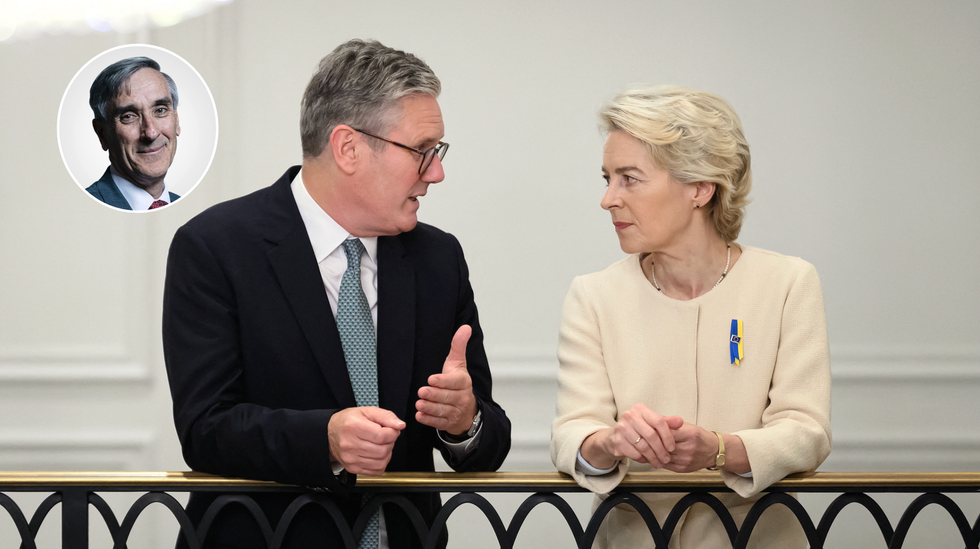
Keir Starmer has a very cynical interest in keeping Britain out of the EU's shackles - John Redwood
|Getty Images
The pro-EU people just argue about trade in goods, ignoring the fact that 57 per cent of our exports are services. They refuse to recognise that services are not only the largest part of our exports already, but they are the fastest growing and they are much bigger with non-EU countries than with the EU.
Our new trade deals struck after Brexit have chapters dealing with services, which EU trade deals either left out or changed very little.
Looking ahead, the UK needs greater liberalisation of services, which the EU never gave us.
Aligning ourselves with single market rules would also be unhelpful to growth and would push up price rises. The government is keen to join the EU electricity trading and carbon emissions scheme. This will put up our carbon tax level and further push up energy costs at a time when the government says it wants to get energy bills down and ease the pressures on the cost of living. So why volunteer for a dearer energy scheme?
The UK is already too dependent on imports from an energy-short continent, and needs to proceed with more investment in combined cycle gas and nuclear power stations to keep the lights on and keep costs down. Relying on very dear imports at times of cold and dark weather with little wind is an expensive folly.
The Government seems to think we can export much more meat and dairy products to the EU if only we accept all their veterinary and food laws.
All the time we were in the EU, we saw our farms under pressure to produce less meat and dairy through inadequate quotas and other rules, as the EU farming system favoured continental producers.
The Government's anti-farm and anti-homegrown food policies mean the industry is in no shape to respond to any increased chance of exporting to the EU, which is being exaggerated in the light of our experience for all those years in the EU.
Unfortunately, our current meat and dairy exports to the EU are tiny. The government has given away another 12 years of our fish to the EU for no gain to counterbalance.
Our best hope of producing more of our own food would be taking back control of our fishing grounds, giving far smaller quotas to EU vessels and rebuilding our own fleet. Why not try that? It would produce many more shipbuilding, ship servicing and fish processing jobs in the UK.
The main point of Brexit was to take back control of our own laws, taxes and spending programmes. Being able to free our trade with non-EU countries was a bonus which we have begun to use. Getting back into the Customs Union would hit manufacturers importing from non-EU countries and put up prices for consumers.
Aligning with EU rules and laws would hinder innovation and make it even more difficult to catch up with the USA, which has laws and policies more helpful to enterprise and the digital revolution than the EU.
The Prime Minister seems to have got the message that the Customs Union is a bad idea. It is also bad Prime Minister to adopt more EU laws and rules and to pay more money to the EU to administer them. We tried that for 47 years in the EU, and it gave us slower growth, falling further and further behind the US.
Our Standards: The GB News Editorial Charter