








President Trump has identified precisely what many in Britain already recognise: Keir Starmer’s government is committing acts of great stupidity.
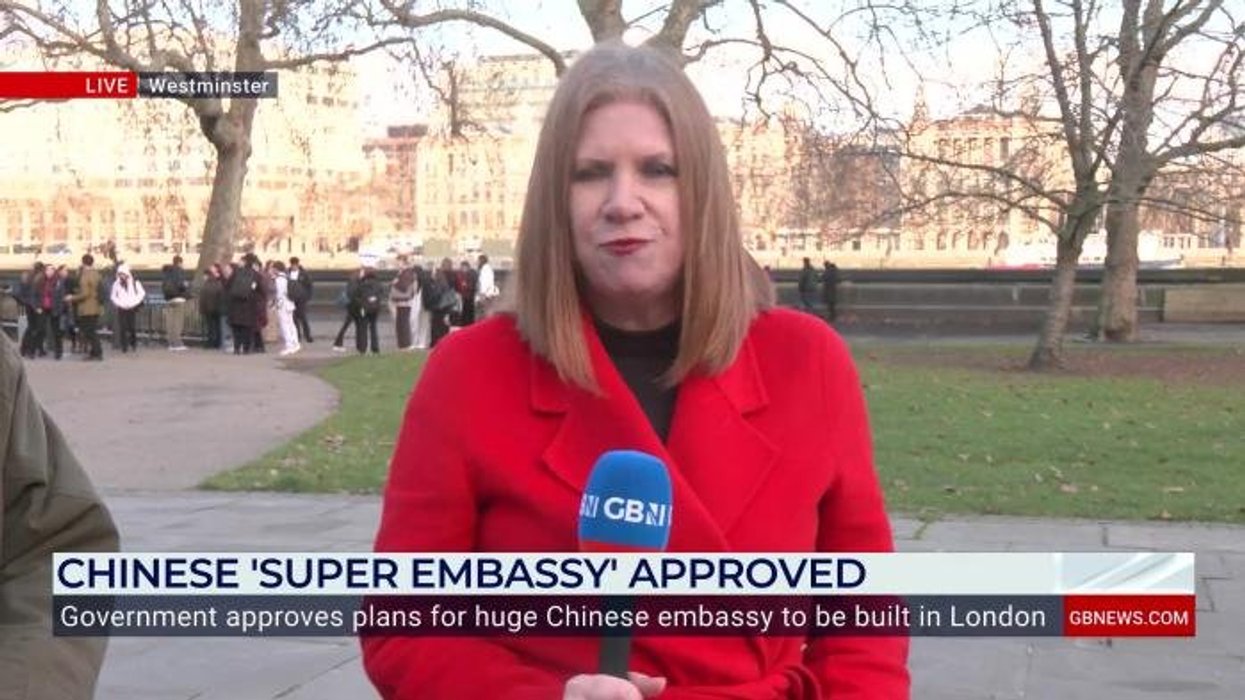
On Tuesday, the Prime Minister authorised China’s largest embassy in Europe—a 20,000-square-metre complex near the Tower of London—despite persistent warnings from lawmakers across parties, security experts, and allies, including the United States.
This approval precedes Starmer’s planned visit to Beijing, the first by a British prime minister since 2018, and clears a long-standing diplomatic hurdle at the direct expense of national security. America has no authority to end the reign of a dangerous government, but the United Kingdom does.
The decision exposes a pattern. Critics, including Labour peer Helena Kennedy and others who wrote to Housing Secretary Steve Reed, highlighted unresolved risks: proximity to sensitive financial cables in the City of London, potential for espionage, and heightened intimidation of Chinese dissidents in exile.
Conservative figures such as Priti Patel described it as a “shameful super-embassy surrender,” while shadow housing secretary James Cleverly called it an act of cowardice devoid of backbone.
The Government insists intelligence agencies were consulted and that consolidating China’s diplomatic presence from multiple sites to one may ease monitoring.
Yet the timing—tied explicitly to improving ties with Beijing—reveals ideology masquerading as pragmatism. Starmer prioritises economic reset and diplomatic access over deterrence against a regime that has repeatedly demonstrated hostile intent toward Western interests.

Keir Starmer approving Beijing's spy fortress just unlocked the mechanism to end his premiership - Lee Cohen
|Getty Images
This is not isolated. Hours earlier, Trump condemned the Chagos Islands agreement on Truth Social as an “act of GREAT STUPIDITY” and “total weakness”.
The deal cedes sovereignty over the archipelago, including Diego Garcia—the site of a vital joint US-UK military base—to Mauritius for no compelling strategic gain, while Britain retains a 99-year lease at significant cost.
Trump reversed prior US endorsement, arguing the move signals vulnerability that China and Russia will exploit, and links it directly to his case for acquiring Greenland as a national security necessity.
Kemi Badenoch echoed the charge, calling the Chagos handover “complete self-sabotage.” The contrast is stark: a post-Brexit Britain, ostensibly committed to sovereign control, voluntarily relinquishes strategic assets while Labour pursues concessions to authoritarian powers.
These two decisions — approving the Chinese embassy and advancing the Chagos transfer—illustrate Labour’s Britain-last priorities and governing logic.
Sovereignty is treated as negotiable when ideological priorities intervene. The party’s managerial class views national interest through the lens of globalist accommodation: reset relations with Beijing for trade access, signal virtue on colonial legacies via Chagos, and manage alliances as costs rather than multipliers of power. The result is structural weakness.
Britain’s geopolitical position depends on credible deterrence, secure borders, energy independence, and leverage within NATO.
Labour’s approach erodes each: exposing critical infrastructure to foreign surveillance, diminishing control over key military facilities, and fraying the Special Relationship at a moment when transatlantic strength is essential against rising threats in the Indo-Pacific and Arctic.
The Special Relationship functions as a force multiplier only when both partners act with resolve. Trump’s blunt assessment underscores the imbalance.
An America-First administration demands allies who prioritise their own security and contribute to collective defence, not those who retreat under pressure. Starmer’s responses—avoiding direct engagement with Trump amid tariff threats and Greenland rhetoric — compound the damage.
Britain cannot afford to appear as the weak link in NATO when adversaries test resolve through territorial opportunism and hybrid threats.
The establishment indictment is clear. Progressive governance under Labour consistently produces retreat: ideological commitments dressed as realism lead to eroded sovereignty, compromised security, and diminished leverage. Competence gives way to managerialism in order to accommodate.
Britain now faces a stark choice. Continue under a government that subordinates hard assets to diplomatic expediency, or restore seriousness through decisive change.
The constitutional framework provides the mechanism: the King reserves the power to dissolve Parliament in circumstances of extreme governmental failure or loss of national confidence, though exercised historically on prime ministerial advice.
Precedents affirm the prerogative’s existence; the Dissolution and Calling of Parliament Act 2022 revived it explicitly.
When executive actions endanger core security and sovereignty, the Monarch’s role as guardian of the constitution becomes relevant.
The path is inevitable. A government demonstrably hostile to national interest through repeated acts of stupidity cannot sustain legitimacy indefinitely.
There exists a mechanism to end this Parliament and compel an election. Britain requires leadership that treats sovereignty as a non-negotiable asset, strengthens the Special Relationship through mutual resolve, and rejects ideological erosion. Anything less invites further destruction. The moment demands action, not delay.
More From GB News