








The world is facing a new nuclear arms race that could see 20 countries chasing the bomb, the head of the atomic weapons watchdog warns.
Rafael Grossi said growing instability had left the world in a “very, very fragile position” and a “crack in the system” could push nations into racing for nuclear capability.
He said there had been talk of “friendly proliferation” from “important countries in Europe, in Asia Minor, in the Far East”.
The issue has been discussed by countries including Poland, Turkey and Saudi Arabia, as well as South Korea and Japan.
TRENDING
Stories
Videos
Your Say
Mr Grossi, Director General of the International Atomic Energy Agency, told The Telegraph: “There are all these things which fill me with concern because I believe that a world with 20 nuclear weapon states or more would be extremely dangerous.”
He said he believed the “current atmosphere of fragmentation, conflict, polarisation” had led to talk of nuclear armament.
He feared an increasingly volatile world “might lead to a situation where several countries might say one day, we do not feel safe. We do not feel sufficiently protected”.
Although the countries are signed up to the Non-Proliferation Treaty, which sees non-nuclear states pledge not to seek weapons, a breach of these rules was not unthinkable, he said. “There’s been a few important countries, important countries in Europe, in Asia Minor, in the Far East that have mentioned [it] and where a public discussion is taking place about this possibility. There is talk about ‘friendly proliferation’.”
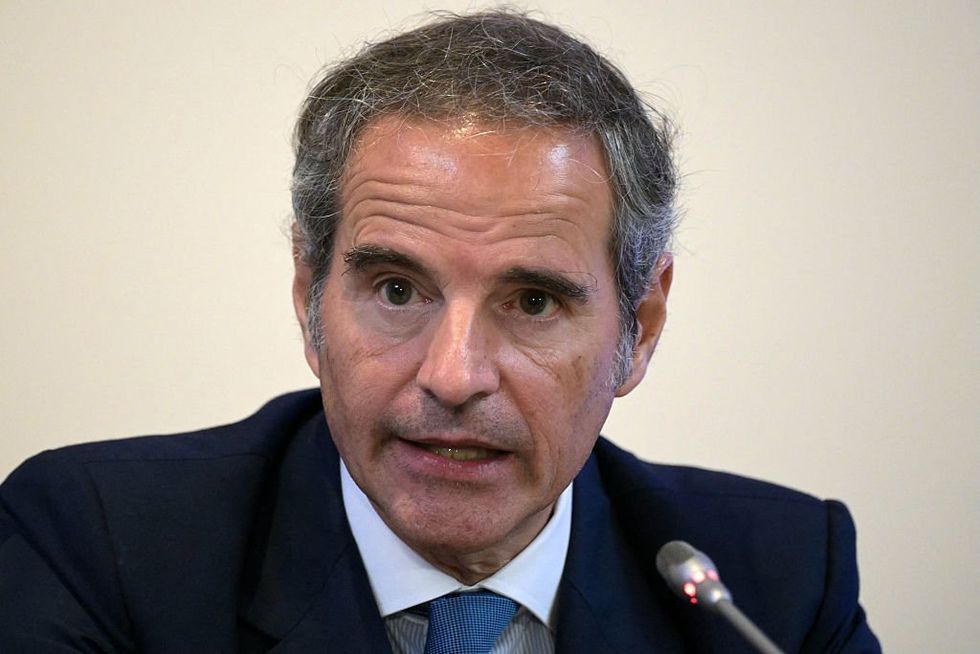
Rafael Grossi said growing instability had left humanity in a 'very fragile position'
|GETTY
He stressed the world was not yet at that point and said that reinforcing the importance of containing nuclear capabilities was vital.
But he warned: “At some point, we are going to see a crack in the system. And then we’ll have a domino [effect]. It is a very, very fragile position. It’s not the case right now. But I think it’s fair enough that we highlight the need to reinforce and recommit to non-proliferation beacons if you want stability in a world that I think is in need of those.”
There are five nuclear states recognised by the treaty – the USA, Russia, China, France and Britain.
India, Pakistan, North Korea and Israel are also understood to have nuclear weapons.
LATEST DEVELOPMENTS
- Nuclear power station approved with 8,000 jobs to follow as Rolls-Royce pumps £2.5billion into Wales
- 'Fantastic example of strength and resilence!' Nuclear veteran opens up on life-changing consequences of atomic tests 60 years on
- British nuclear missiles risk being shot out of the sky by Vladimir Putin's new air defences
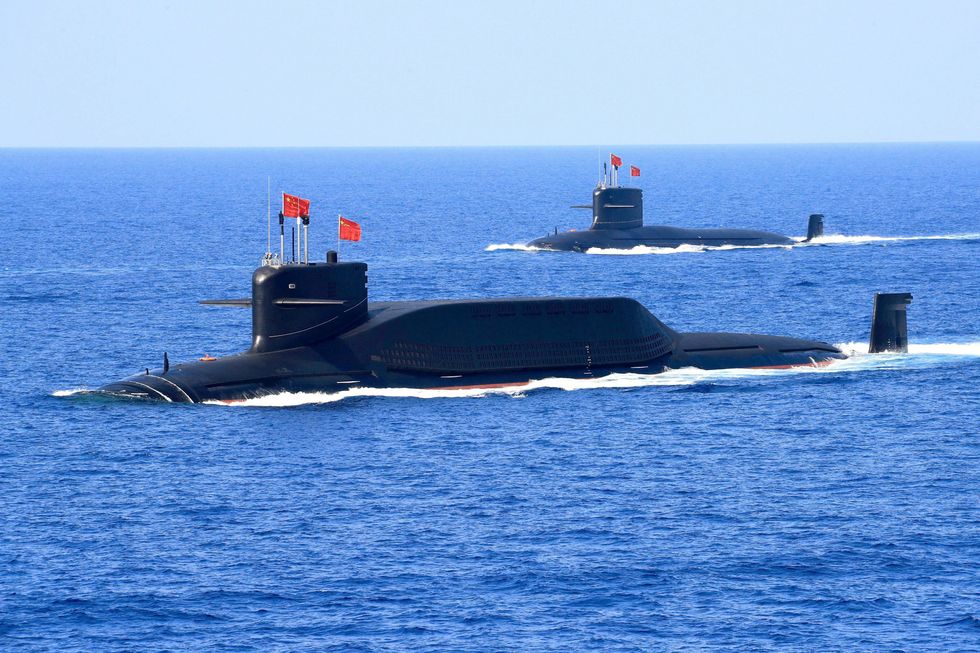
He added China was overseeing 'a very steady growth' in its nuclear arsenal
| REUTERSIt was President Donald Trump’s belief Iran was on the cusp of developing a nuclear bomb that was cited as a reason for the current Gulf conflict.
The US has also spoken about seizing Iran’s enriched uranium by force if it is not surrendered.
However, Mr Grossi advised caution, saying: “There are inherent challenges to such a move. I don’t doubt for a second that the United States has the military capabilities to do this but I’m just saying this is a very delicate thing to handle, to manipulate, to move around.”
He added the IAEA had deep knowledge of Iran’s nuclear programme and would be best placed to confirm what was really happening with it.
Without the involvement of his agency, he said, any deal struck would be impossible to verify.
“Without verification, any agreement is no agreement,” he said. “It’s an illusion of an agreement.”
He added China was overseeing “a very steady growth” in its nuclear arsenal, which he said was cause for concern.
North Korea had an “ambitious” programme for developing ballistic missiles, he said, warning of tensions on the peninsular.
Our Standards: The GB News Editorial Charter