

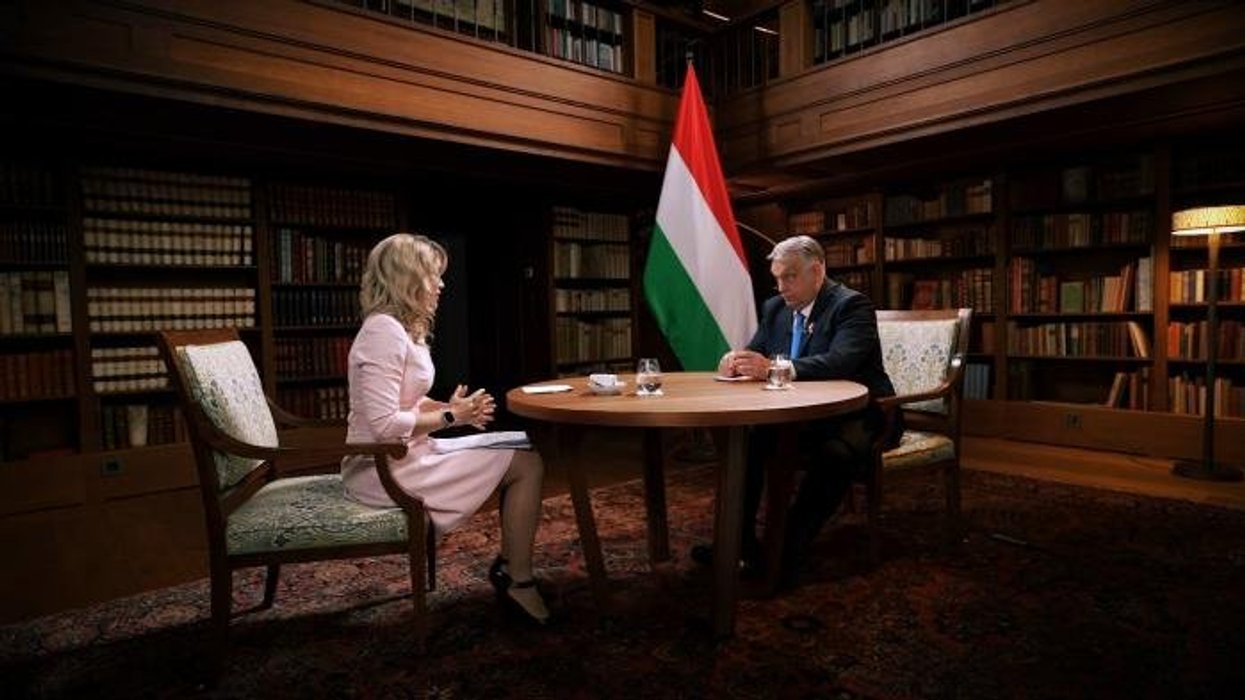






Hungarian Prime Minister Viktor Orban has told GB News that Europe's Christian heritage is "dying out" after the continent witnessed a surge in migration.
Speaking exclusively with the People's Channel, Mr Orban insisted religious values and teachings offer a reliable way to offer moral guidance, particularly when it comes to weighing up the good and the bad.
Christianity remains the largest religion in Hungary today, making up 43 per cent of the population, with almost 30 per cent of this figure being Catholic.
Although it has historically been a Christian nation, no state religion is imposed on its citizens, while freedom of religion is protected.
TRENDING
Stories
Videos
Your Say
The Hungarian premier is often a self-acclaimed defender of Christian civilisations, encouraging a hike in the number of state-funded faith schools across Hungary.
He warned that Christianity is now being questioned more often, culminating in conflicting views towards heritage and how it should manifest in today's society.
From 2010 until 2020, data from the Pew Research Center noted atheists were the fastest-growing group across Europe.
Over the decade of the migration boom, the number of Christians dropped by nine per cent, with the number of Jews also dropping by eight per cent in 2020.
However, every other key religious group grew, with atheists increasing by 37 per cent, while the number of Muslims increased by 16 per cent.
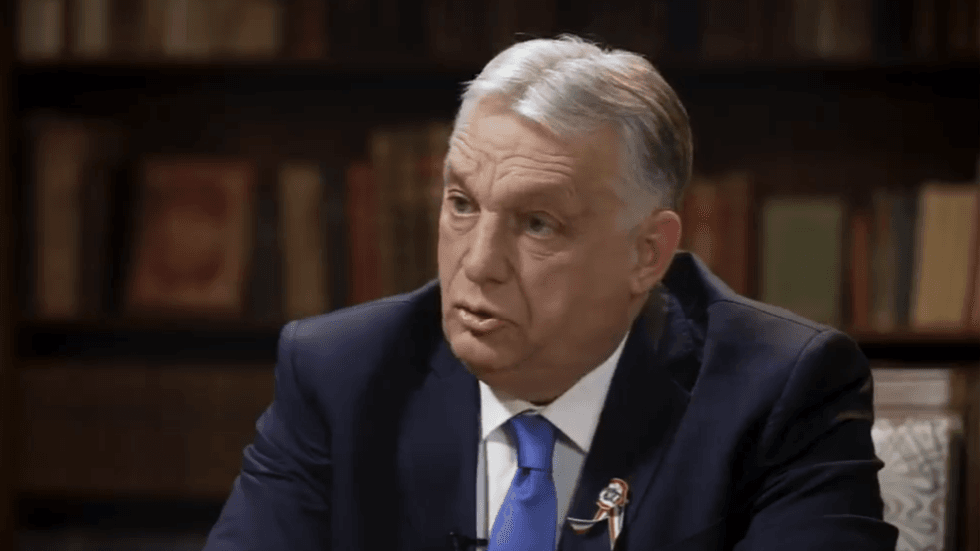
Viktor Orban argued Christianity taught useful lessons on morality to citizens, beyond belief in God
|GB NEWS
While some today view the religion as a heritage or a value, those leaning towards the left have argued religious adherence "belongs in the past", Mr Orban said.
He added: "As an outcome of this new development, two traditions in the modern politics developed into our society.
"The first is those modern political forces who remained inside the Christian civilisation and considered it as something which we have to deliver with us to the future.
"The other, what we call left, said, no, this is not the way Christianity is belonging to the past. A new age is coming, communist or liberal whatsoever."
IS CHRISTIANITY IN DECLINE ACROSS THE WEST? READ MORE:
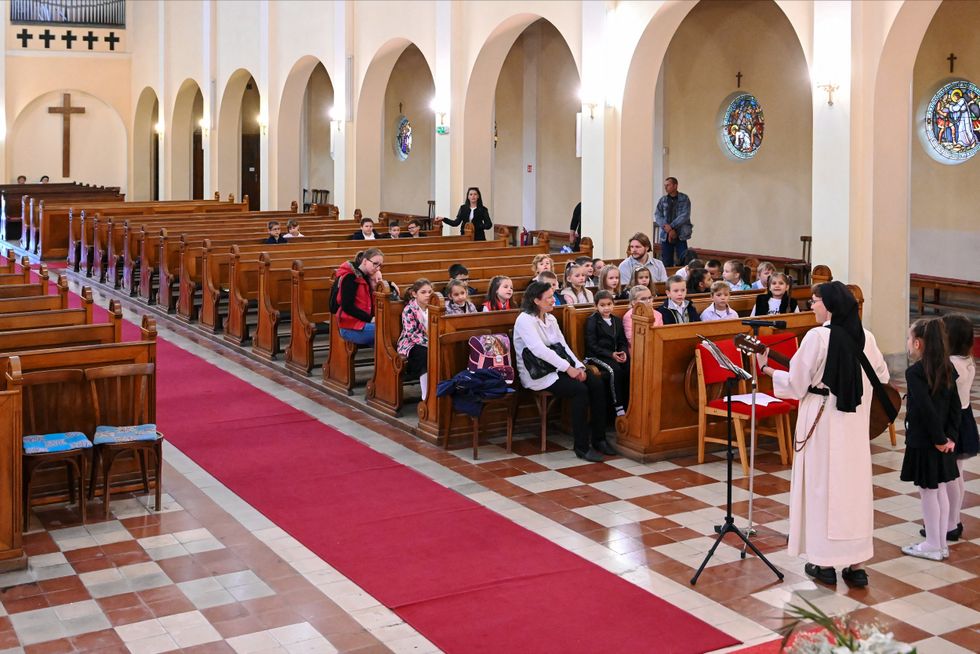
Mr Orban has overseen a boost in the number of state-funded faith schools across Hungary
|GETTY
The European leader stressed it was "unfortunate" migration drove a non-Christian majority amongst the masses across Western societies.
"So it's not just a natural tendency, it's enlarged by the migration as well, because those who are coming in are not Christians, but basically Muslims," Mr Orban clarified.
"So now the Christian roots are dying out in European politics."
However, he maintained that being a "believer" is a private matter reserved for the individual to decide, stressing that no one can be coerced into following any religious teaching beneath a state.
Christianity, nevertheless, consolidates numerous moral teachings, offering guidance on what is good and bad, he argued, even if its not necessarily in relation to God, he argued.
The premier continued: "So regardless whether you are believer or not, the the set of Christian teachings is a good way to organise our societies. That's what I believe".
Mr Orban stressed his view was partnered with a freedom-loving perspective, recognising that a state cannot dictate its citizens' beliefs.
However, he added: "If you would not like to live with somebody, if you don't share the value, you have to stop that at the border and say, 'guys or girls, we love you, but this is not your place'.
"And the Hungarian concept is very simple. We think that the mixture, especially quick and artificial mixture of various civilisations in one territory, can create a lot of difficulties and high risk.
"I understand what the liberals are saying in the West that if we mixed up Muslim cultures with Christian cultures, it could result in a higher level, more attractive liberal society, probably yes, but probably not.
"And if you make that attempt and you prove to be unsuccessful, you can't come back to the starting point," he warned, declaring that Hungary will continue to identify as a Christian nation.
"We would like to maintain our identity, and we would not like to mix up our civilisation pattern and fabric with something else," he concluded.
Our Standards: The GB News Editorial Charter