







Iran has warned of "severe" consequences for US military vessels which have dared to pass through the Strait of Hormuz after peace talks broke down.
The Iranian Revolutionary Guard Corps (IRGC) delivered the eerie signal while declaring they will deal "severely" with military ships crossing the key waterway.
"Any attempt by military vessels to pass through the Strait of Hormuz will be dealt with severely," the Guards’ Navy Command said, Iran's state broadcaster IRIB claimed.
On Saturday, US naval officials confirmed a pair of American warships made the crossing across the strategic passage to clear out mines left by the Islamic Republic.
TRENDING
Stories
Videos
Your Say
"The IRGC Navy has full authority to manage the Strait of Hormuz intelligently," the guards added.
They stressed only "civilian vessels under specific conditions" would be allowed to pass through the maritime passage.
The spine-tingling warning from Tehran has followed a breakdown in talks between Iran and the US.
In a three-minute-long briefing after peace talks broke down in Pakistan late last night, Vice President JD Vance said there were "shortcomings" and the Iranians "chose not to accept the US terms".
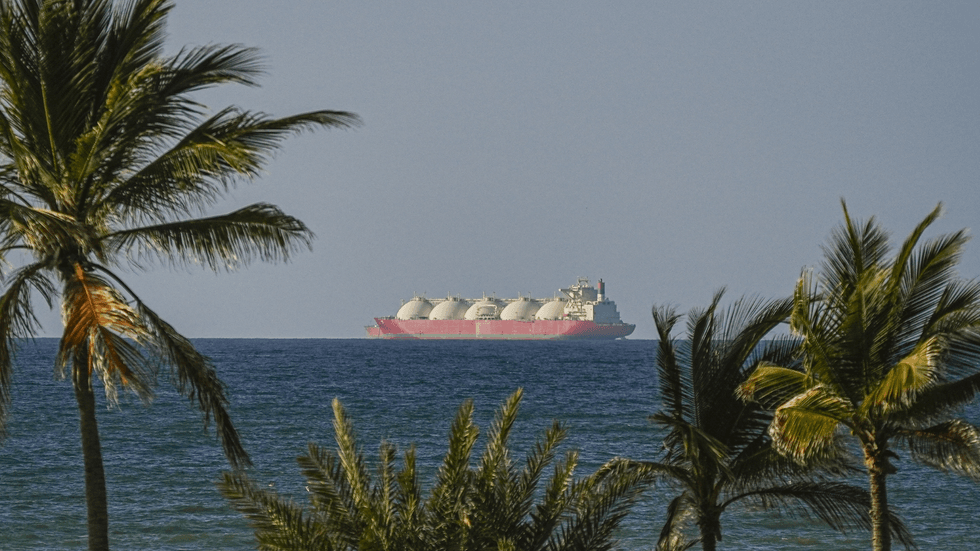
The strait was reopened after the ceasefire
|GETTY
"The bad news is that we have not reached an agreement, and I think that's bad news for Iran much more than it's bad news for the United States of America," he said, adding that the US had "made clear its red lines".
However, the VP did not outline the consequences the failed talks would have on the status of the Strait of Hormuz.
Meanwhile, Tasnim, Iran's state news agency, claimed the Americans' "excessive" demands had "hindered" any deal during the "intense" talks between Tehran and Washington.
Failure of the vital talks came just a few hours after the US Central Command announced underwater drones along with further military resources would be deployed to clear the strategic trade passageway.
IRAN PEACE TALKS - READ THE LATEST:
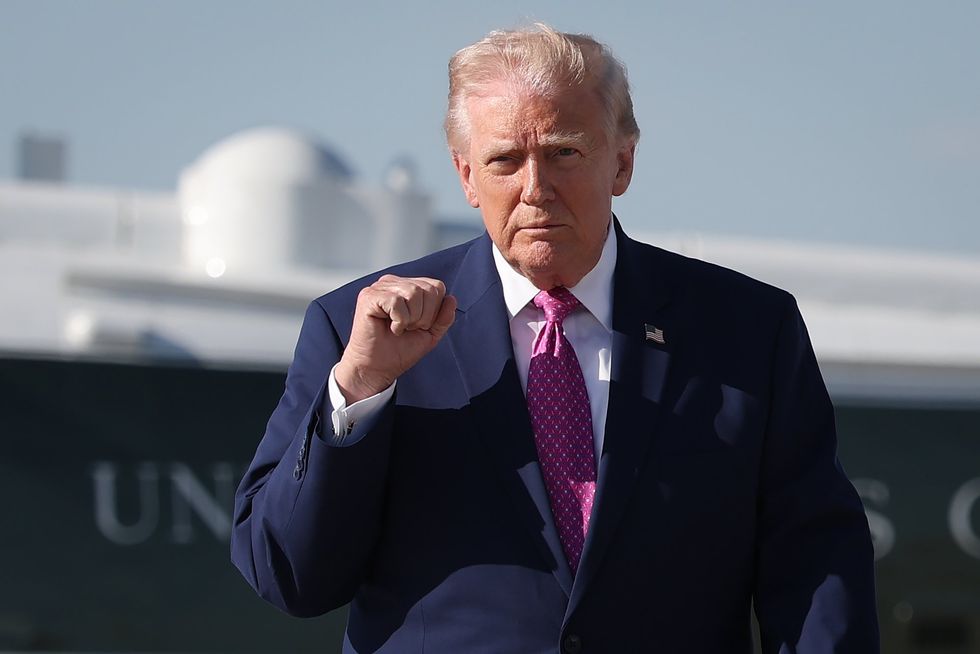
Donald Trump said the US was working to reopen the strait
|GETTY
Admiral Brad Cooper confirmed Central Command is "establishing a new passage" to facilitate the free flow of commerce.
Ever since Iran first blockaded the strait, which is responsible for a fifth of the globe's oil and gas, citizens have been bludgeoned with soaring energy prices.
After US President Donald Trump announced a two-week ceasefire on Tuesday, the free passage of oil through the strategic waterway played a key role in the breakthrough peace deal.
"Subject to the Islamic Republic of Iran agreeing to the COMPLETE, IMMEDIATE, and SAFE OPENING of the Strait of Hormuz, I agree to suspend the bombing and attack of Iran for a period of two weeks," he said.
However, it later came to light that Iran started demanding payments for the hundreds of ships looking to pass through the waterway - which incensed American officials.
Hamid Hosseini, Iran's oil exporters' union spokesman, declared a $1 per barrel fee would be slapped on the vessels sailing through and Iranian authorities must receive an email detailing what each vessel is carrying.
On Saturday, Mr Trump confirmed he was working to open up the strait which, he said, would be a "favour to countries all over the world, including China, Japan, South Korea, France, Germany, and many others".
"Incredibly, they don’t have the courage or will to do this work themselves," he slammed.
Britain, however, went unmentioned.
The 47th President said the US would be doing the work for those who were "afraid or weak or cheap".