

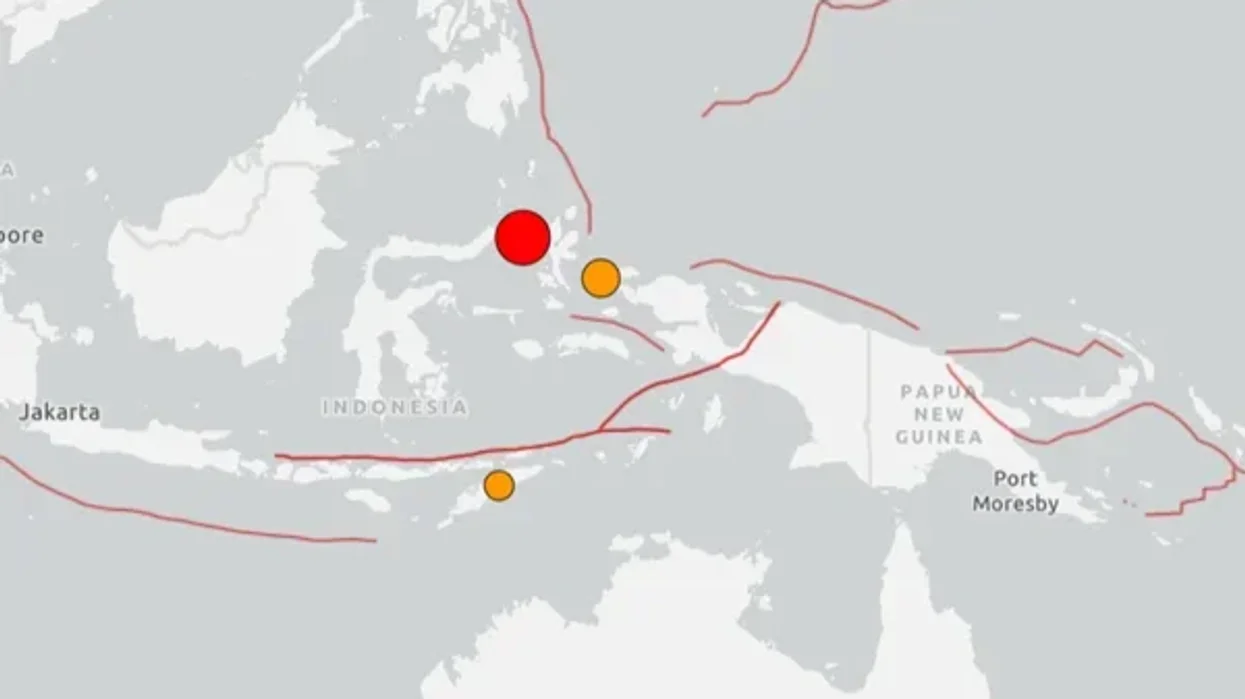








A magnitude 7.4 earthquake struck in Indonesia's Northern Molucca Sea on Thursday, killing one person, damaging buildings and triggering tsunami waves.
Indonesia - along with neighbouring countries Malaysia and the Philippines - was put on notice for dangerous high water in the early hours of April 2, UK time.
The quake was initially reported as a 7.8 magnitude on the Richter Scale, though this was later downgraded to a 7.4.
A 70-year-old woman was crushed to death below rubble in Manado city when part of a building used by the local sports authority collapsed.
Another person broke their leg jumping off a building.
The quake was recorded at a depth of 10 km (6.21 miles), according to the US Geological Survey (USGS).
TRENDING
Stories
Videos
Your Say
Its epicenter was roughly 120 km from the city of Ternate, located in the North Maluku province of Indonesia, the USGS said.
The city is home to more than 205,000 residents.
According to USGS data, the major tremor occurred at around 6.48pm local time.
It said nine other quakes with a magnitude of 7 or more have occurred within 250 km of the Thursday event over the last 50 years but had not caused extensive damage.
Two smaller aftershocks were later detected close to where the 7.4 magnitude quake struck.
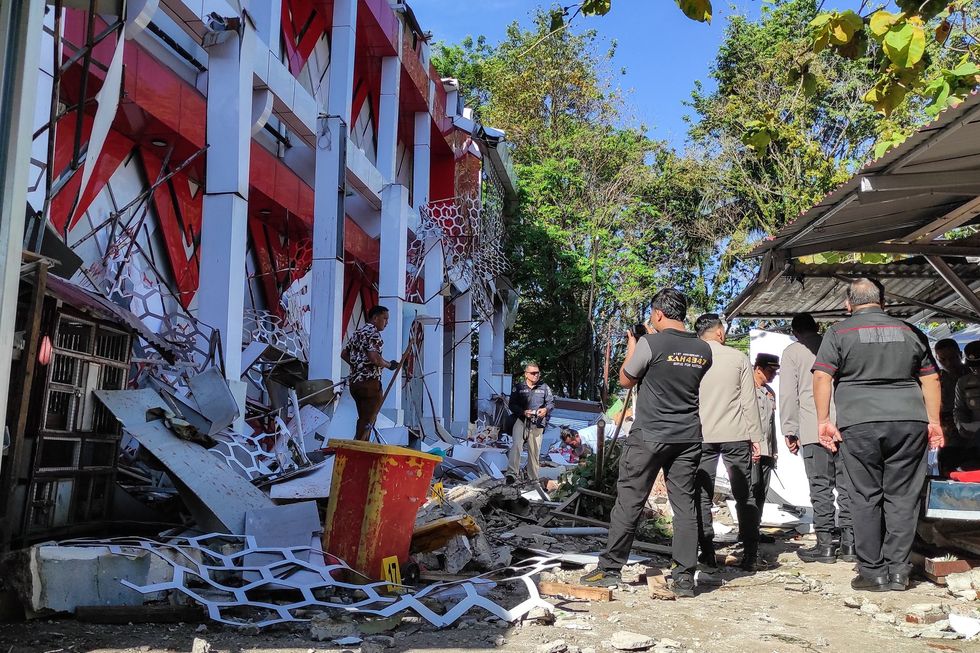
A building of the North Sumatra's National Sports Committee of Indonesia was damaged in the quake
|GETTY
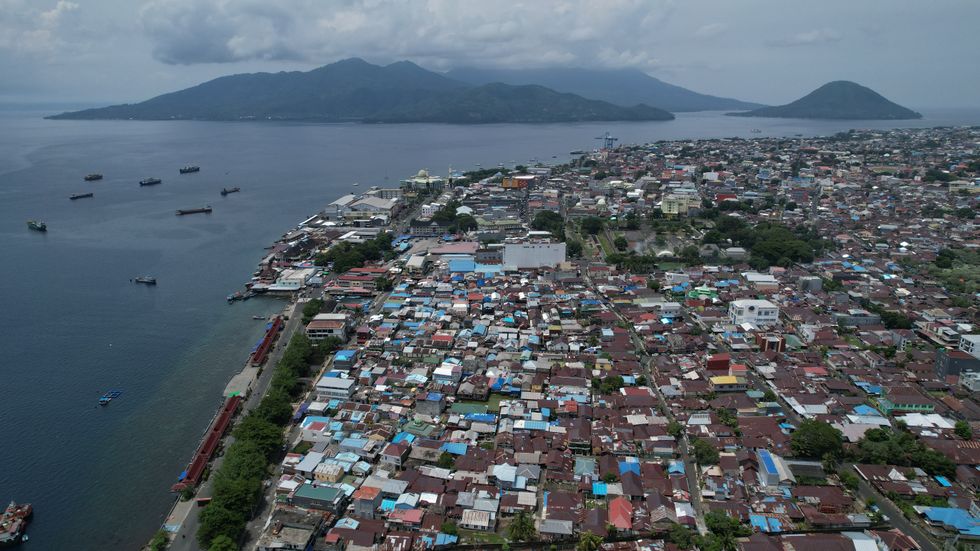
The epicenter was roughly 120 km from the city of Ternate, located in the North Maluku province of Indonesia
|GETTY
They registered magnitudes of 5.5 and 5.4 respectively and both occurred within half an hour after the initial shake.
Aftershocks can occur in the days, weeks and potentially years after the initial quake.
Although they are typically smaller, they can often be of equal or larger magnitude to the first trembler.
The USTWS has cautioned that tsunami waves reaching 0.3 metres to one metre above the tide level could hit Indonesia's coastline.
EARTHQUAKES - READ THE LATEST:
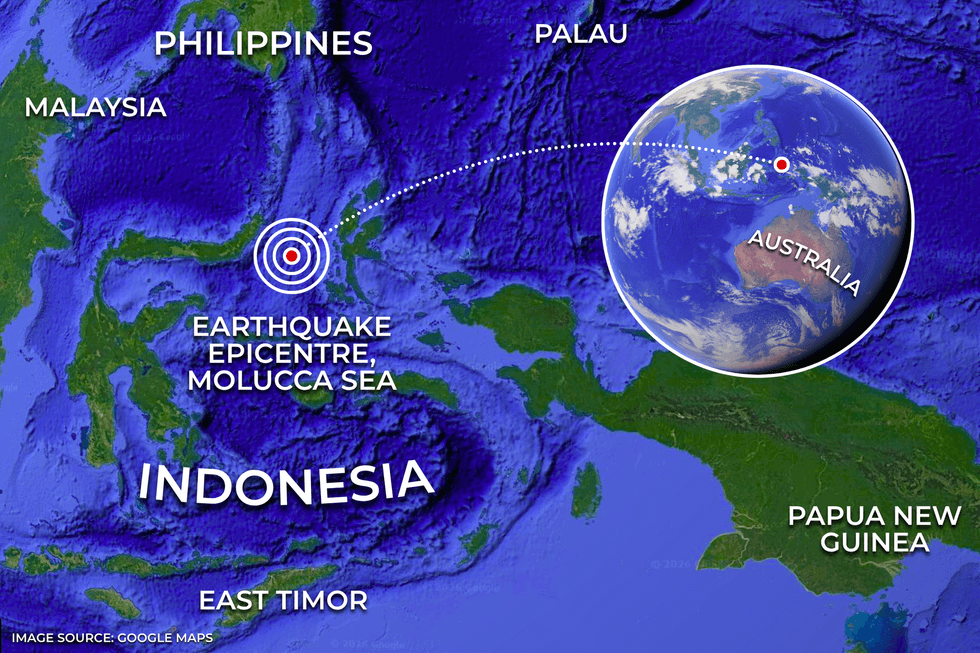
A 7.8 magnitude earthquake has erupted off the coast of Indonesia
|GB NEWS
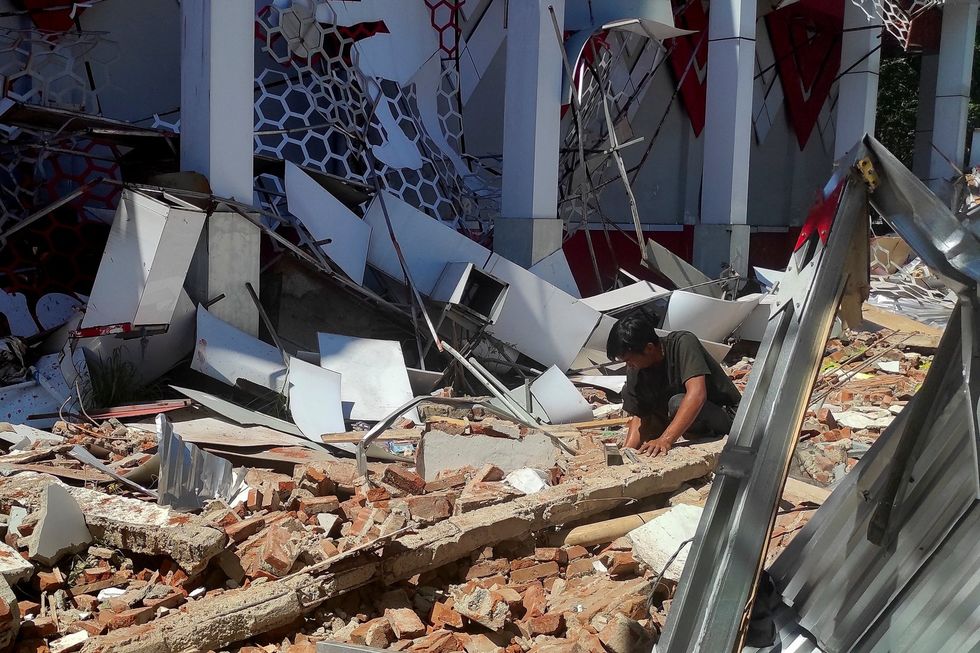
PICTURED: A damaged building in Manado. A 70-year-old woman was crushed to death below rubble in the city
|REUTERS
The agency issued an additional forecast of waves less than 30cm above tide level for Guam, Japan, Malaysia, Papua New Guinea, the Philippines and Taiwan.
"We were sitting there drinking tea... [Initially we] didn’t realise it was an earthquake," Admini, a 69-year-old patient, told the BBC at Siloam Hospital in Manado.
"And then we heard a child scream: 'Come down, hurry up,’ and we immediately looked for the emergency stairs to go downstairs."
The Japan Meteorological Agency has said "slight sea level changes" could hit the Japanese coast, though added that no tsunami damage is expected.
Australia’s Bureau of Meteorology confirmed there was no threat of tsunami waves striking the country's mainland or islands.
Indonesia's geophysics agency said waves of 0.3 metres above the tidal level had made contact off its shoreline in the aftermath of the large tremor.
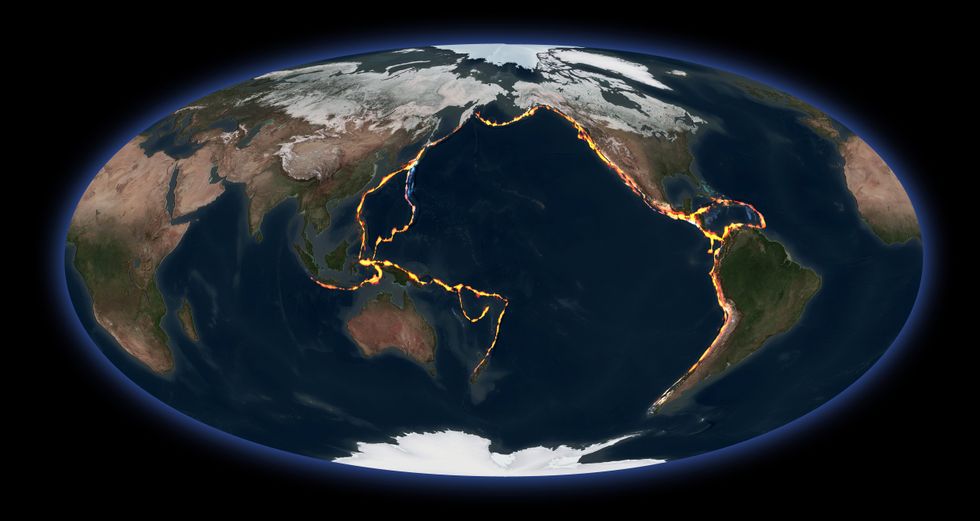
Indonesia is particularly prone to quakes due to its location on the Ring of Fire
|GETTY
Indonesia is particularly prone to quakes due to its location on the Ring of Fire - a horseshoe-shaped belt surrounding the Pacific Ocean with intense tectonic activity.
It is home to three-quarters of the active volcanoes worldwide and is the site of around 90 per cent of total global shakes.
On Boxing Day 2004, a 9.3 magnitude quake struck off the coast of Aceh, in northern Sumatra, Indonesia.
The enormous earthquake caused a huge tsunami with waves up to 30m (100ft) high, killing an estimated 227,898 people in 14 Asian countries.
Our Standards: The GB News Editorial Charter