








Britain’s sovereignty over the Falkland Islands appears secure after King Charles' US state visit, with Marco Rubio dismissing suggestions America could reconsider support for the UK’s claim as “just an email”.
Last week, a leaked Pentagon memo outlined possible measures to punish Nato allies that declined to participate in US-Israeli military strikes against Iran.
The document suggested Washington could review its backing for British “imperial possessions”, including the Falkland Islands.
But during the King’s visit, Mr Rubio played down calls for the US to support Argentina’s claim over the British territory, according to The Sun.
The leaked memo sparked a fierce backlash involving senior Argentine and British political figures, as well as Falklands War veterans.
Mr Rubio told the newspaper that the reaction had been “overexcited”.
He added: “It was just an email. People are getting overexcited by an email. It was just an email with some ideas.”
After the document came to light, Argentine President Javier Milei and his government ramped up rhetoric over Buenos Aires’s claim to the Falkland Islands.
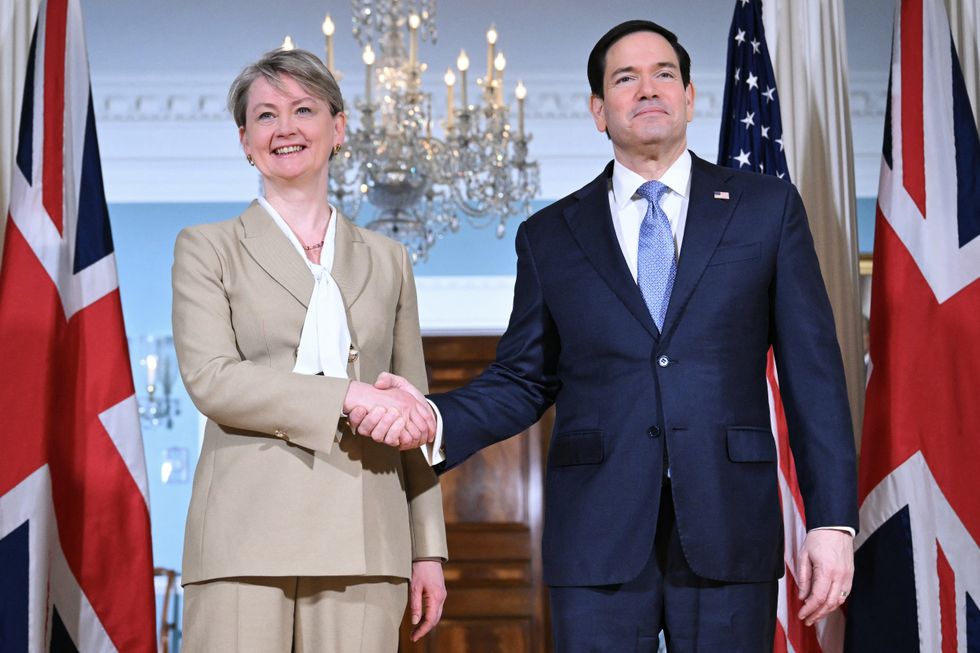
During the King’s visit, Mr Rubio played down calls for the US to support Argentina’s claim over the British territory
|GETTY
Mr Milei, who has previously described the islands as “illegally occupied”, wrote on social media: “The Malvinas were, are, and will always be Argentine.”
Vice President Victoria Villarruel also intensified pressure, declaring: “The discussion over the sovereignty of our islands is between states, therefore the United Kingdom must discuss bilaterally with Argentina the claim that we maintain for legal, historical, and geographical reasons.”
She added: “The Kelpers are English people who live in Argentine territory; they are not part of the discussion. If they feel English, they should go back to the thousands of miles away where their country is.”
The term “Kelpers” refers to the seaweed-rich waters surrounding the Falkland Islands.
FALKAND ISLANDS - READ THE LATEST:

President Javier Milei had ramped up rhetoric over Buenos Aires’s claim to the Falkland Islands in recent days
| GETTYArgentina’s foreign minister Pablo Quirno also called for an end to what he described as British “colonialism”, demanding renewed bilateral negotiations.
Downing Street responded forcefully, insisting that sovereignty “rests with the UK”.
A spokesman said: “The Falkland Islands have previously voted overwhelmingly in favour of remaining a UK overseas territory, and we've always stood behind the islanders' right to self-determination.”
For now, tensions appear to have eased after Mr Rubio reaffirmed that Washington’s long-standing position had not shifted.
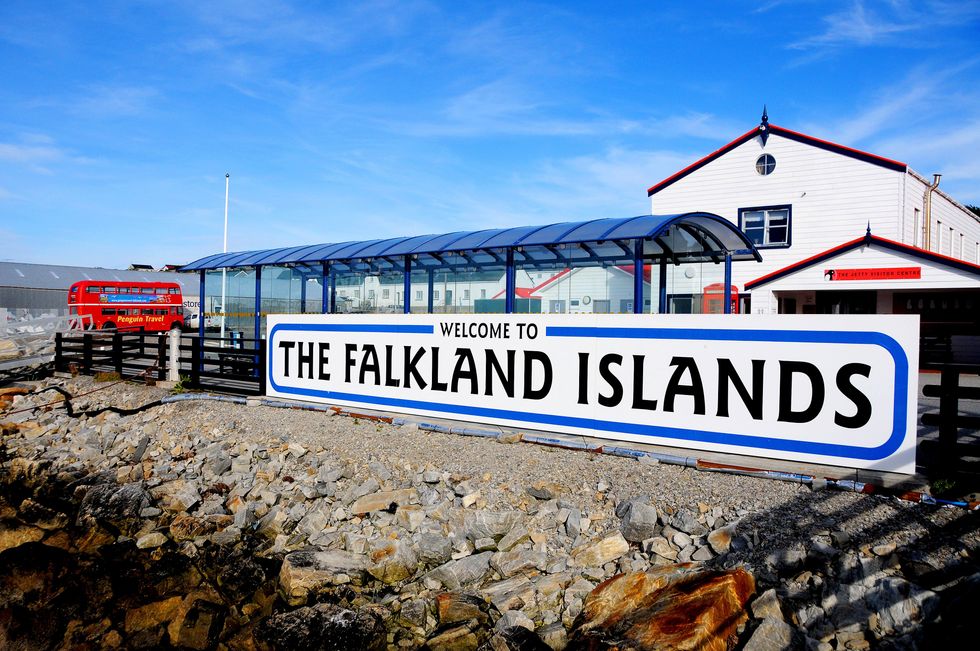
Downing Street insisted that sovereignty of the South Atlantic islands 'rests with the UK'
| GETTYHe said: “Our position on the islands remains one of neutrality.
“We acknowledge that there are conflicting claims of sovereignty between Argentina and the UK.
“We recognise the de facto United Kingdom administration of the islands but take no position regarding sovereignty claims of either party.”
Mr Rubio’s intervention came after talks in Washington with Foreign Secretary Yvette Cooper on Wednesday.
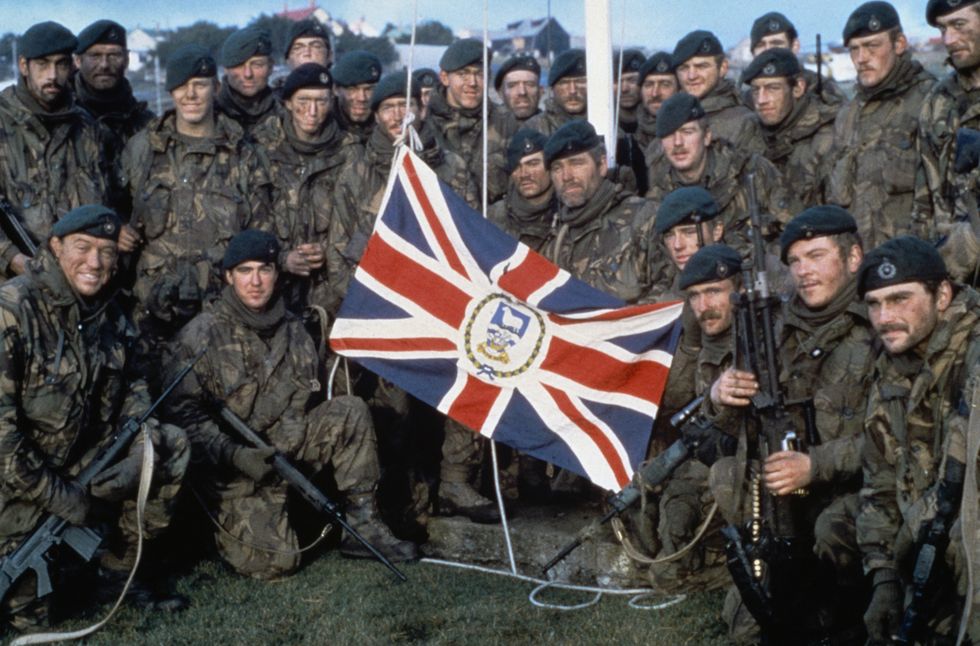
British forces liberated the Falkland Islands on June 14, 1982
| GETTYIn 2013, a referendum on sovereignty was held in the Falklands, which saw 99.8 per cent of islanders vote to remain a British Overseas Territory, with only three votes against.
Buenos Aires has dismissed that vote as illegitimate, previously alleging Britain had planted voters on the islands.
Britain first claimed the islands in 1765, with Commodore John Byron establishing Port Egmont the following year.
Although Britain temporarily withdrew in 1776 amid economic pressures, it left behind a plaque asserting sovereignty.
After Argentina became an independent country in 1816, Buenos Aires attempted to assert control, before Britain re-established rule in 1833.
British control continued until Argentina’s invasion in 1982, when its forces occupied the islands for 74 days.
Prime Minister Margaret Thatcher dispatched a naval task force to the South Atlantic, with Argentine forces surrendering on June 14.
The conflict claimed the lives of 649 Argentine personnel, 255 British personnel and three Falkland Islanders.
Our Standards: The GB News Editorial Charter