









Britons could get more flexibility over when they access their pension under new proposals that would overhaul the state pension triple lock.
The changes would allow people to draw on state-backed support earlier, rather than waiting until retirement age.
The proposals come from the Tony Blair Institute for Global Change which has argued the triple lock should be scrapped ahead of replacing the current pensions system to enable people to access funds earlier in life.
In a new report, the institute argues Britain's pension model is "outdated, increasingly unaffordable, and too rigid for the way people live and work", warning it places too much emphasis on income at retirement age.
Without reform, pension spending is forecast to rise from around five per cent of GDP today to 7.8 per cent by 2070, the report states.
The number of pensioners is also expected to increase sharply, climbing from 12.6 million to nearly 19 million over the same period.
According to the institute, this growing pressure on the system could force difficult choices, including higher taxes, cuts to public services, or a combination of both.
The think tank proposes replacing the existing system with what it calls a "Lifespan Fund," which would offer a more adaptable approach to state support.
Under this model, individuals would accumulate entitlement through various activities such as employment, caring responsibilities and education. Annual contributions to a notional fund would build up to 20 years of state-backed support, equivalent to current state pension levels.
Crucially, people could tap into some of this entitlement before reaching retirement age to help them through difficult periods.
The fund would provide income support during times of unemployment, while retraining for new careers, or when taking time away from work to look after family members.
This flexibility represents a significant departure from the present arrangement, where the state pension can only be claimed once someone reaches the official retirement age.
Those who choose to access their Lifespan Fund during working life would automatically face higher national insurance contributions upon returning to employment.
This mechanism creates what the institute describes as a "default path to rebuild what they had drawn down," ensuring people replenish their entitlement over time.
 Think tanks are calling for the state pension triple lock to be reviewed over 'sustainability concerns' | GETTY / OBR
 The TBI calculates that its proposed model would keep long-term pension spending at approximately 5.5 per cent of GDP. This would avoid around £66billion in additional annual costs by 2070, measured in today's money.
The think tank is calling for the triple lock to be abolished to stop the state pension outpacing earnings growth. Currently, the triple lock guarantees that pensions rise each April by whichever is highest: total earnings growth, CPI inflation, or 2.5 per cent.
The institute wants the Pensions Commission to secure cross-party agreement on reform before the next general election.
Tom Smith, director of economic policy at the TBI, said: "Britain's state pension system was built for a different era. We can't keep pouring money into a system that is increasingly unaffordable.
"Pension spending must be contained, and that means the triple lock cannot continue after the next election.
"Ending it will require political leadership from all parties but that should only be the first step. Real reform must also build a better system: one that is fairer, more flexible, and designed for how people live today."
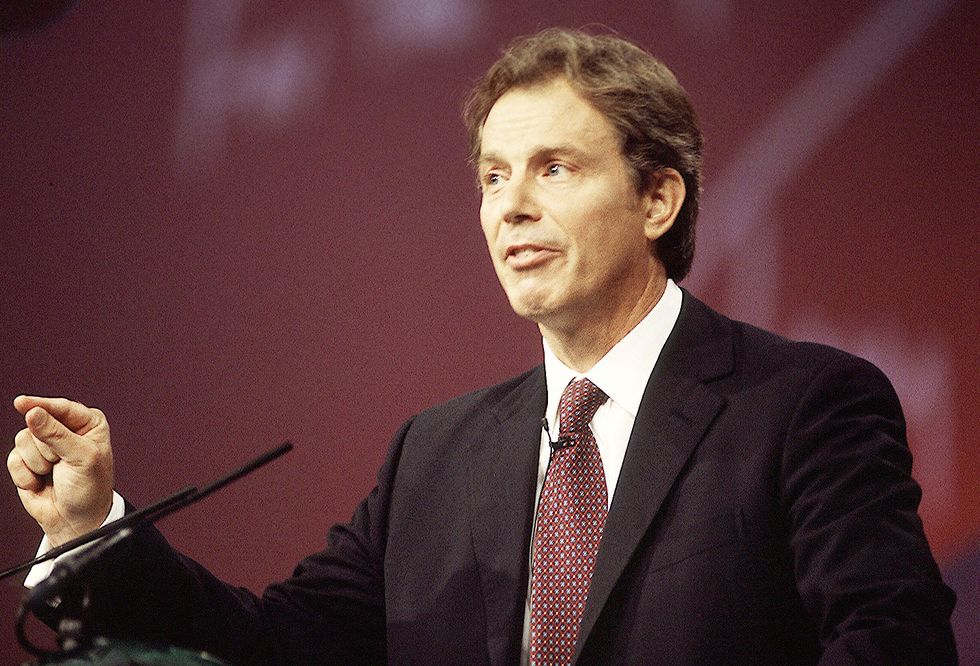
A report by the Tony Blair Institute (TBI) said the state pension is “outdated, increasingly unaffordable, and too rigid for the way people live and work”
| GETTYMr Smith added: "TBI's proposed Lifespan Fund offers that better alternative. It replaces the one-size-fits-all state pension with a personalised system that people build up through active contribution across their lives. It gives people real freedom to use support earlier in life to retrain, care for relatives or manage periods out of work and to top it back up before retiring on their own terms."
Tom Selby, director of public policy at AJ Bell, acknowledged that the triple lock will eventually need to go but raised serious concerns about the TBI's proposals.
He described the current state pension as "fairly straightforward" and providing "certainty," while warning that the new system would create "fiendish complexity."
Mr Selby said the prospect of government calculating retirement income based on personal health records "feels somewhat dystopian."
He warned the approach would be "vulnerable to people gaming the system by over-stating ill-health and habits like drinking and smoking."
The analyst noted that while flexibility might appeal to the public, determining income based on age and health status "would prove hugely controversial."
The Pensions Commission is already examining how we can ensure secure retirements for tomorrow’s pensioners
|GETTY
Mr Selby added that many people "would inevitably feel aggrieved that their neighbour received a higher income due to poor health."
Caroline Abrahams, charity director at Age UK, argued the triple lock should remain in place for the next parliament, saying it has helped improve living standards for some of the poorest pensioners.
She said: "We continue to hear from older people who are struggling financially, and the extra money the triple lock delivers makes a meaningful difference to many lives. In new polling, three in 10 pensioners say they are struggling financially even before the worrying rise in energy prices."
Ms Abrahams called for a national debate on the purpose and value of the state pension, noting it is currently "set too low to provide those reliant on it with a decent standard of living throughout their later lives."
A Department for Work and Pensions (DWP) spokesperson said: "Supporting pensioners is a priority and our commitment to the triple lock for the rest of this Parliament means millions of pensioners will see their yearly state pension rise by up to £2,100.
"The Pensions Commission is already examining how we can ensure secure retirements for tomorrow’s pensioners and for those that have not reached state pension age but need extra support, a range of options such as universal credit and other means-tested and disability-related benefits are available."