

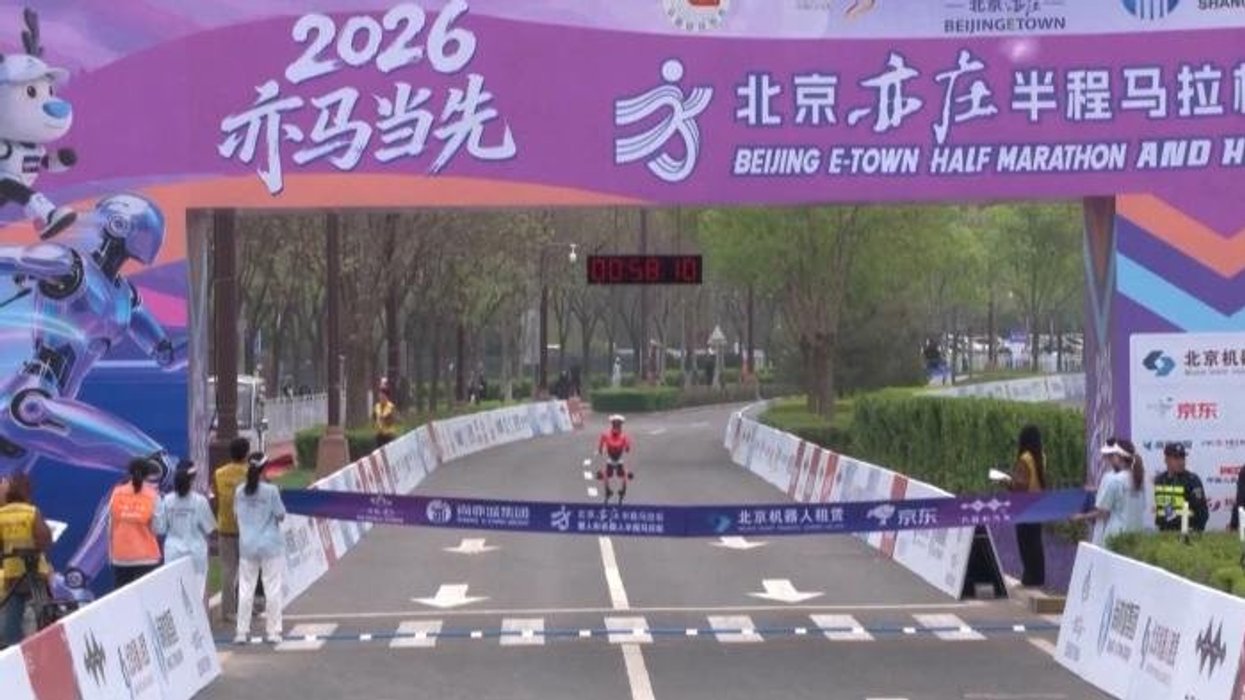








Chinese humanoid robots have surpassed human competitors in a half-marathon by a staggering 10-minute margin on Sunday.
The winner of the race, a robot created by Chinese smartphone manufacturer Honor, completed the 21-kilometre course in Beijing in just 50 minutes and 26 seconds.
This remarkable time beats the current human world record, set by Ugandan athlete Jacob Kiplimo in Lisbon last month.
The robot champion crossed the finish line more than 10 minutes ahead of the fastest human competitor in the parallel race.
TRENDING
Stories
Videos
Your Say
Honor, which spun off from Huawei, dominated the competition entirely, with its teams claiming all three podium positions.
Each of these top-finishing machines navigated the course independently, without remote control assistance.
Last year, the race served as a humbling reminder that machines had not yet caught up with human endurance, with robot contestants collapsing as soon as the starting gun sounded, while others had to be carried away from the course.
Most of the mechanical participants could only manage a walking pace, and reports emerged that some were so overwhelmed by the physical demands that their heads literally detached from their bodies.
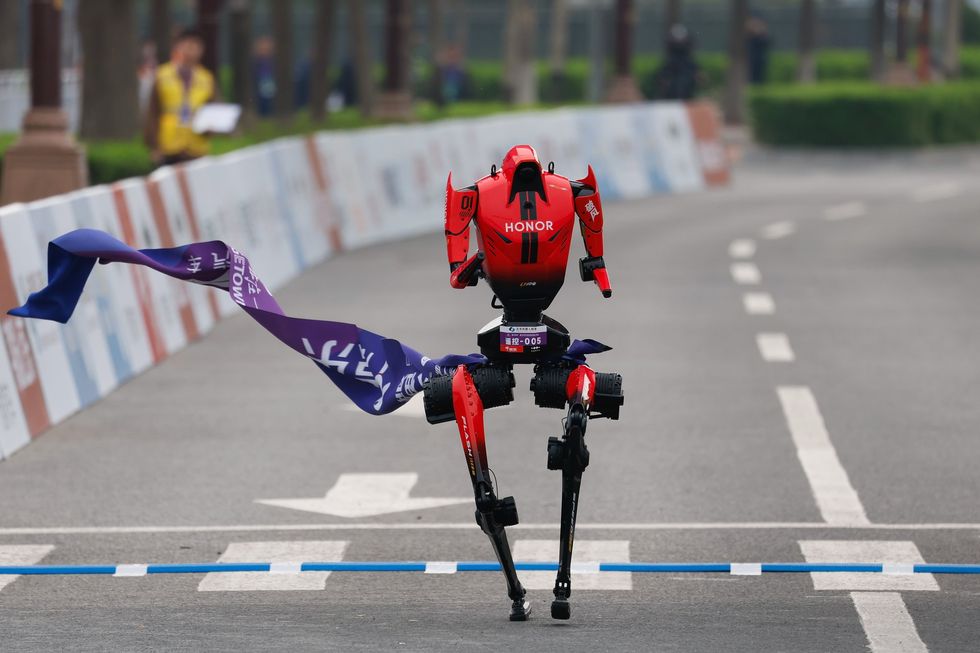
Chinese humanoid robots have surpassed human competitors in a half-marathon by a staggering 10-minute margin on Sunday
|GETTY
The 2025 champion robot required two hours and 40 minutes to complete the distance, more than double the time posted by the human winner of the conventional race that day.
Most robots failed to reach the finish line.
This year's competition saw a dramatic increase in scale, with more than 100 teams entering, compared to just 20 in the inaugural edition.
The technical capabilities on display had advanced considerably as well.
LATEST DEVELOPMENTS
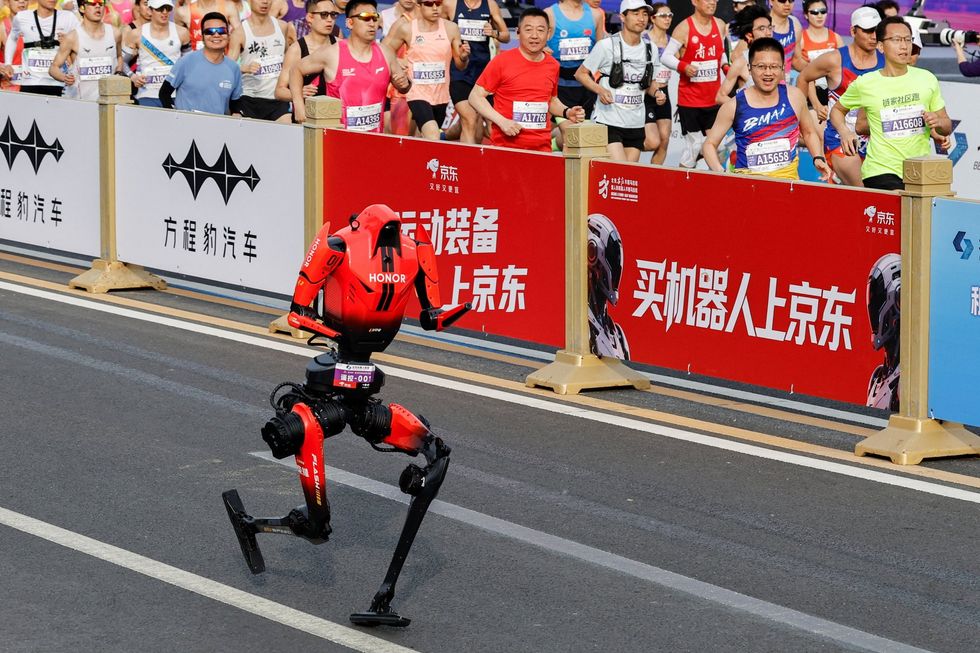
The winning Chinese humanoid robot completed the 21-kilometre course in Beijing in just 50 minutes and 26 seconds
| REUTERSClose to half of all robot entrants traversed the challenging terrain using their own autonomous navigation systems rather than relying on remote-controlled operators.
To prevent accidents, organisers arranged for the machines and the 12,000 human participants to run on separate parallel tracks throughout the 21-kilometre route.
Several of the leading robots proved noticeably quicker than professional athletes, with multiple machines posting times that exceeded the human world record.
All three Honor robots that secured podium finishes operated entirely through self-navigation, each recording times faster than any human has ever achieved over the half-marathon distance.
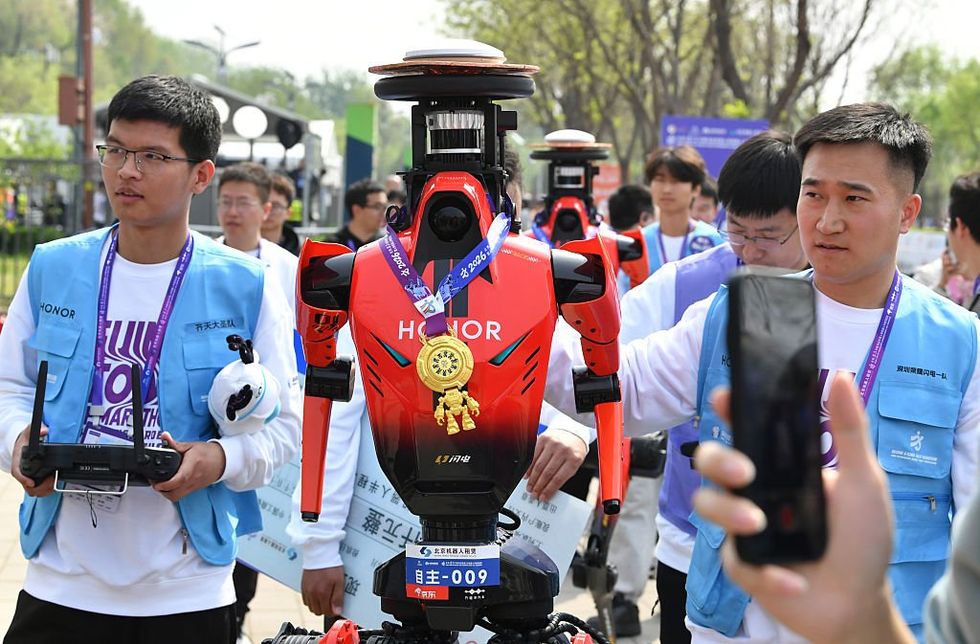
The winner of the race was a robot created by Chinese smartphone manufacturer Honor
|GETTY
Du Xiaodi, an Honor engineer on the victorious team, explained that the winning machine had been under development for a year.
The robot features legs measuring 90 to 95 centimetres in length, designed to replicate the stride of elite human runners, along with liquid cooling technology adapted from the company's smartphone products.
Mr Du said: "Running faster may not seem meaningful at first, but it enables technology transfer, for example, into structural reliability and cooling, and eventually industrial applications."
Onlookers interpreted the diverse array of humanoids, varying in size and running style, as clear evidence of China's progress in robotics.
Our Standards: The GB News Editorial Charter