











Japan's historic cherry blossoms are under threat by ravenous beetles eating the trees from the inside out.
Authorities across the country are now felling hundreds of sakura in a desperate bid to halt the spread of Aromia bungii, commonly known as the red-necked longhorn beetle.
In Kiryu, a city north of Tokyo, 230 trees at 25 schools are set to be removed to prevent further infestation.
The pest, which first appeared in central Japan in 2012, is thought to have entered the country via timber imports from China and South Korea, the Times reports.
TRENDING
Stories
Videos
Your Say
It has since colonised 17 of Japan's 47 prefectures, with experts warning that cherry trees could vanish entirely within three decades if the spread continues unchecked.
The beetle's extraordinary reproductive capacity makes it particularly difficult to control.
Akira Kobayashi, a board member of Japan Tree Doctors' Association, told Yomiuri television: "Female insects lay some tens to hundreds of eggs, it is said. So its reproductive activity is extremely high.
"Sometimes they lay 1,000 eggs."
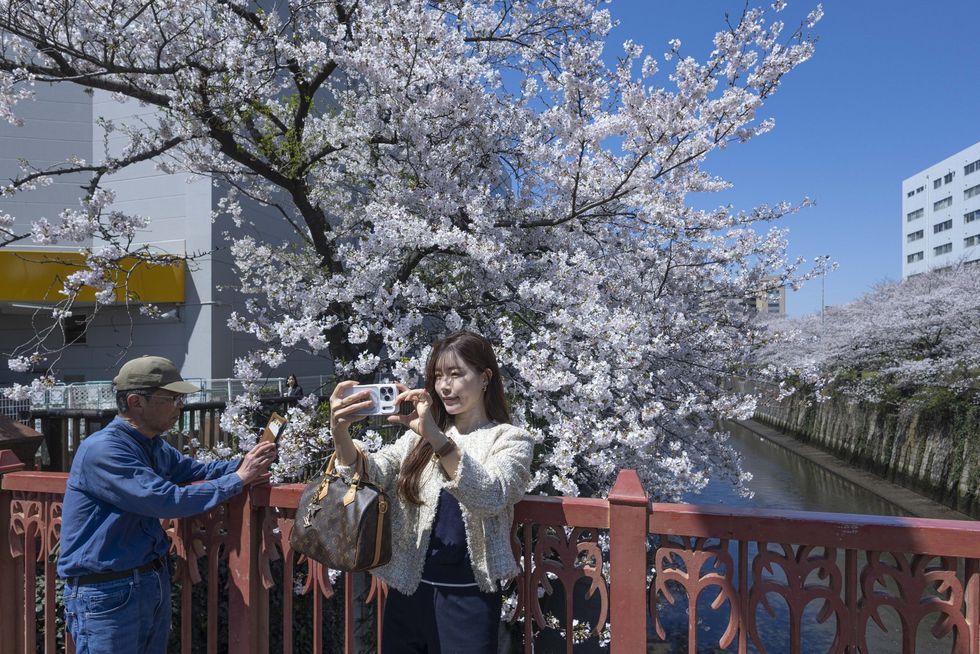
The blooming of Japanese cherry blossoms, called sakura, is a much loved phenomenon by locals and tourists in the country
|GETTY
As few as 10 of these insects can prove fatal to a single sakura tree, with larvae burrowing into trunks and devouring the wood from within, ultimately causing bark loss.
Mr Kobayashi said: "Japan is utopia for red-neck longhorn beetle.
"We know that they are gradually expanding the habitat. They are difficult to eradicate, so we have to keep exterminating them."
The pest also targets peach, persimmon and plum trees.
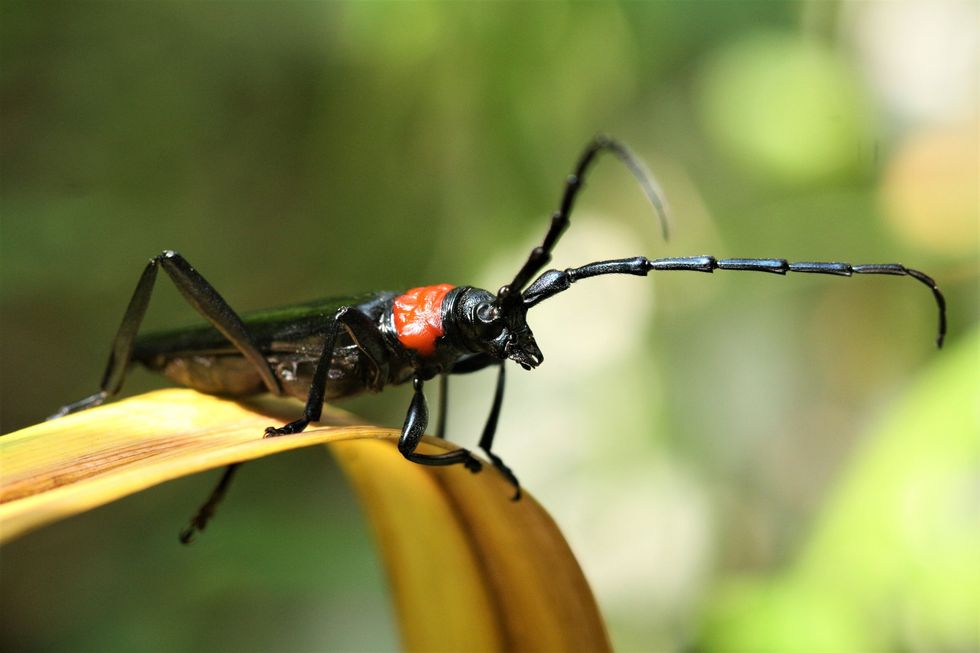
The culprit, a red-neck longhorn beetle
|GETTY
Despite the grim outlook, early detection can save infected trees.
In Yamatotakada, a town in central Japan, officials discovered the beetle had infested 150 trees within a celebrated avenue of 450 sakura, some more than seven decades old.
The presence of "frass", a telltale mixture of larval excrement and wood particles, revealed the infestation.
Local authorities invested 5.7 million yen (approximately £27,000) in 2024 on chemical injections, successfully eliminating the grubs.
LATEST DEVELOPMENTS
Communities are now mobilising citizens in the fight against the pest.
In Akiruno, a Tokyo suburb, residents can report frass sightings via smartphone using a QR code system.
Meanwhile, Oyama in Tochigi prefecture offers a bounty of 500 yen for every 10 beetle carcasses collected.
The red-necked longhorn beetle is not the only danger confronting Japan's beloved sakura.
A condition known as witch's broom afflicts the Somei-Yoshino variety, the nation's most popular cherry cultivar, causing disfigurement and preventing blooms from appearing.
Climate change poses yet another challenge, disrupting the traditionally predictable flowering season and creating difficulties for tourism operators.
Japanese average temperatures have risen by 1.3C over the past century.
Data from the Japan Meteorological Agency shows that since 1963, peak blooming has shifted earlier by 1.2 days per decade
This trend has accelerated markedly since 2020, particularly in the capital.
Tokyo's cherries flowered on March 19 this year, five days ahead of the historical average, prompting mass cancellations of flower-viewing tours in previous seasons.