










A British exam board has allowed GCSE French students to use gender-neutral language despite the terms not being used in France.
Staff from Pearson Edexcel have given the green light to teens using "inclusive" pronouns, nouns and adjectives in their written and oral GCSEs.
However, the French do not pander to the same bid for inclusivity, with all their grammatical concepts being strictly categorised into gendered variants.
Adjectives have specific "masculine" and "feminine" endings to match the noun it is complementing, such as an object or person.
Gender neutral terms do not exist in France in grammatically correct settings.
Nevertheless, some universities and socialist councils have ploughed on with the inclusivity drive and adopted the progressive language.
They have exchanged "he" and "she", which are normally "il" and "elle", for the made-up neutral terms "iel" and "iels".
But Jean-Michel Blanquer, who is a former French education minister, blasted the "absurd" proposals from the exam board.
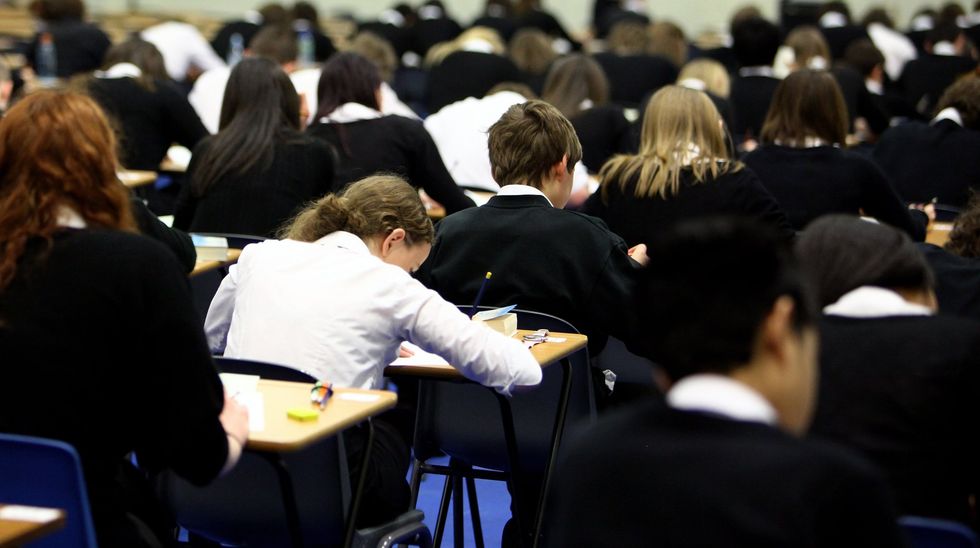
The specification is designed for exams from 2026
|GETTY
"French grammar has not changed in this regard," he added.
"And the use of 'iel' does not correspond to any widespread usage among the French population."
The exam board's new specifications for 2026 exams impact students sitting Spanish and German GCSEs as well.
The curricula now include a section on "gendered language", backed by the LGBT activists at Stonewall.
Pearson claims the use of gendered language, as the French language commands, can "present specific challenges for trans and non-binary students".
LATEST DEVELOPMENTS:
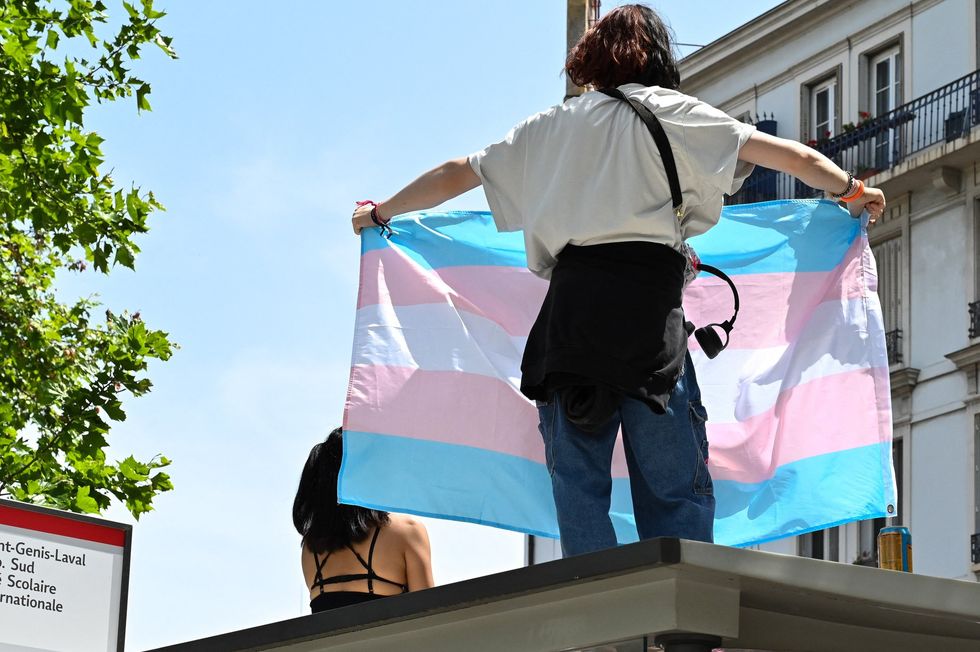
Women's rights activists blasted the 'pro-trans agenda' flooding British schools
|GETTY
As a result, they vowed their assessment would include vocabulary for "trans" and "non-binary" in the vocabulary list.
To go one further, they said they would "recognise students' use of non-binary or gender-neutral pronouns when describing themselves or others" in the written and speaking exams.
The board also allows the use of new adjectival endings "according to their preferred way of identifying".
Trans students can also use different spellings, as well as deploy a variety of full stops, "x's", asterisks and underscores to express their identity.
"It may seem baffling how quickly schools have been captured by gender ideology in recent years," Director of Advocacy at Sex Matters, Helen Joyce, told The Telegraph.
She explained that Stonewall-linked external providers had nurtured a "pro-trans agenda" and called on revised safeguarding guidance for single-sex spaces in schools, such as toilets and changing rooms.
"The next challenge for the Department for Education will be to tackle the pernicious creep of gender ideology throughout the curriculum, and the role of external providers in driving this," she added.
A Pearson spokesman said: "Gender-neutral pronouns are not required as part of Pearson Edexcel GCSE French, German, or Spanish. The specifications require students to learn and be assessed only on the standard masculine and feminine forms used in these languages.
"The vocabulary list has over 1,750 terms and reflects the language students will encounter in everyday life, including references to men and women, him and her, boys and girls, mothers and fathers.
"The specifications also include guidance for teachers on how student responses are considered in assessment. This does not add to the required content.
"Our membership of Stonewall ended over two years ago."
A Department for Education spokesman said: "Our expectations are clear: gender identity is an area of significant debate. Schools should not endorse any particular view or teach it as fact – including the idea that all people have a gender identity."