








The trail hunting season ends this month. But with the tradition set to be banned, people in the countryside are hoping it is not their last.
The practice was brought in after fox hunting was made illegal in 2005 and it does not involve killing animals. Instead, trail hunting mimics a traditional hunt, with hounds following an animal scent which has been laid and hunters trailing the pack on horseback.
However, this part of British culture is set to be banned under Labour's animal welfare strategy amid concern the activity has been used "as a smokescreen for the hunting of wild animals", according to Environment Minister Baroness Hayman. GB News joined members of the Badsworth, Bramham and York South Hunt, who were out on the last hunt of the season, and warn banning trail hunting is unnecessary and will hurt rural communities.
Around 80 riders assembled on farm land in North Yorkshire for the hunt and Tom Gaythorpe, who laid the trails, explained how he uses a rag soaked in animal scent for hounds to chase to replicate the pursuit of an animal across the countryside, without the need to kill. "It's basically trying our best to keep up with the traditional paths that the traditional prey would follow and by using an artificial scent with big open fields, large grass fields and grass margins, we can use the quad bike, to get in places where you can't get on horse back," said trail layer Tom Gaythorpe.
"On the quad we can also get into the woods and go through a bit more dense vegetation where you can't take a horse through and it's basically just trying the best to keep a tradition alive that's been taken away. The hounds are here for a purpose; they're a working animal... they're not a domestic pet and this is what they live for. There's also all the job roles within hunting, like huntsmen and kennelmen."
The Countryside Alliance said banning trail hunting will have potentially damaging consequences for farmers, rural communities, wildlife and biodiversity. The British Hound Sports Association agree and says trail hunts are "vital" to communities as they not only bring money into the rural economy, but also support mental and physical wellbeing.
Both organisations are running a joint campaign, chaired by former Defence Secretary Sir Ben Wallace, defending all forms of legal hunting and are urging hunt supporters to take action to protect the infrastructure of hunts and the future of hounds, so that it continues for future generations. Polly Portwin, Director of the Campaign for Hunting at Countryside Alliance, told the People's Channel trail hunting plays an important role in the rural economy, providing direct employment and supporting many other associated businesses which benefit from money that is spent both by hunts and those that go hunting – either mounted or on foot.
"The consultation is coming anytime soon, which is for government to consult into how to implement that ban, and we at the Countryside Alliance, working with the British Hound Sports Association, have got a campaign called the future for hunting campaign, working together to try and remind this government that banning trail hunting is not a priority for any government," she said.
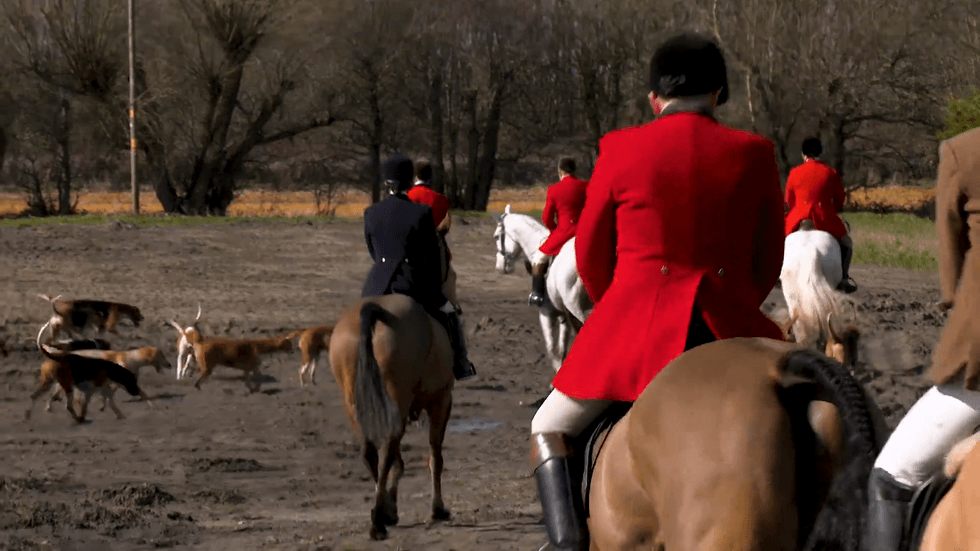
The trail hunting season ends this month
|GB NEWS
"Pack of hounds are following a trail that's been laid across the countryside for them, and they're not pursuing live quarry and trail hunting contributes around £100million to the rural economy every year. What it can't quantify is what it means to the people that take part and what it means to them as a community."
She added the social aspects of hunting are much needed in remote communities where the opportunity for social interaction can be limited. "It's so important these people are out here today, they're great friends. What would they do? What would we do with these packs of hounds?," said Polly Portwin, Director of the Campaign for Hunting at Countryside Alliance.
"What would the government do with 12,000 hounds if they decide to ban trail hunting? And that's a question that we have for the government. The hounds are big - some of them weigh 6 or 7 stone, and they are used to living as a pack in kennels where there's the huntsman. There are a lot of people that do not understand what we do - we have opened our doors to MPs, to councillors, to people in government to come and see what trail hunting really means to people. We'll be continuing to campaign to make sure that trail hunting can continue and for rural communities and people who live in isolated areas, it's a way of life."
Riders from the Badsworth, Bramham, York South Hunt are from every background. Richard Thompson is the Joint Master for Badsworth, Bramham, and York South Hunt and said he believes the Government think all members of hunts are "toffs" and the sport is just for the privileged elite; a stereotype he completely disagrees with.
LATEST DEVELOPMENTS
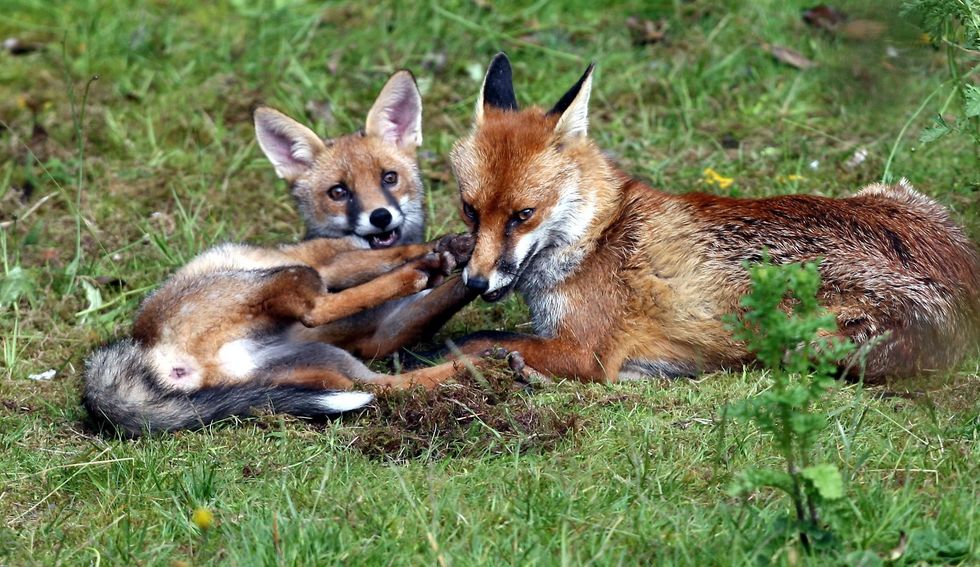
Fox hunting was made illegal in 2005
| PAHe said: "Our hunt is perhaps one of the poorest areas, so our clientele that come, and our supporters are from all walks of life. We do have some landowners that come out with us, but equally we have people who are from school, who are nurses working in the National Health Service, and all sorts of jobs that come out and support us. The Labour government have a majority, and they think they can ride roughshod without coming and understanding the rural way of life. They think that we are a load of toffs and toffee nosed people with loads of money that come out hunting, and that's far from the truth."
Older or younger, trail hunting has something to offer all generations and there were both babies and pensioners at the meet in Selby. Sisters Charlotte Waddington, 11 and Harriet Waddington, 13, enjoy trail hunting and are also part of the Badsworth, Bramham, York South Hunt Pony Club. They participated in the last hunt of the season.
"I was on my pony Domino and I've gone over loads of hedges, ditches, jumps and all sorts. It's been a really good day," said Harriet.
"It just brings you all together as well and learning different, things on different horses and how different ones might react or how different techniques to be riding and it's great being outside. I've ridden my pony called Bobby and it's (trail hunting) really good because you can see like people doing different techniques and you can learn it from it."
As well as bringing the rural community together, hunting has always played an important part in shaping the countryside, not only to retain access to land but to support the farmers and landowners without whom there would be no hunting. By conserving and managing woodland and hedgerows that have been planted, hunts help to maintain a rich haven for flora and fauna, championing a biodiverse environment.
William Dixon, farmer at G Dixon and Son Farm, hosted the Badsworth, Bramham, York South Hunt on his farmland. He said: "Within the rural community, whether it's farming, agriculture, whatever, hunting, shooting ,is in a very difficult situation with the Labour government, and as far as I'm concerned, trail hunting must thrive and it must continue on. People have a great time and enjoy themselves and enjoy the fantastic countryside and I think it's great for everybody."
Melanie Doughty is a farmer's wife and attended the hunt in Selby on foot and handed out food and drink to the riders. She is very passionate about seeing trail hunting continue and says it has been carried out properly since it was introduced 21 years ago.
"I've been hunting all my life since I was seven years old on ponies and then I went on horses and now I follow on foot and I would do anything to keep it going," said Melanie. "There's so many people involved, from the people that run the hunts and look after the hounds, then you have the farriers, the farmers who hosts the hunts and like to see them running around the countryside. It is such a way of... it involves so many people and so many people. Even if they don't go to the hunt, they like to see it. If trail hunting is banned, then what about point-to-point? And then what about hunter chases and the racing fraternity? It all starts there from in the hunting field."
Trail hunting has been banned in Scotland since 2002 and hunting with dogs remains legal in Northern Ireland and Ireland. A Department for Environment, Food and Rural Affairs spokesman said: “As outlined in our manifesto, this government is committed to enacting a ban on trail hunting that truly protects our countryside, wildlife and rural communities.”
The trail hunting ban is part of a new animal welfare strategy, which includes reforming dog breeding practises, including ending the practice of puppy farming. Ministers will also be consulting a ban on the use of electric shock collars and considering the introduction of new licences for domestic rescue and rehoming organisations.
Further protections for wild animals include banning snare traps and introducing a close season for hares, to reduce the number of adult hares being shot in the breeding system. It also aims to improve the welfare of farmed animals by moving away from confinement systems such as colony cages for laying hens and introducing humane slaughter requirements for farmed fish.
The strategy is set to be delivered by the end of 2030, with farmers and stakeholders being promised they will have opportunities to share their views with the government as consultations are launched.
Our Standards: The GB News Editorial Charter