









Flights from Edinburgh and Glasgow airports were delayed and diverted on Sunday after fuel supplies to some airlines were disrupted.
The disruption was caused by a shortage of tanker drivers, leaving passengers facing uncertainty about their journeys.
Around ten flights were delayed at Edinburgh on Sunday evening, with an unspecified number also running late at Glasgow, as airlines scrambled to manage the disruption.
A Notice to Aviation, known as a Notam, was issued advising airlines operating in Scottish airspace to carry extra fuel on inbound flights due to supply issues resulting in reduced capacity at the two airports.
TUI flights from Glasgow were diverted via Prestwick to refuel, while flights from Edinburgh were forced to make unscheduled stops in Manchester before continuing to destinations including Dubai and Paris.
EasyJet, Scotland's biggest airline, confirmed that three of its Glasgow-bound flights made precautionary stops en route to take on additional fuel.
A spokesman for the airline said: "Due to the temporary fuel delivery issue which arose due to driver sickness at one of the fuel suppliers at Glasgow Airport, three flights stopped en route to Glasgow to take on additional fuel as a precaution.
“More supplies have been delivered to the airport now and so our programme is operating normally."
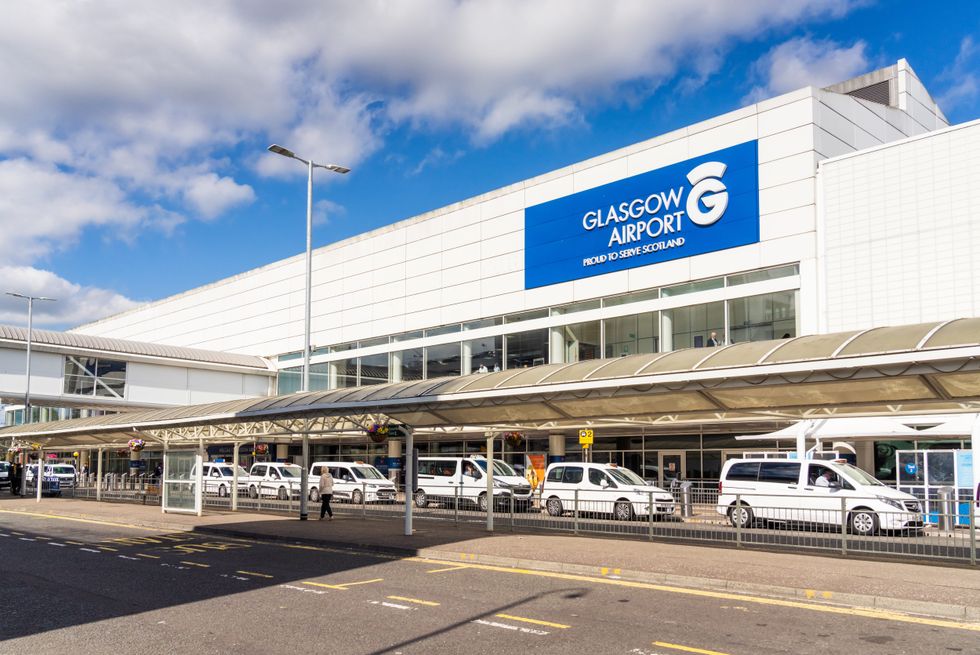
Glasgow Airport said the disruption was caused by a short-term staffing issue
|GETTY
Glasgow Airport said the disruption was caused by a short-term staffing issue at one of its fuel suppliers and stressed that the problem was localised rather than linked to wider geopolitical pressures.
A spokesman for the airport said: "A short-term staffing issue has affected one of the fuel suppliers used by airlines at the airport, with work underway to return stock levels to normal.
“There have been no related flight cancellations and the airport remains fully operational."
They added: "This is a local supply issue and not linked to wider geopolitical events.
LATEST DEVELOPMENTS
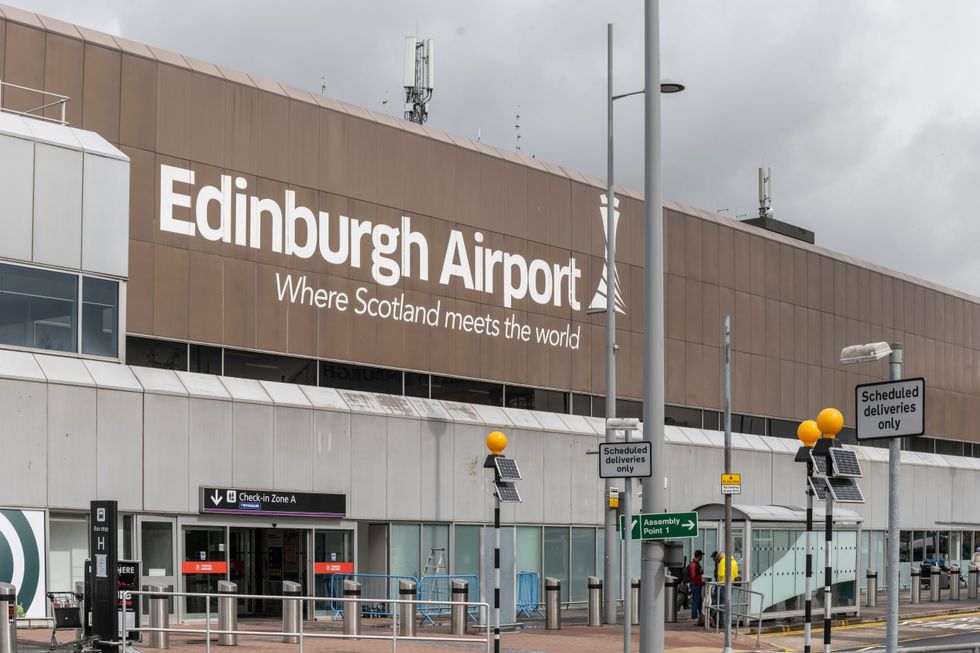
Edinburgh Airport confirmed no issue remained by Monday morning, with flights operating normally
|GETTY
“Any suggestion that the airport has run out of fuel is inaccurate and does not reflect the operational situation."
Edinburgh Airport confirmed no issue remained by Monday morning, with flights operating normally.
Ryanair, Edinburgh's biggest airline, said it had experienced no disruption, with its fuel suppliers at both airports maintaining supply throughout.
The two airports, which handled more than 25 million passengers between them last year, are particularly vulnerable to supply chain problems because they are not connected to the Exolum pipeline that serves major English airports including Heathrow, Gatwick, Stansted and Manchester.
Instead, both Edinburgh and Glasgow receive their jet fuel by road, making them reliant on tanker deliveries from refineries elsewhere in the UK.
Professor John Underhill, Director for Energy Transition at Aberdeen University, said the closure of the Grangemouth refinery in Scotland had left airports including Glasgow, Edinburgh, Aberdeen and Newcastle entirely dependent on tanker deliveries from the remaining UK refineries at Stanlow, Humber, Fawley and Pembroke.
The local disruption comes against the backdrop of a wider and more serious crisis in jet fuel supply across Europe, driven by the closure of the Strait of Hormuz during the Iran war.
Since the waterway closed, the cost of oil has surged sharply, with the price per barrel at times reaching more than double its pre-war level.
Europe is considered particularly exposed to these fluctuations, with roughly half of the continent's jet fuel supply originating from the region.
Airlines across the continent have already cancelled thousands of flights as a result, affecting approximately two million passengers, with Lufthansa alone cutting 20,000 flights between now and October.
The surge in jet fuel prices has caused significant problems for holidaymakers, with airlines postponing or cancelling services and airports warning of ongoing disruption as the crisis shows little sign of resolution.
Edinburgh Airport advised passengers to check directly with their airline for the latest information on their flights, with a spokesman confirming a fuel supplier had been working to resolve the issue.