










A nuclear-powered Royal Navy submarine is said to have arrived in the Arabian Sea, bringing Iran directly in range of British missiles.
HMS Anson left Perth, Australia, on March 6 - and has since travelled approximately 5,500 miles to take up position in the northern Arabian Sea's deep waters, military sources have revealed.
The Astute-class vessel carries Tomahawk Block IV land-attack missiles capable of hitting targets up to 1,000 miles away, alongside Spearfish heavyweight torpedoes.
Her presence means British forces could launch attacks on Iran should tensions in the region worsen.
The submarine is normally based at Faslane in Scotland, where an Iranian man has been charged with attempting to break in.
HMS Anson surfaces to just below the waterline once every 24 hours to establish communications with the Permanent Joint Headquarters at Northwood in London.
Defence sources told the Mail that Lieutenant General Nick Perry, serving as chief of joint operations at the PJH, would issue any potential firing order upon receiving Prime Ministerial authorisation.
Following such an order, the submarine would ascend near the surface and release a salvo of four missiles.
The vessel lacks a traditional periscope, instead displaying surface views on a large television screen.
"Anson will be quietly lurking. The Prime Minister and Commander Maritime Operations will be told where she is," a source said.
Anson's nuclear reactor eliminates the need for refuelling throughout its 25-year operational lifespan.
While her capacity to purify both water and air enables the vessel to travel around the globe without surfacing.
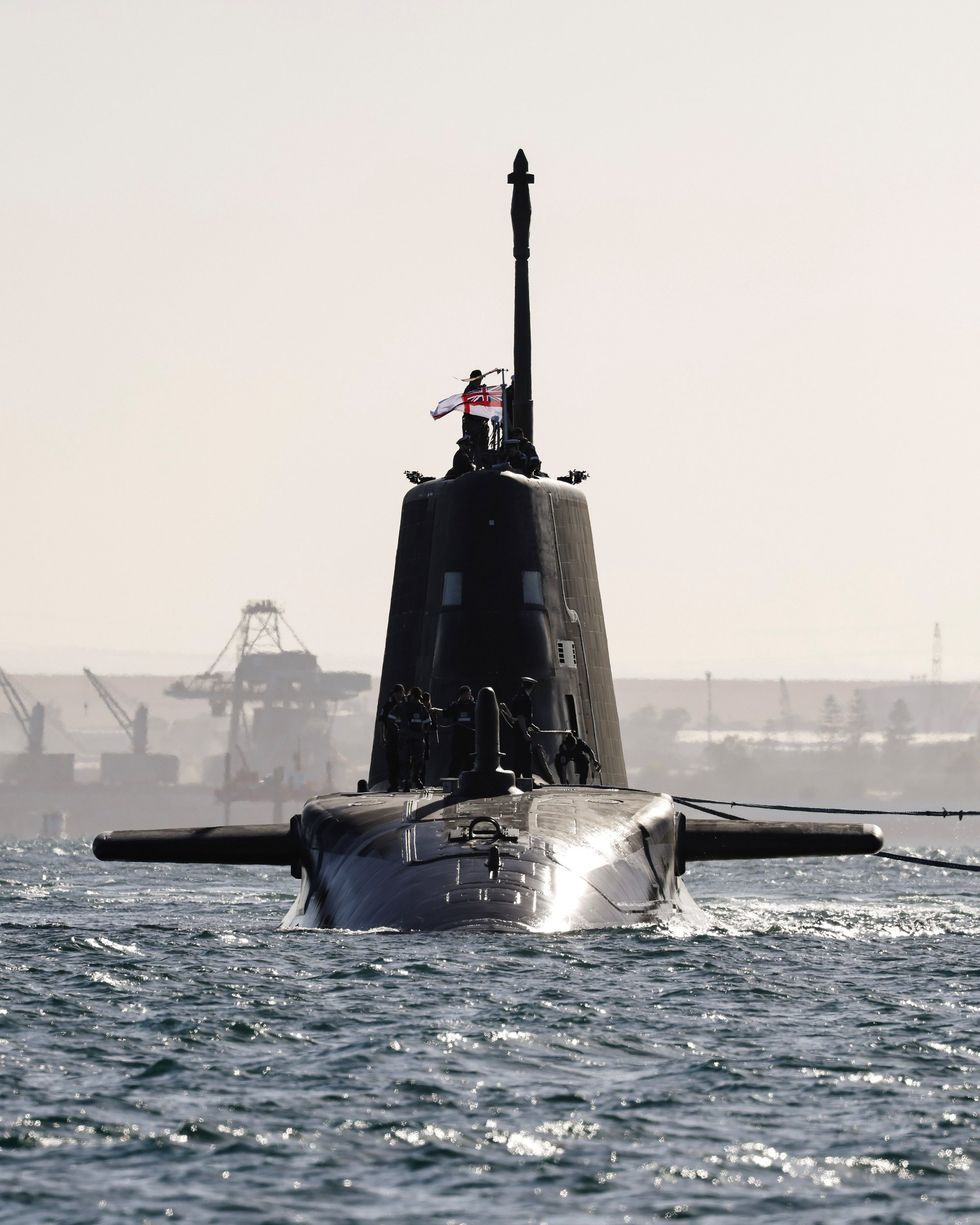
After an order from the PM, the submarine would ascend near the surface and release a salvo of four missiles
|MOD
But her trips are limited by food storage - the submarine can only carry three months' provisions for its 98 crew members.
A source said: "If necessary, she will be running silently, so no showers, no flushing loos and many men washing in one sink of water.
"It gets very smelly."
The Ministry of Defence declined to confirm HMS Anson's location last night.
A spokesman said: "We won't provide running detail on specific operations or deployments."
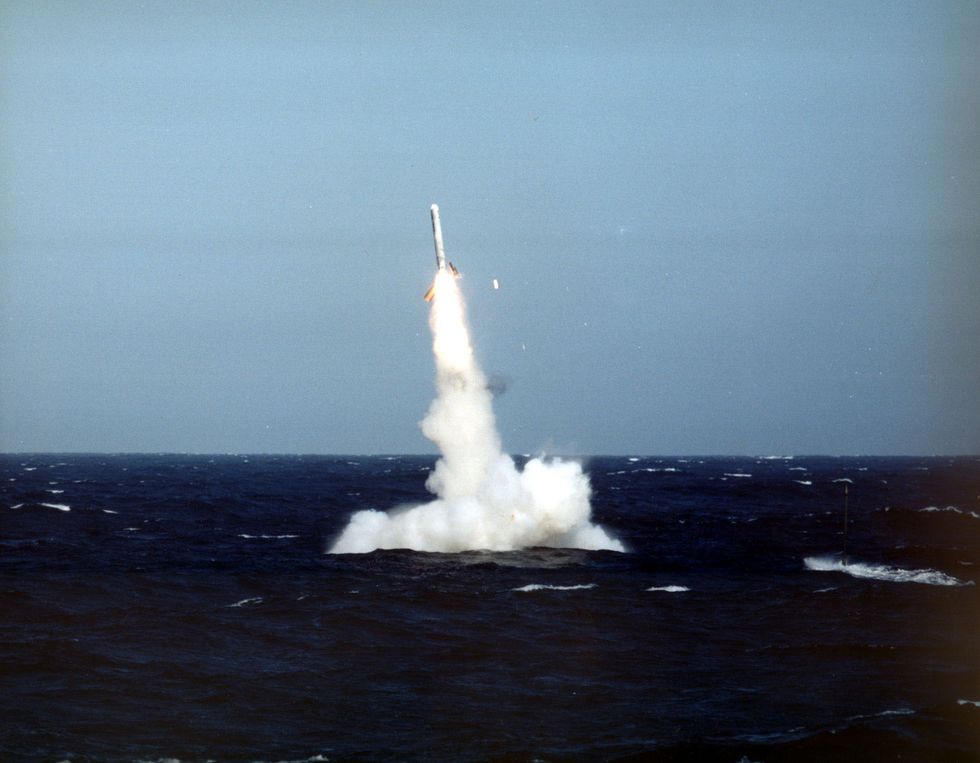
The Astute-class vessel carries Tomahawk Block IV land-attack missiles (pictured) capable of hitting targets up to 1,000 miles away
|MOD
Downing Street said on Friday that Sir Keir Starmer had agreed to permit American forces to use British bases for offensive operations against Iranian sites.
These targets have been threatening vessels passing through the Strait of Hormuz.
Previously, the Prime Minister had restricted US access to British bases for defensive purposes only, specifically to intercept Iranian missiles endangering British interests or lives.
Sir Keir has now broadened the scope of permitted targets, citing "collective self-defence" as justification for protecting shipping in the vital waterway.
But Donald Trump, late on Saturday night, started a countdown for the US to "obliterate" Iranian power plants if the country fails to reopen the strait.
LATEST FROM IRAN:
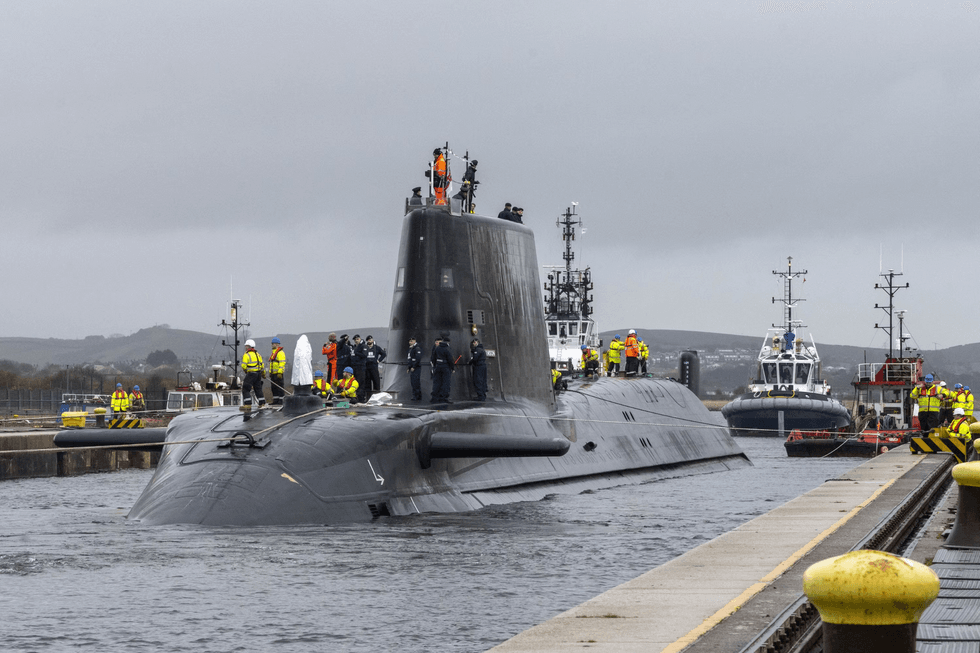
PICTURED: HMS Anson departs the BAE Systems shipyard in Barrow-in-Furness, Cumbria, on her maiden voyage
|PA
In a late-night post to his Truth Social platform, Mr Trump declared a 48-hour countdown had begun "from this exact point in time" - 11.45pm on Saturday, UK time.
Mr Trump said his forces would destroy the Islamic Republic's largest power plant by Monday night.
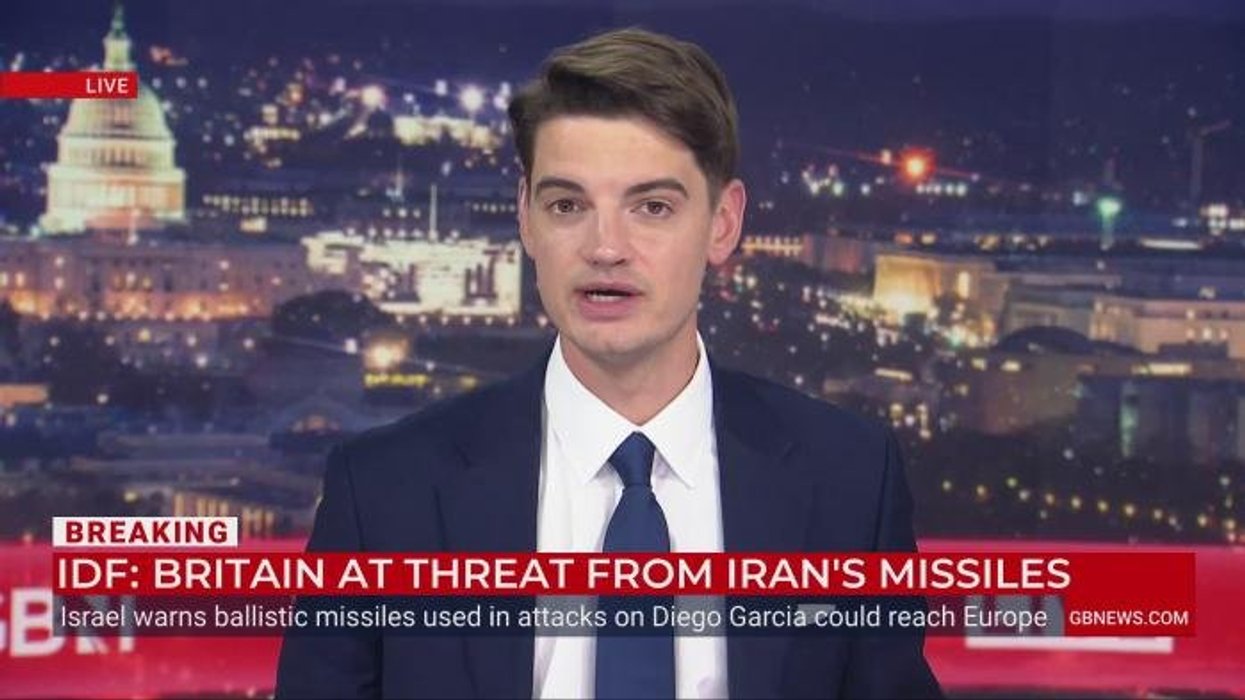
Meanwhile, Iran attempted to widen the theatre of war this week by launching missiles at the Chagos Islands, home to the joint UK-US base on Diego Garcia.
It was initially reported that the missiles were fired after the PM gave the US new permissions to use British bases.
But Government sources went on to confirm the attack happened before it released the statement on Friday.
It means the British public had not been informed immediately about the attack, and it has still not been confirmed exactly when the attempted strike took place.
If the missiles had reached Diego Garcia, they would have been the longest-range Iranian strike ever.
It was believed before the war that Iran's missiles could only hit targets 3,000 kilometres away.
But Israel said on Saturday that the attempted attack revealed for the first time that Iranian missiles can travel distances of 4,000 kilometres.
This range places dozens of nations across Europe, Asia and Africa within potential striking distance, representing what military officials describe as an "immediate threat to the continent".
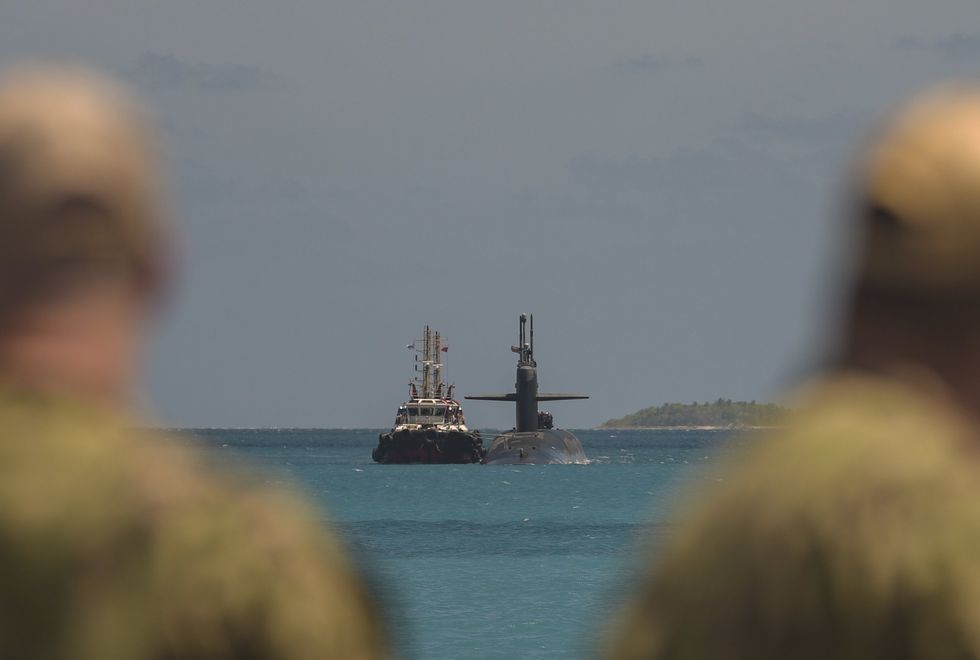
PICTURED: The USS West Virginia conducts a port visit at Diego Garcia in 2019
|US NAVY
Foreign Secretary Yvette Cooper stressed following the strikes that Britain "was not and continue not to be involved in offensive action, and we've taken a different view from the US and Israel on this".
While the MoD called the attacks "reckless".
A spokesman said: "Iran's reckless attacks, lashing out across the region and holding hostage the strait of Hormuz, are a threat to British interests and British allies.
"RAF jets and other UK military assets are continuing to defend our people and personnel in the region.
"This government has given permission to the US to use British bases for specific and limited defensive operations."
More From GB News