









The Open University has reversed a pledge made to a pro-Israel legal group to stop using the term “ancient Palestine” in reference to the Virgin Mary.
UK Lawyers for Israel (UKLFI) had written to the university in November 2025 urging it to remove the phrase from course materials, arguing it fed claims promoted by anti-Israel activists that “Jesus was Palestinian”.
The group also claimed the wording could breach the Equality Act 2010 by potentially “harassing” Jewish or Israeli students.
However, 18 days later the university agreed to the request, despite saying the terminology was academically appropriate.
TRENDING
Stories
Videos
Your Say
In correspondence seen by Novara Media, faculty head Adrienne Scullion said the term was problematic “in a way that, perhaps, it was not” when the material was first written in 2018.
She added the wording would not appear in future course materials and would instead be “explained and contextualised” in existing teaching content.
The OU module described the Virgin Mary as a “Jewish woman in ancient Palestine”, while a map and accompanying materials also used the term and referenced Aramaic as “a language widely spoken in ancient Palestine”.
UKLFI argued the description was historically inaccurate because Mary was believed to have lived in first-century Galilee, then part of a predominantly Jewish region under Roman rule.
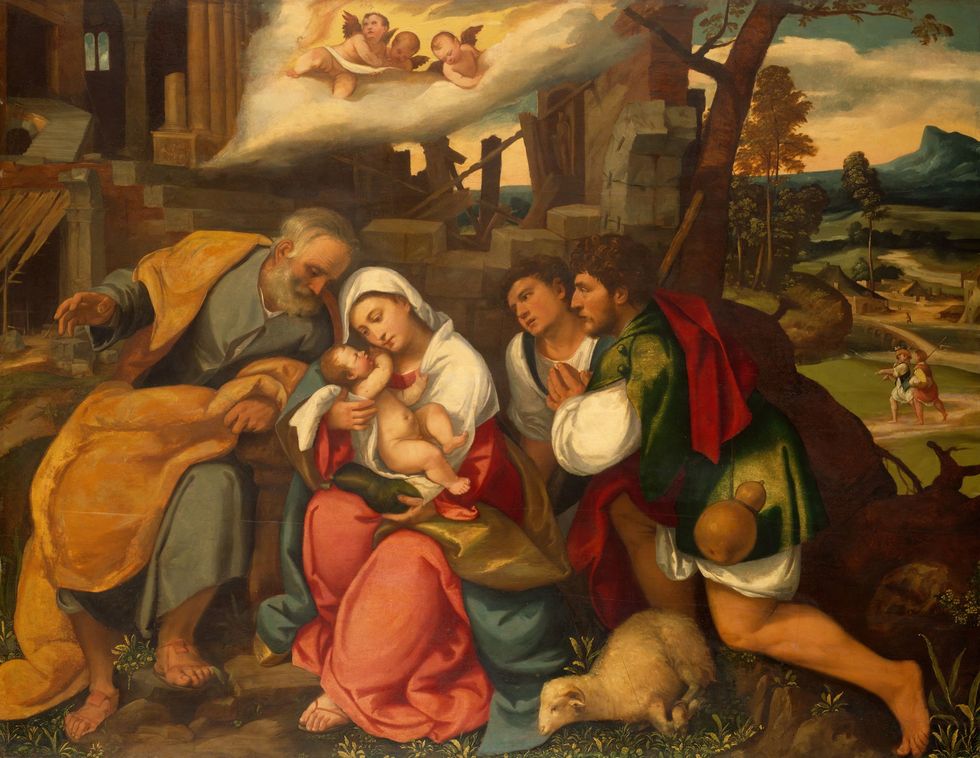
The Virgin Mary, as depicted in the Nativity, who the Open University said was from 'ancient Palestine'
| GETTYHowever, the university later clarified that academics remain free to use the term where it is considered academically appropriate.
A university spokesperson told Novara Media the contextual note applied only to a single Arts and Social Sciences module, and that no restrictions had been placed on wider academic usage.
They said earlier comments about removing the term from future course material referred specifically to a unit that is scheduled to be replaced as part of a routine module update.
An anonymous OU staff member told Novara the explanation represented a “clear contradiction” between the university’s later statements and the assurances previously given to UKLFI.
EDUCATION - READ THE LATEST:

The Open University has seemingly backtracked on their pledge to no longer use the term 'ancient Palestine'
|GETTY
The apparent shift came after academics warned the agreement could conflict with the Higher Education (Freedom of Speech) Act 2023, which requires universities to protect academic freedom and resist external pressure on teaching content.
An open letter defending the use of the term was signed by several prominent academics and political figures.
Signatories included historians Rashid Khalidi, Nur Masalha, Ilan Pappé and Avi Shlaim, alongside philosopher Judith Butler, economist Yanis Varoufakis and Jeremy Corbyn.
In a statement, the OU said: “Academic colleagues remain free to use the term ‘Ancient Palestine’ in their teaching.”
The university added that correspondence from “an external organisation” related only to one specific module and that the contextual note would be included in an introductory Arts course.
It continued: “Whilst our defence of the academic right to use the term ‘Ancient Palestine’ has been clear throughout, we recognise that aspects of the earlier correspondence relating to future changes to that one module may have caused confusion when read outside their immediate context.
“That response sought to be transparent about anticipated changes as part of routine module refresh, which would remove the unit containing that case study.
“There has been no institutional discussion about prohibiting or removing the term ‘ancient Palestine’. The use of terminology in all our curriculum remains a matter for academic judgement, consistent with our commitment to academic freedom and scholarly independence.”
GB News has approached the Open University for comment.
More From GB News