










Taxpayers are forking out up to £1.6million a year for emergency services to rescue severely obese people - with firefighters called out every three hours to move patients who cannot be moved safely by ambulance crews alone.
The call-outs include house fires, medical emergencies, falls, flooding incidents, and routine requests to assist ambulances with the transport and extrication of obese patients from their homes.
New research shows that between 2020 and 2025, UK fire services attended 15,849 bariatric rescues, equivalent to one rescue every three hours and 20 minutes.
The analysis was carried out by Zava, an online healthcare provider offering GP-led services including weight-loss treatment, using Freedom of Information requests sent to all 49 UK fire and rescue services.
TRENDING
Stories
Videos
Your Say
It reveals bariatric rescues of obese people have surged by 76 per cent in just four years - from 1,804 incidents in 2020 to 3,183 in 2024, almost nine incidents a day.
Using available cost data, based on figures from London, experts estimate the total five-year bill has reached £8,033,374, driven by the scale and complexity of these incidents.
Since 2020, fire crews have spent 553,609 minutes dealing with bariatric emergencies - the equivalent of more than a full year of continuous work.
The London Fire Brigade has been one of the hardest hit.
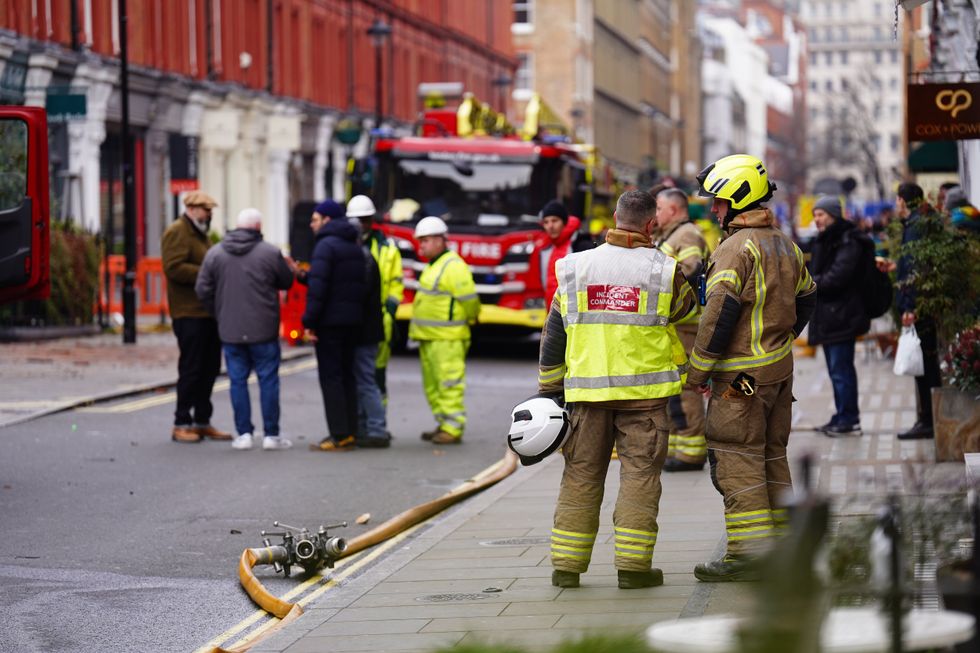
The London Fire Brigade has been one of the hardest hit services in the country
|PA
Since 2020, it has attended 2,025 bariatric incidents, costing the service £1,033,295 in staff time, specialist vehicles and equipment.
Call-outs in the capital rose 259 per cent, from 134 incidents in 2020 to 481 in 2024.
Nearly four in five London rescues involved assisting ambulances, rather than responding to fires - highlighting how frequently firefighters are being used as a lifting service for obese patients.
One London firefighter, Tom, described how a single rescue can escalate into a major operation.
In one case, crews spent around ten hours rescuing an obese man from his home following a medical emergency.
OBESITY CRISIS - READ MORE:
Firefighters had to remove a ground-floor balcony, take out three French doors, and build a reinforced ramp capable of supporting his weight. Rope systems were then used to lower the patient safely to the road.
“These rescues are rarely just about lifting,” Tom said. “They often involve removing windows, doors or balconies, or working at height - all of which increase risk and duration.”
It took nine firefighters just to lift the patient from a chair onto a stretcher.
“Normally you’d take a limb each, but he was so heavy extra hands were needed,” Tom said. “One of my crew members injured his back during this job. These incidents routinely push firefighters beyond safe manual handling limits.”
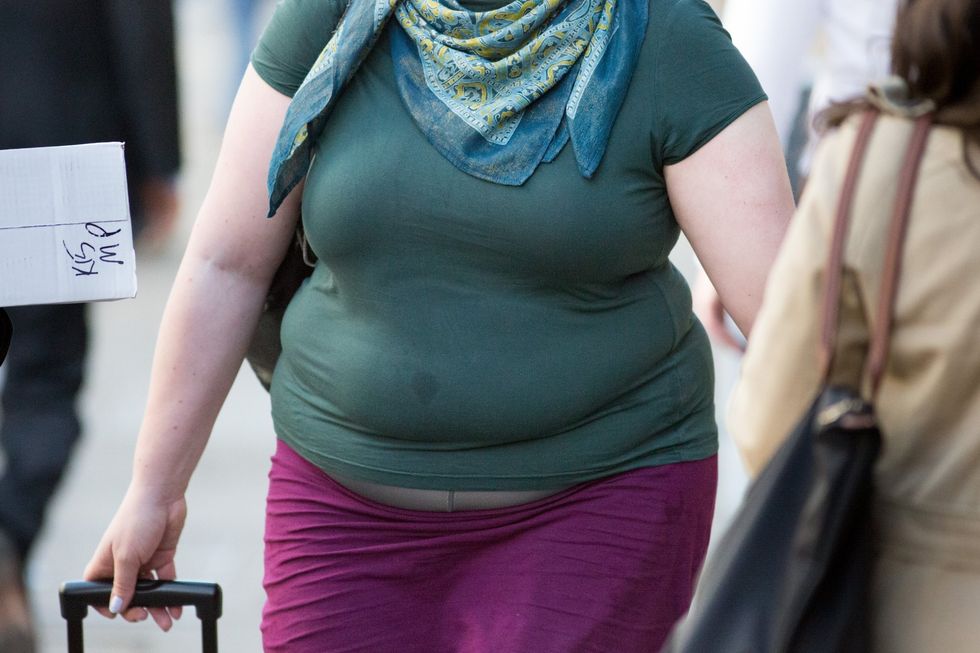
The sheer scale of the crisis comes as Britain battles a growing obesity epidemic (file photo)
|PA
Firefighters warn these prolonged rescues reduce emergency cover, leaving fewer crews available for fires, road crashes and other life-threatening incidents.
And the sheer scale of the crisis comes as Britain battles a growing obesity epidemic.
More than six in ten adults in England (64.5%) are now overweight or obese, up from 61.3% a decade ago, according to Government data. The number of adults living with severe obesity has nearly doubled since the early 2000s, reaching 1.88 million people.
Crystal Wyllie, a doctor at Zava, said: “Obesity is not just impacting the NHS - it’s placing growing pressure on fire and rescue services too.”
More From GB News