






Britain's original Bramley apple tree risks being cut down after its university landlords put its land up for sale.
Nottingham Trent University (NTU) has owned the Bramley Cottages in Southwell, Nottinghamshire, since 2018 - but now has put the property on the market.
Under new owners, the tree outside the Church Street property could be chopped down without repercussion.
NTU has said it is selling the cottages, which were converted to student accommodation, due to their "age and configuration" which has made them "not as suitable as other NTU-owned accommodation".
It had been responsible for the tree's upkeep since 2018, but had been criticised for converting the historic buildings into student flats and barring the public from seeing the tree.
The tree, which was never granted a Tree Preservation Order, was planted by Mary Anne Brailsford in 1809.
Nearly 50 years later, gardener Henry Merryweather came across its fruit when the property was owned by Matthew Bramley.
He took a cutting from the tree under the condition that the fruit bore the Bramley name.
Celia Stevens, 85, the granddaughter of Mr Merryweather, is hoping to raise £400,000 to guarantee the safety of the tree.
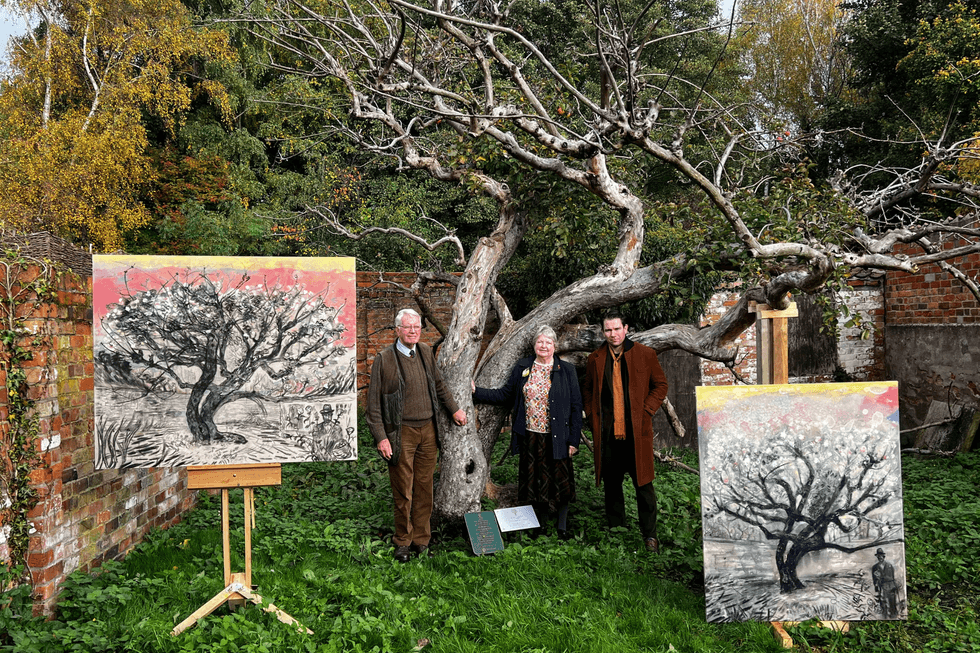
Britain's original Bramley apple tree risks being cut down
|CROWDFUNDER
She said: "They fail to recognise what it has done over the years – it has helped feed troops, bring tourists over, and people just think it’s a cooking apple.
"We are very fortunate to have anything of this nature. My great-grandfather found this apple, bred it, and it became one of the most celebrated culinary apples ever produced.
"It has a value commercially, but it has a value as an ancient tree that brings value to Nottinghamshire, and it just needs the respect of people who understand and love such things to give it as long a life as it can have."
Henry Merryweather's great grandson Roger said he was "gravely concerned" about the future of the tree.
BRITISH HERITAGE AT RISK - READ MORE:
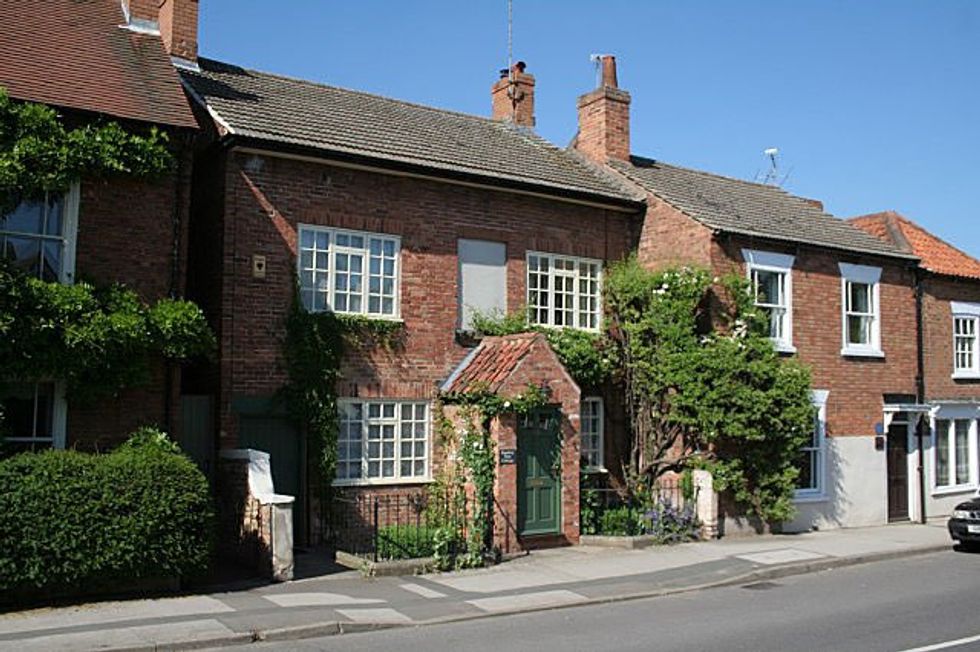
PICTURED: The Bramley Tree Cottages. The cottage to the right bears a blue plaque, recognising the birthplace of the tree
|WIKIMEDIA/ALAN MURRAY-RUST
He added that Prince Philip told him "because of your family we have Bramleys at Sandringham".
The tree is still fruiting and produced Bramley apples as recently as last year - despite suffering from an incurable honey fungus infection.
The fungus spreads between the bark and wood and can kill trees, shrubs, and perennial plants.
Dan Llywelyn Hall, artist and founder of the Mother Bramley Fund, said: "The structure of the tree is wonderful and it tells a story in every twist and turn of the bark.
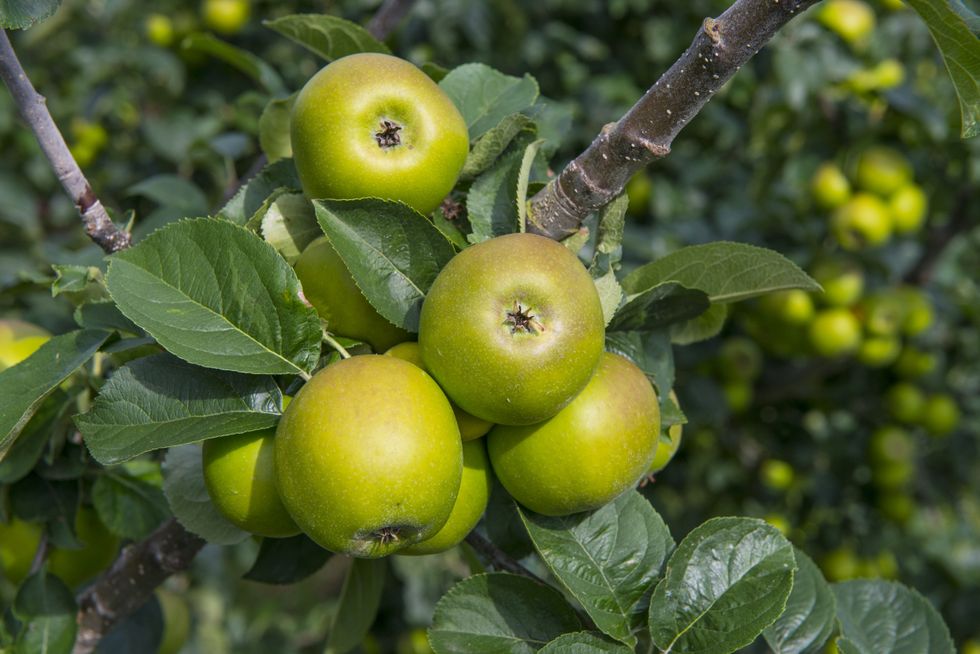
Bramley apples originated in Southwell but are now farmed across the UK
|GETTY
"The fact that it is literally connected, rooted, to Southwell is so unique.
"We just want the new owners to understand they are about to be the custodian of a tree which is of great significance to our country and we are very much willing to work with them.
"But, my biggest worry is that they might not be sympathetic to that."
The university said: "NTU is proud to have been the latest custodian of the Bramley apple tree and to have played a part in helping to safeguard and celebrate its legacy.
"The university aims to ensure that the tree will remain in the care of a responsible custodian and to also support them with guidance on how to care for the tree moving forward."