










Net migration to the UK could surge by another 300,000 by the end of the decade, a leading Government adviser has warned.
Prof Brian Bell from the Migration Advisory Committee said to expect the overall migration figure to jump “in the medium term” from its current level of 204,000.
He said the number of overseas students and workers, which are expected to rise once again, take up a great proportion of the rise.
Reducing net migration is an election manifesto pledge by Sir Keir Starmer, and a failure to do this would serve as a blow to his chances of winning another term.
“I might expect a bit of a bounce-back that’s consistent with what the OBR (Office for Budget and Responsibility) predict in their economic and fiscal outlook,” Prof Bell said.
“They expect us to return to more like 300,000 in the medium term, and I think that’s a reasonable prediction.”
The OBR also predicted a rise before the end of the decade.
A surge of foreign workers encouraged to come to the UK by Boris Johnson’s Government resulted in peak levels of net migration in the year to March 2023, when it reached 944,000.
 Labour's migration manifesto pledges: Keir Starmer's four promises to solve Britain's migrant crisis | GB NEWS
The former Prime Minister incentivised working in Britain as the UK emerged from the Covid pandemic, but net migration figures have dropped sharply since then.
Prof Bell said he would be surprised if work visas “took off again” because, with tough restrictions on foreign skilled workers, it was “much more controlled”.
He expects asylum seekers and family visas to make up a significant share of net migration, as the rules are “quite difficult to change”.
They currently account for 44 per cent of net migration, and Prof Bell expects the number to reach 50 per cent.
LATEST DEVELOPMENTS
 Sir Keir Starmer says his 'number one priority is to put an end' to illegal migration | X/KEIR_STARMER
“Those numbers won’t fall particularly dramatically and therefore, if anything, I might expect a bit of a bounce-back to return to more like 300,000 in the medium term,” he said.
He warned of a negative fiscal impact because refugees “unambiguously” cost the state money, as they earn less and are less likely to have jobs.
Prof Bell said taxpayers are likely to stump up hundreds of thousands of pounds extra for asylum seekers who remain in the UK.
He pointed to research in the Netherlands which put the “lifetime net fiscal impact” of each asylum seeker at minus £390,000.
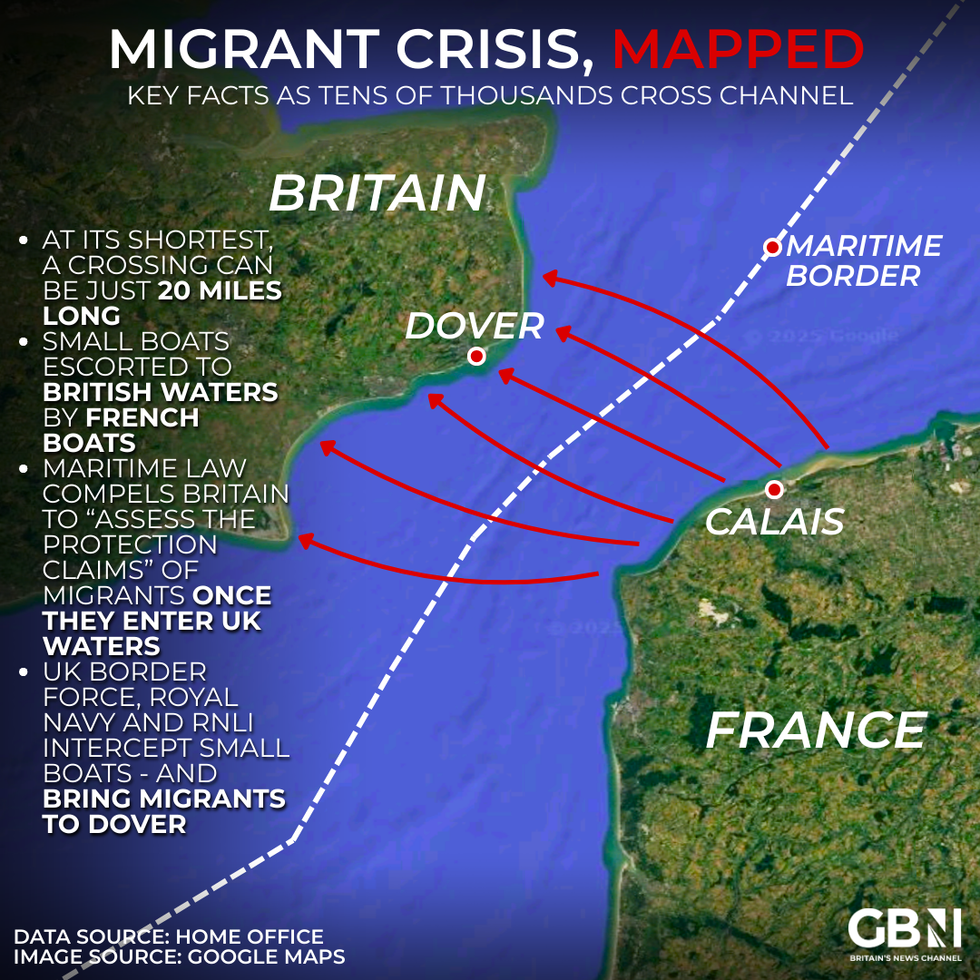 Migrant crisis, mapped: Key facts as tens of thousands cross Channel | GB NEWS
A similar study in Australia estimated a figure of minus £198,000.
“I would be very surprised if Australia and the Netherlands were not good comparators for us in terms of general labour markets and the types of people who are coming on asylum,” he said.
“I don’t want to put a figure on it, but I think those sort of headline numbers that come from those countries — it wouldn’t surprise me if a similar order of magnitude was true in the UK.”
The Migration Advisory Committee report, published on Wednesday, said: “We expect the lifetime net fiscal impact of those entering through asylum and refugee routes to be unambiguously negative.
“This is largely due to their low employment rates and wages, high rates of economic inactivity, and their exemption from the ‘no recourse to public funds’ rule.
“For example, analysis by the Migration Observatory suggested that 56 per cent of those who reported initially arriving in the UK to claim asylum and were of working age were in employment, compared to 75 per cent of the UK-born population.
“When in employment, their median annual salary was £20,000 for men and £18,000 for women, compared to £31,000 and £22,000 respectively for the UK-born.”