








A former Independent Chief Inspector of Borders and Immigration has warned that the UK could see a "record-breaking" summer of small boat crossings unless something "remarkable" is put in place.
Speaking to GB News, John Vine feared the continued warm and dry weather will see "thousands" of illegal migrants making the perilous journey across the Channel.
Mr Vine told GB News viewers: "Although the figures are down this year, 3,700 arrived in May last year compared with this year, and if you look at the figures for June last year, we're looking at over 5,000 in June last year.
"So if the weather remains as it is, I think the rate that we're seeing at the moment of arrivals on small boats will be up near that figure by the end of June, unless something remarkable changes."
In the past week, GB News has revealed that more than 1,000 asylum seekers crossed over the calm waters in small boats while Britain basked in temperatures as high as 35C.
Since 2018, when the crisis began, more than 200,000 illegal migrants have reached the shores of Britain.
Highlighting how the conversation about how to tackle the crisis began in 2018, Mr Vine told GB News: "At the end of the day, the defence of our borders shouldn't rely on the weather at all, it should rely on professional action by Border Force to prevent people from arriving here in this way.
"We're spending a lot of money to ask the French police to intervene on our behalf, but of course we have no control over their actions."
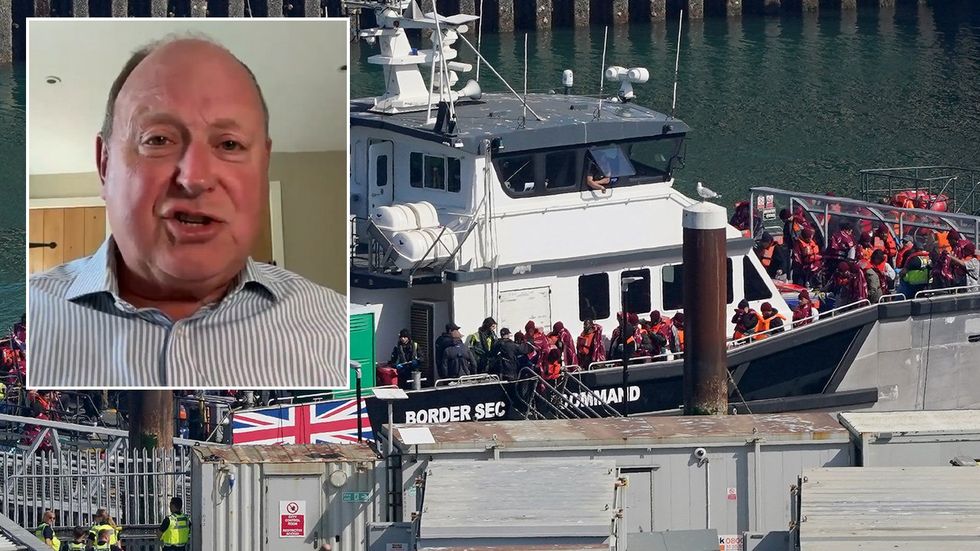
John Vine has warned of a 'record-breaking' summer as small boat migrants continue to enter Britain
|GB NEWS / PA
Mr Vine called for the French to take "action on the beaches" to prevent small boats from making the crossing in the first place.
He argued: "What we need to see is action taken on the beaches to prevent the boats being launched in the first place.
"There's supposed to have been as part of this deal, a new squad of police trained to wade into shallow waters and to prevent taxi boats from launching, but we've never seen any evidence of that since the announcement.
"So there are lots of things that we don't know about what's working well with the Government strategy and what isn't."
LATEST DEVELOPMENTS
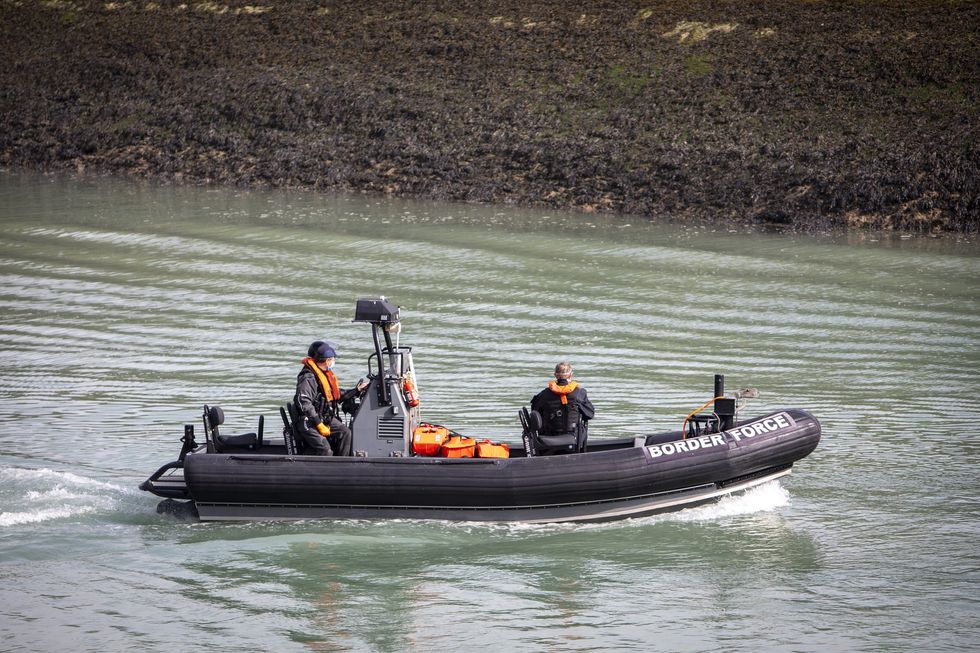 The Home Office are spending a staggering £1.2million a year to buy and maintain Channel rescue boats | GETTY
Questioned by host Cristo Foufas on why the border authorities do not "send the boats back to France", Mr Vine stressed that Home Secretary Shabana Mahmood had "tried to negotiate" with the French on that strategy.
He said: "The Home Secretary, as part of the negotiation on the deal, tried to get the French to agree to the British boats returning migrants to the coast of northern France. That would have been a bit of a game changer, but I have to say that the French didn't agree to that.
"So unless you have an actual deterrent, which means that when people hand over the money, they know that they're not going to reach the UK or they're going to be returned to France or other countries from whence they came pretty quickly, then this trade will continue."
Mr Vine concluded: "In effect, what organised crime are doing is supplying a service to people whose demand is to come to the UK it seems to be insatiable.

Mr Vine told GB News that the crisis will not be tackled unless something 'remarkable' is put in place
| GB NEWS"You can't use enforcement alone to actually deal with this problem. There needs to be something political which addresses the problem in the first place."
A Home Office spokesman told GB News: "After record high levels of migration under the previous government, net migration has fallen by 82 per cent.
"Whilst holding a sponsorship license is no guarantee of a visa, we will never tolerate abuse. That is why we have tightened requirements, including doubling the length of time employers who commit repeat offences are prevented from sponsoring workers.
"Meanwhile, skilled sponsor revocations are up, more than 100 occupations have been cut from overseas recruitment access and the skilled salary threshold raised."